Amanze Chinonye
The Nigeria Police Force (NPF) has intensified public sensitisation on the digitalised Tinted Glass Permit process, reminding vehicle owners that approval for the use of tinted vehicle windows is granted only to applicants with verified medical or security-related challenges.
The Force said the initiative is aimed at strengthening national security, improving accountability, and preventing the misuse of tinted vehicles for criminal activities.
It stressed that the policy is not intended to inconvenience law-abiding Nigerians but to establish a regulated system where vehicles with tinted glass are properly documented and verified.
Join our WhatsApp ChannelThe sensitisation campaign highlights why the permit is required, who qualifies for approval, the legal provisions guiding issuance, security concerns surrounding unauthorised tinted vehicles, the official application process, and the legal debates surrounding enforcement.
READ ALSO :
Nigeria’s Tinted Glass Policy: Security Measure or Test of Rule of Law?
Why the Tinted Glass Permit Is Required
The Tinted Glass Permit is a regulatory requirement designed to control the use of tinted windows on motor vehicles and address security concerns associated with concealed occupants.
The Nigeria Police Force has raised concerns that unauthorised tinted vehicles may be exploited by criminal elements to conceal their identities, movements, and activities. Such vehicles can create challenges during security checks, investigations, and intelligence operations.
By maintaining records of approved tinted vehicles, security agencies can distinguish between authorised users and vehicles that may be used for unlawful purposes.
The Police have emphasised that the policy is not targeted at responsible motorists but is intended to support public safety, improve accountability, and strengthen law enforcement operations.
Legal Framework and Court Challenges Over Enforcement
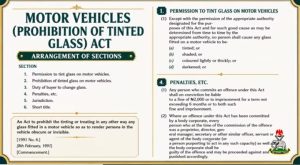
The regulation of tinted vehicle glass in Nigeria is backed by the Motor Vehicles (Prohibition of Tinted Glass) Act, 1991 (No. 6).
The Act prohibits any person from tinting, shading, colouring, or darkening glass fitted on a motor vehicle in a manner that makes occupants inside the vehicle obscure or invisible, except with the permission of the appropriate authority and for a recognised reason.
Under Section 1 of the Act, approval may only be granted where the appropriate authority determines that there is sufficient justification for allowing the use of tinted glass.
The Nigeria Police Force relies on this legislation as the basis for issuing tinted glass permits, particularly for applicants with verified medical or security challenges.
The law also outlines penalties for violations. Under Section 4 of the Act, any person convicted of an offence may be liable to a fine of N2,000, imprisonment for a term not exceeding six months, or both.
Where an offence is committed by a corporate organisation, responsible officers, including proprietors, directors, general managers, secretaries, or authorised representatives involved in the violation, may also be held liable.
However, while the Police derive their authority from existing legislation, the enforcement of the policy has faced legal challenges, with courts issuing interim orders pending the determination of substantive cases.
The legal challenges have focused largely on the implementation and enforcement process, with some courts issuing temporary restrictions while the matters are being considered. The Police have maintained that no final judgment has invalidated the legal framework empowering them to regulate tinted glass permits.
READ MORE :
Court Halts Nationwide Enforcement of Tinted Glass Permit Policy
Eligibility and Official Application Process
The Nigeria Police Force has clarified that tinted glass permits are not issued based on personal preference or simply because a vehicle has tinted windows.
Approval is restricted to applicants who can establish genuine need based on:
- Medical challenges requiring the use of tinted glass; or
- Security challenges that justify the need for tinted vehicle windows.
Applicants seeking approval on medical grounds are required to provide relevant medical documentation, while those applying on security grounds must present evidence of their security concerns for verification.
The Police stated that every application undergoes assessment before approval is granted. Factory-fitted tinted glass or ownership of a tinted vehicle does not automatically qualify an individual for a permit.
To improve transparency and simplify access, the Police introduced a digital application system through the Police Specialised Services Automation Project (POSSAP) platform.
Applicants are required to:
- Register on the official platform.
- Provide valid identification details.
- Submit vehicle registration and ownership information.
- Upload required supporting documents.
- Provide medical or security-related evidence where applicable.
- Complete verification procedures.
- Await approval after assessment.
The official application portal is available through the POSSAP platform: https://possap.gov.ng/
The Police have advised Nigerians to avoid unauthorised agents and use only approved channels to prevent fraud and ensure applications are properly processed.
READ ALSO :
Police Dismiss NBA’s Claims on Tinted Glass Permit, Insist Policy Is Backed by Law
Security Concerns and the Need for Compliance
The enforcement of tinted glass regulations is part of broader efforts by security agencies to improve public safety and prevent the misuse of vehicles for criminal activities.
The Police have expressed concerns that unauthorised tinted vehicles can provide cover for criminal operations because occupants may be difficult to identify during security checks.
Proper documentation of approved tinted vehicles, the Force said, will enhance intelligence gathering, support investigations, and improve the effectiveness of security operations nationwide.
The Nigeria Police Force maintains that the Tinted Glass Permit process is a security and accountability measure designed to balance citizens’ legitimate needs with the responsibility of protecting lives and property.
For vehicle owners, the message remains clear: approval for tinted glass is not automatic. It is granted only to applicants who can demonstrateverified medical or security challenges in line with the law.
Citizens who require the permit are encouraged to use the official digital process and obtain approval to ensure compliance with Nigerian regulations.

Amanze Chinonye is a Staff Correspondent at Prime Business Africa, a rising star in the literary world, weaving captivating stories that transport readers to the vibrant landscapes of Nigeria and the rest of Africa. With a unique voice that blends with the newspaper's tradition and style, Chinonye's writing is a masterful exploration of the human condition, delving into themes of identity, culture, and social justice. Through her words, Chinonye paints vivid portraits of everyday African life, from the bustling markets of Nigeria's Lagos to the quiet villages of South Africa's countryside . With a keen eye for detail and a deep understanding of the complexities of Nigerian society, Chinonye's writing is both a testament to the country's rich cultural heritage and a powerful call to action for a brighter future. As a writer, Chinonye is a true storyteller, using her dexterity to educate, inspire, and uplift readers around the world.