 Amanze Chinonye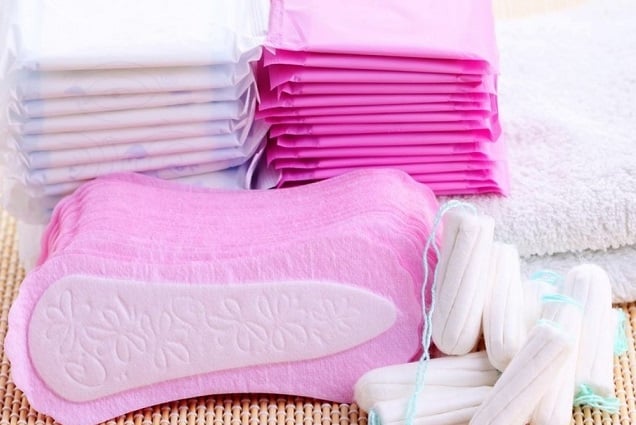
For millions of women, sanitary pads are an ordinary part of menstrual care. They are bought, used and discarded each month with little attention to what lies beneath their familiar white surface.
Recent Nigerian research is beginning to look more closely at that question.
Join our WhatsApp ChannelStudies published in 2026 have examined sanitary pads available in Nigeria for phthalates, heavy metals and polychlorinated biphenyls (PCBs), detecting several chemicals in the products tested.
READ ALSO :
Strengthening Alliances And Building Movements To End Female Genital Mutilation
They show what researchers found in specific products and, in some cases, what their exposure and risk calculations indicate.
The Nigerian research also forms part of a wider scientific literature. A 2024 systematic review published in BJOG: An International Journal of Obstetrics & Gynaecology identified studies reporting phthalates, volatile organic compounds, parabens, environmental phenols, fragrance chemicals, dioxins and dioxin-like compounds in menstrual products. It also identified gaps in research on exposure during menstrual-product use.
What researchers found in Nigeria
One study, published in February 2026 in Scientia Africana, examined six brands of sanitary pads manufactured and marketed in Nigeria.
Using gas chromatography-mass spectrometry, researchers detected 12 phthalate congeners. Diisobutyl phthalate (DiBP) recorded concentrations ranging from 1.757 to 83.010 milligrams per kilogram. Di-n-pentyl phthalate ranged from 0.321 to 12.936 mg/kg, while dibutyl phthalate ranged from 0.169 to 12.616 mg/kg.
The researchers calculated daily exposure doses for the phthalates detected and reported that the estimates were substantially higher than those reported in comparable studies from other countries.
They called for routine regulatory monitoring and technologies to reduce or eliminate phthalate exposure from sanitary products.
The study measured the products themselves; it did not investigate disease outcomes among women who used them.
Another Nigerian study looked at four metals lead, cadmium, arsenic and chromium in sanitary products.
Researchers tested five sanitary-pad brands, along with a pantyliner, cotton wool and tissue paper purchased in Lagos, Abuja and Port Harcourt.
Lead was detected in all the sanitary products tested, at concentrations ranging from 10.97 to 19.66 mg/kg. Cadmium ranged from 1.31 to 2.10 mg/kg, arsenic from 0.92 to 4.85 mg/kg and chromium from 0.44 to 1.63 mg/kg.
The researchers reported that lead, cadmium and arsenic exceeded the safety limits used in their assessment, while chromium remained within the stated permissible range.
They also calculated potential non-carcinogenic risks associated with exposure to the metals. Those calculations were based on assumptions about exposure and were not clinical assessments of product users.
Another set of findings
A separate 2026 study examined six sanitary-pad brands purchased in Lagos, Abuja and Port Harcourt for PCBs.
Researchers detected 10 PCB congeners, with total concentrations ranging from 0.0102 to 0.3200 nanograms per gram.
PCB-126 contributed significantly to the study’s calculated toxic-equivalency values.
At the same time, the study reported hazard quotients below one and described the estimated risks as low.
The findings underline the difference between identifying a chemical in a product and establishing a health effect among people who use it.
READ MORE :
Gendered Words, Shared Understanding: The Linguistic Wonder of Ubang
Beyond the Nigerian Studies
The Nigerian findings are not isolated from international research.
The BJOG review examined studies published between 2000 and 2021 and identified 12 peer-reviewed studies that directly measured chemicals in menstrual products. The products examined came mainly from the United States, Japan, South Korea and several European countries.
The review found reports of phthalates, volatile organic compounds, parabens, environmental phenols, fragrance chemicals, dioxins and dioxin-like compounds. It also found considerable variation in the products and methods studied and highlighted gaps in evidence about exposure during menstrual-product use.
The authors called for further research to clarify exposure levels over menstrual cycles.
A separate 2026 study published in the Journal of Hazardous Materials examined disposable sanitary pads and paper diapers for 92 chemicals, including synthetic antioxidants, organophosphate esters and phthalate esters.
Researchers reported detecting 11 synthetic antioxidants in all samples and identified chemicals including dibutyl phthalate. They described the work as a pilot study and reported that dermal contact with sanitary pads may represent an exposure route for some chemicals.
READ ALSO :
Current Realities and the Future of Menstrual Hygiene for Youth in Sub-Saharan Africa
Where Regulation Comes in
In Nigeria, sanitary pads are listed by the National Agency for Food and Drug Administration and Control (NAFDAC) as medical devices.
NAFDAC’s online Greenbook contains registered sanitary-pad products, including products manufactured in Nigeria and products for which Nigerian companies are listed as applicants or manufacturers.
Individual entries provide information such as product descriptions, manufacturers and approval dates. One example is New Comfit Deluxe Sanitary Pads, which NAFDAC lists as a medical device with an approval date of September 15, 2022, and an expiry date of August 24, 2027.
Registration establishes that a product is listed by the regulator. It does not, by itself, provide a complete picture of the product’s chemical composition or potential exposure.
The Federal Competition and Consumer Protection Commission (FCCPC) has also raised broader concerns about product labelling.
In a notice issued on August 19, 2026, the commission said its market surveillance, inspections and quality-assurance activities had identified products with misleading or deceptive information, as well as products lacking details including production dates, expiry or best-before dates, batch numbers, manufacturer information, ingredient lists and country of origin.
The Findings so far
Taken together, the studies provide evidence that several chemicals have been detected in sanitary products examined in Nigeria.
They do not show that every sanitary pad contains the same substances or concentrations, and the Nigerian studies involved relatively small numbers of products. Their findings therefore cannot automatically be extended to every brand or batch sold in the country.
Nor do they establish that sanitary-pad use causes specific diseases among Nigerian women.
What remains is a body of findings that raises specific scientific questions: how consistently are these chemicals found across products, at what concentrations, and what exposure occurs during normal use?
Answering those questions will require testing more brands and batches and gathering better data on actual exposure.
For now, the evidence is clear on one point: chemicals have been detected in sanitary products tested in Nigeria, but the available studies do not establish a general disease risk from sanitary-pad use.
That distinction is central to understanding both the significance and the limits of the research.

Amanze Chinonye is a Staff Correspondent at Prime Business Africa, a rising star in the literary world, weaving captivating stories that transport readers to the vibrant landscapes of Nigeria and the rest of Africa. With a unique voice that blends with the newspaper's tradition and style, Chinonye's writing is a masterful exploration of the human condition, delving into themes of identity, culture, and social justice. Through her words, Chinonye paints vivid portraits of everyday African life, from the bustling markets of Nigeria's Lagos to the quiet villages of South Africa's countryside . With a keen eye for detail and a deep understanding of the complexities of Nigerian society, Chinonye's writing is both a testament to the country's rich cultural heritage and a powerful call to action for a brighter future. As a writer, Chinonye is a true storyteller, using her dexterity to educate, inspire, and uplift readers around the world.