 Amanze Chinonye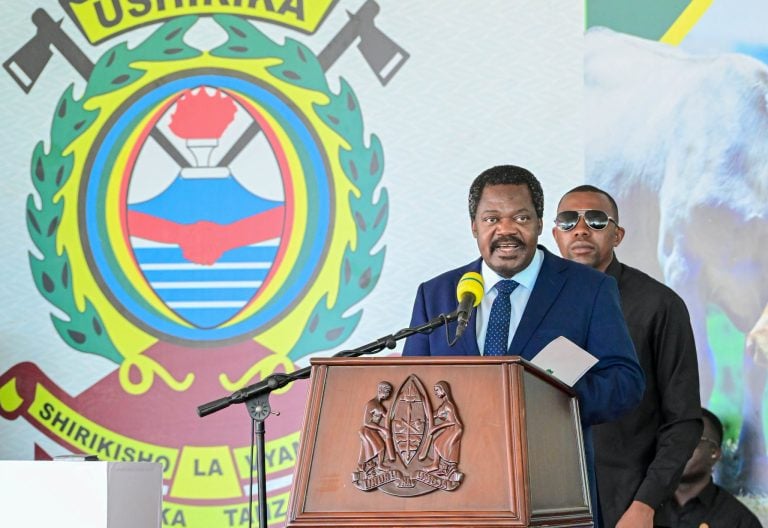
Emmanuel Nchimbi’s resignation as Tanzania’s vice-president has raised questions about the political tensions surrounding President Samia Suluhu Hassan’s administration, coming less than a year after he took office and weeks after he publicly urged Tanzanians to push for a new constitution.
Join our WhatsApp Channel
Nchimbi announced his resignation on August 25, saying he would retire from politics and public service and leave office on September 4. Chief Secretary Moses Kusiluka confirmed that Hassan had accepted his resignation.
READ ALSO :
Tanzania Vice-President Nchimbi Resigns, Announces Retirement From Politics
In his statement, Nchimbi said he had written to the president after concluding that she wanted a different vice-president. He recalled a commitment made before the 2025 election to step aside if Hassan sought a change.
The announcement was made through Nchimbi’s Instagram account, which had been dormant since 2023. The account had not been used for major political announcements during his subsequent rise as CCM secretary-general, Hassan’s running mate or vice-president, making its use for his resignation an unusual feature of his departure.
The timing has drawn attention because Nchimbi’s resignation followed a prominent intervention on constitutional reform.
On July 24, he told the Tanzania Human Rights Defenders Coalition in Dar es Salaam that Tanzanians should “fight to get a new constitution”, describing constitutional reform as essential to stronger governance, human rights and democratic institutions.
Nchimbi said Tanzania had an opportunity to complete the process before the 2030 general election and called for a constitution based on broad national consensus.
His remarks came amid a longstanding constitutional debate. Tanzania began a major constitutional review in 2011, producing a draft constitution before the process stalled without a referendum.
Hassan has also publicly supported constitutional reform, so the issue does not amount to a simple disagreement over whether Tanzania needs a new constitution. The political sensitivity lies in how and when the reform should be pursued and the wider political interests surrounding it.
Nchimbi’s intervention was followed by reports of tensions within the ruling Chama Cha Mapinduzi (CCM), including claims that he was referred to the party’s ethics committee after a National Executive Committee meeting in Zanzibar on July 29.
His departure nevertheless comes against a wider backdrop of political tension following Tanzania’s October 2025 presidential election. Hassan won nearly 98% of the vote after major opposition figures were prevented from contesting, while post-election unrest left hundreds dead, according to a government-appointed inquiry.
The fallout from the election has intensified debate over political freedoms, accountability and constitutional reform, placing governance issues at the centre of Tanzania’s political discourse.
Nchimbi’s own political trajectory adds another layer to the story. Before becoming vice-president, he served as CCM secretary-general and was selected as Hassan’s running mate in the 2025 election. His sudden departure removes a senior figure from the government at a politically sensitive time.
His future political ambitions, including speculation about a possible 2030 presidential bid, have also featured in discussions surrounding his growing public profile. But Nchimbi’s resignation statement did not mention presidential ambitions or any dispute with Hassan.
READ MORE :
How a $195 Million Graphite Dispute Involving Patrice Motsepe Was Struck Off by a Tanzanian Court
The timing of his exit has also attracted attention because it came shortly before Parliament was due to resume its sittings. During the previous session, an MP referred to a “Judas the betrayer” within government, a remark that was widely interpreted as a veiled reference to divisions within the administration.
Whether Nchimbi’s resignation represents a broader political realignment remains to be seen. What is clear is that it leaves Hassan with the immediate task of choosing a new deputy while her government faces unresolved questions over constitutional reform and the political divisions exposed by last year’s election.
Under Tanzania’s Constitution, the president must appoint a new vice-president within 14 days after the office becomes vacant, with the nominee subject to confirmation by the National Assembly.
The choice of Nchimbi’s successor will therefore be closely watched for what it may signal about Hassan’s political priorities and the direction of CCM.
For now, Nchimbi has said he is leaving politics voluntarily. But his abrupt departure, following an unusually outspoken call for constitutional reform and an unexpected announcement through a dormant Instagram account, has ensured that his resignation will remain a significant political story in Tanzania.

Amanze Chinonye is a Staff Correspondent at Prime Business Africa, a rising star in the literary world, weaving captivating stories that transport readers to the vibrant landscapes of Nigeria and the rest of Africa. With a unique voice that blends with the newspaper's tradition and style, Chinonye's writing is a masterful exploration of the human condition, delving into themes of identity, culture, and social justice. Through her words, Chinonye paints vivid portraits of everyday African life, from the bustling markets of Nigeria's Lagos to the quiet villages of South Africa's countryside . With a keen eye for detail and a deep understanding of the complexities of Nigerian society, Chinonye's writing is both a testament to the country's rich cultural heritage and a powerful call to action for a brighter future. As a writer, Chinonye is a true storyteller, using her dexterity to educate, inspire, and uplift readers around the world.