 Amanze Chinonye
What began as allegations of impersonation has evolved into one of the most consequential governance controversies confronting the Tinubu administration.
At the centre of the debate is the Presidential Foreign Intervention Promotion Council (PFIPC) an organisation the Presidency insists never existed but which critics say appears to have surfaced in official government processes, including the reported allocation of about ₦1.3 billion in the 2026 Appropriation Act.
The apparent contradiction has transformed the issue from a criminal allegation into a wider debate on public financial management, institutional accountability and the integrity of Nigeria’s budgetary process.
Join our WhatsApp ChannelOver recent weeks, the controversy has expanded beyond questions surrounding Prince Adeniyi Adeyemi, who claims to have served as Director-General of the council, into a broader national conversation about governance safeguards and institutional oversight.
READ ALSO :
NDC Demands Gbajabiamila’s Sack Over PFIPC Scandal, Seeks Independent Probe
The Presidency, through the Special Adviser to the President on Information and Strategy, Bayo Onanuga, has maintained that the PFIPC was never a recognised government agency and described Adeyemi as an impostor who fraudulently presented himself as its Director-General.

Rather than settling the matter, however, the official response has intensified public scrutiny, prompting calls from civil society organisations, former public officials, legal practitioners, policy analysts and members of the public for a comprehensive and independent investigation.
Adeyemi’s Defence
Before the Presidency issued its detailed response, Adeyemi publicly rejected attempts to portray him as a fraudster.
In a lengthy statement published on his official Facebook page on June 25, he argued that the controversy could not be resolved through official denials alone and raised what he described as inconsistencies in the government’s account.
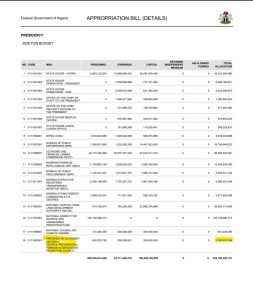
Adeyemi contended that if the PFIPC never existed, the government should explain how the council allegedly appeared in the 2026 Appropriation Act after passing through executive preparation, Budget Office review, National Assembly scrutiny and presidential assent.
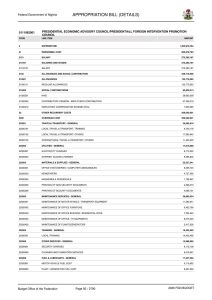
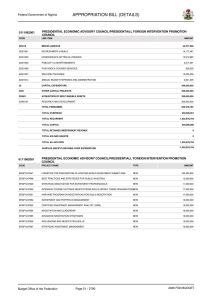
According to him, the issue is procedural rather than personal.
He questioned how a body the Presidency now describes as fictitious obtained office accommodation within the Federal Secretariat, secured banking arrangements and interacted with government institutions.

Adeyemi also alleged that his disagreement with Chief of Staff to the President, Femi Gbajabiamila, stemmed from financial demands relating to the council’s proposed take-off funding an allegation that remains unverified and has been denied in official government communications.
He further claimed to have survived previous assassination attempts and called on President Bola Tinubu to establish an independent investigative panel to examine every aspect of the controversy, including the circumstances surrounding the death of Dolapo Babatunde Tanimola, whom the Presidency identified as the intermediary between him and the disputed appointment.

He urged that such a panel should review budgetary records, official documents and institutional communications, insisting that documentary evidence not competing public statements should determine the truth.
The allegations made by Adeyemi have not been independently verified, and the Presidency has rejected claims linking the Chief of Staff or the Presidency to the disputed council.

Dalung Questions Official Narrative
Former Minister of Youth and Sports Development, Solomon Dalung, has also questioned the Presidency’s explanation.
In a detailed public reaction, Dalung argued that even if the allegations against Adeyemi were ultimately proven, Nigerians still deserved answers about how a supposedly non-existent agency allegedly functioned within official government structures.
According to him, the controversy extends beyond whether Adeyemi falsely claimed to head the council.
Rather, Dalung said the more fundamental questions concern how the organisation allegedly secured office space within the Federal Secretariat, interacted with government institutions and diplomats, and appeared in the 2026 Appropriation Act despite the Presidency’s insistence that it never legally existed.
He maintained that if the PFIPC was fictitious, government must explain how it entered the budgetary process, who authorised its inclusion and where administrative safeguards failed.
Dalung also questioned the Presidency’s disclosure that Tanimola died in a hotel fire shortly before Adeyemi’s arrest, saying the public deserved greater clarity on the circumstances surrounding the incident.
According to the former minister, accountability should not be limited to prosecuting an alleged impostor but should also include a transparent examination of the conduct of institutions that may have facilitated or failed to detect the alleged irregularities.
Legal Perspective
Legal practitioner and public affairs analyst, Liborous Oshoma, has argued that the allegations surrounding the PFIPC suggest possible internal involvement if they are eventually substantiated.
Speaking during a television interview, Oshoma said the nature of the claims raises questions about whether the alleged impersonation could have occurred without assistance from within the system.
He maintained that the controversy now extends beyond individual conduct and must include scrutiny of institutional processes and potential administrative lapses.
Oshoma further stated that, in the interest of transparency and public confidence, the Chief of Staff to the President, Femi Gbajabiamila, should step aside temporarily to allow an unfettered investigation.
“The Chief of Staff to the President must also step aside so that a thorough investigation can be conducted into these allegations,” he said.
He stressed that stepping aside should not be interpreted as a presumption of guilt but as a safeguard to protect the integrity of the investigative process.
The Human Rights Writers Association of Nigeria (HURIWA) has similarly urged President Tinubu to order a comprehensive investigation into all aspects of the controversy.
The organisation also called for the suspension of the Chief of Staff while investigations are ongoing, arguing that such a step would enhance public confidence in the independence of the process.
READ MORE :
Public Debate Intensifies
Beyond official reactions, the controversy has generated sustained debate across social media platform X, where professionals, researchers and commentators continue to interrogate the government’s explanation.
Academic and business researcher Deji questioned what he described as the improbability of a single individual orchestrating such an elaborate operation without institutional lapses or insider collaboration.
He argued that the Presidency’s position requires Nigerians to accept that one individual allegedly forged official documents, secured office accommodation within the Federal Secretariat, opened multiple bank accounts, engaged government institutions and still succeeded in having the agency reflected in the 2026 national budget.
He also pointed to the timeline of events, noting that security agencies were reportedly alerted in October 2025, yet the disputed agency subsequently appeared in the 2026 budget process before final approval.
Oncology researcher Salako described the controversy as raising broader concerns about governance and public trust in state institutions, while also pointing to the reported death of Tanimola as an issue requiring further scrutiny.
Political commentator Imran Wakili said the controversy should prompt a wider review of government agencies and public expenditure, warning that similar entities could exist only on paper while benefiting from budgetary allocations.
Entrepreneur Samuel questioned the Presidency’s narrative, citing publicly circulated videos and photographs allegedly showing Adeyemi receiving visitors at an office linked to the PFIPC despite official denials of its existence.

He also referenced social media posts allegedly shared by Adeyemi shortly before the Presidency disclosed Tanimola’s death.
A Test of Institutional Accountability
The controversy has moved beyond the conduct of one individual into a broader examination of institutional accountability.
The central questions now being raised include how the PFIPC appeared in the 2026 Appropriation Act, whether any public funds were appropriated or released to it, how government institutions interacted with an organisation now described as fictitious, and whether existing administrative safeguards functioned as intended.
For many observers, the issue is no longer solely about alleged impersonation but about whether Nigeria’s governance systems are sufficiently robust to detect and prevent such occurrences.
While the Presidency maintains that the PFIPC was never a recognised government agency and that Adeyemi fraudulently presented himself as its Director-General, critics argue that only an independent investigation supported by documentary evidence, forensic review and public disclosure of findings can resolve the controversy.
As investigations continue, the PFIPC saga has become one of the defining governance stories of the administration one that now extends beyond a single allegation into a broader test of transparency, accountability and public trust in government.

Amanze Chinonye is a Staff Correspondent at Prime Business Africa, a rising star in the literary world, weaving captivating stories that transport readers to the vibrant landscapes of Nigeria and the rest of Africa. With a unique voice that blends with the newspaper's tradition and style, Chinonye's writing is a masterful exploration of the human condition, delving into themes of identity, culture, and social justice. Through her words, Chinonye paints vivid portraits of everyday African life, from the bustling markets of Nigeria's Lagos to the quiet villages of South Africa's countryside . With a keen eye for detail and a deep understanding of the complexities of Nigerian society, Chinonye's writing is both a testament to the country's rich cultural heritage and a powerful call to action for a brighter future. As a writer, Chinonye is a true storyteller, using her dexterity to educate, inspire, and uplift readers around the world.