 Amanze Chinonye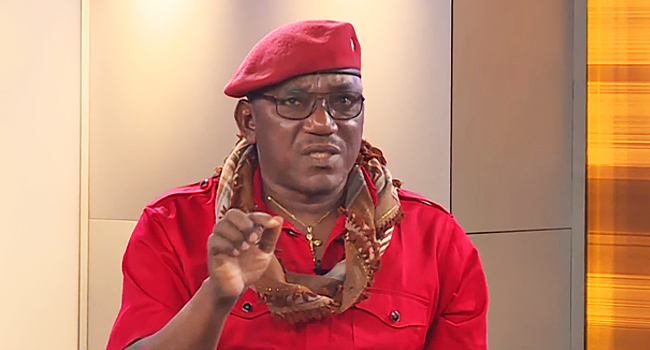
Former Minister of Youth and Sports Development, Solomon Dalung, has criticised the Presidency’s response to the controversy surrounding the alleged Presidential Foreign Intervention Promotion Council (PFIPC), saying it failed to answer critical questions about the council’s appearance in the 2026 national budget and its alleged interactions with government institutions, Prime Business Africa reports.
Reacting to the statement issued by the Presidency through Special Adviser to the President on Information and Strategy, Bayo Onanuga, Dalung argued that the government’s attempt to defend the Chief of Staff to the President, Femi Gbajabiamila, had instead intensified public scrutiny of the matter.
Join our WhatsApp ChannelREAD ALSO :
Presidency Details Probe Into Fake Presidential Council, Says Suspect Faces Trial July 27
According to the former minister, even if the allegations against Prince Adeniyi Adeyemi were assumed to be true, the Presidency still owed Nigerians an explanation of how a purportedly non-existent agency allegedly operated within official government structures.
Dalung questioned how a private individual could create a fictitious presidential agency, secure office space within the Federal Secretariat, recruit staff, engage with diplomats and government institutions, and, according to publicly available budget documents, have the agency included in the 2026 Appropriation Act with a multi-billion-naira allocation.
“If that is truly what happened, then this is no longer just the story of an alleged fraudster. It is also the story of a spectacular institutional failure,” he said.
He maintained that the Presidency’s statement failed to address what he described as the most fundamental issue the inclusion of the PFIPC in the national budget.
According to Dalung, budgetary allocations pass through multiple stages of executive review and legislative approval before receiving presidential assent, making it necessary for the government to explain how a body it now describes as fictitious found its way into the appropriation process.
He also questioned the reported use of office space within the Federal Secretariat, asking under whose authority the facility was allocated, how long it was occupied and which government officials interacted with those operating from the premises.
The former minister further drew attention to the Presidency’s reference to the late Dolapo Babatunde Tanimola, identified in the official statement as the link between Adeyemi and the disputed appointment.
Dalung noted that the Presidency disclosed Tanimola died in a hotel fire five days before Adeyemi’s arrest but provided no further details about investigations into the incident.
He questioned whether an autopsy or coroner’s inquest was conducted, whether investigators examined the deceased’s electronic devices, communications and financial records, and what conclusions were reached regarding the circumstances surrounding the fire.
READ MORE :
PFIPC Scandal: HURIWA Urges Tinubu to Suspend Gbajabiamila, Order EFCC Probe
Describing the issues as legitimate governance concerns rather than conspiracy theories, Dalung argued that while the courts would determine whether Adeyemi falsely presented himself as a government official, the Presidency must also account for the actions of government institutions that allegedly interacted with the disputed council.
He called on the government to explain how the PFIPC was included in the budget if it was not legally established, how official processes allegedly recognised the council if the appointment was forged, where institutional safeguards failed, and whether there was any insider involvement.
Dalung maintained that accountability should not end with prosecuting one individual but should also extend to explaining how government institutions allegedly validated, accommodated or failed to detect what the Presidency now describes as a complete fabrication.
He added that Nigerians deserve answers supported by official records, timelines and documentary evidence, insisting that the controversy remains unresolved until the outstanding questions are fully addressed.

Amanze Chinonye is a Staff Correspondent at Prime Business Africa, a rising star in the literary world, weaving captivating stories that transport readers to the vibrant landscapes of Nigeria and the rest of Africa. With a unique voice that blends with the newspaper's tradition and style, Chinonye's writing is a masterful exploration of the human condition, delving into themes of identity, culture, and social justice. Through her words, Chinonye paints vivid portraits of everyday African life, from the bustling markets of Nigeria's Lagos to the quiet villages of South Africa's countryside . With a keen eye for detail and a deep understanding of the complexities of Nigerian society, Chinonye's writing is both a testament to the country's rich cultural heritage and a powerful call to action for a brighter future. As a writer, Chinonye is a true storyteller, using her dexterity to educate, inspire, and uplift readers around the world.