 Amanze Chinonye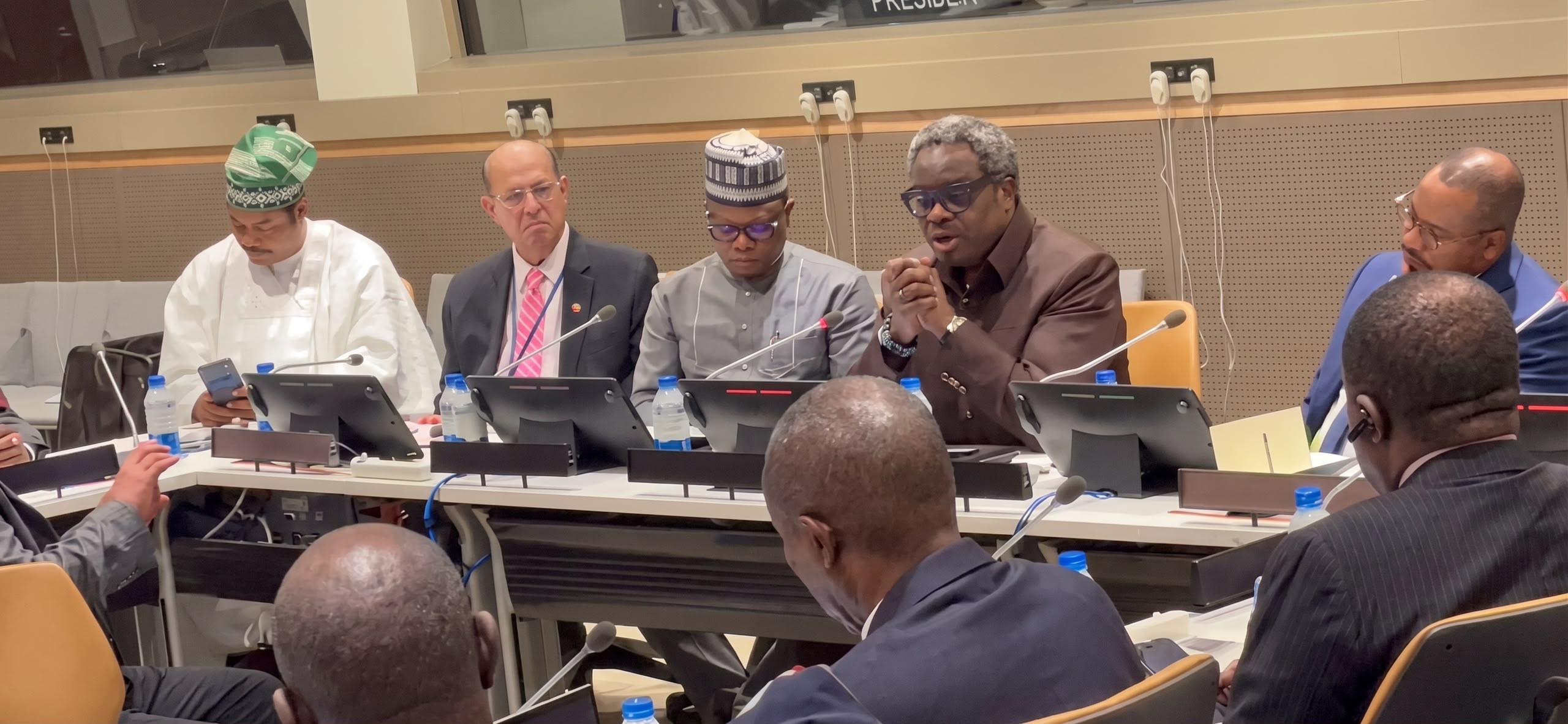
Africa needs a major increase in sustainable investment and climate finance to bridge its development funding gap and build infrastructure capable of withstanding economic and climate shocks, Sahara Power Enterprise Group Managing Director Kola Adesina said on Sunday, Prime Business Africa reports.
Speaking at a United Nations General Assembly roundtable on sustainable global investment, economic resilience and climate financing, Adesina called for stronger mobilisation of global and African capital, better-prepared projects and deeper local-currency markets to finance energy, infrastructure, industry and other productive sectors.
Join our WhatsApp Channel“Africa’s most pressing challenge is expanding its productive capacity at scale,” Adesina said, arguing that investment must translate into jobs, stronger competitiveness and greater economic resilience.
READ ALSO :
Sahara Group Seeks Greater Investment to Unlock Africa’s Energy Potential
The financing challenge is acute. About 600 million people in sub-Saharan Africa lack access to electricity, while African countries require substantially more climate finance to implement their commitments than current flows provide.
Adesina said the funding shortfall comes as African economies face growing exposure to droughts, floods, extreme heat and other climate-related risks. Africa accounts for less than 4% of global greenhouse-gas emissions, he said.
“Africa requires substantial investment not only to grow, but also to protect the infrastructure, businesses, food systems, and communities that underpin development,” he said.
He pointed to the scale of capital available globally, citing about $1.6 trillion in foreign direct investment in 2025 and $16.7 trillion in assets linked to sustainable investment strategies.
The challenge, Adesina said, is directing more of that capital towards bankable African projects. He called for stronger project preparation, greater mobilisation of African institutional investors and deeper local-currency financing markets to help unlock private capital.
He also urged greater regional cooperation in energy, transport and logistics, saying coordinated investment in these sectors could strengthen economic integration and expand productive capacity.
READ MORE :
Sahara Group Pushes ‘Beyond Energy’ Strategy, Expands Sustainability Drive Across Operations
Adesina cited Sahara’s investments in liquefied natural gas, liquefied petroleum gas, gas-to-power infrastructure and logistics as part of its contribution to Africa’s energy development. He said the company was targeting net-zero emissions by 2060 through gas infrastructure development, renewable energy integration and nature-based solutions.
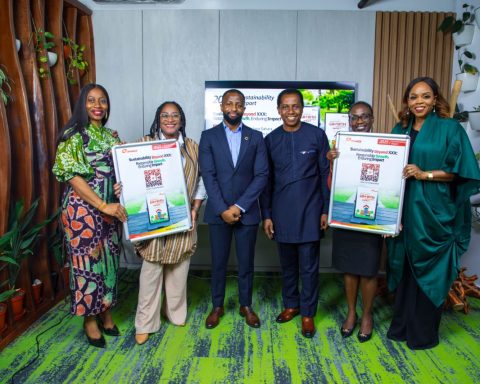
The discussion formed part of Sahara’s Beyond XXX platform, which focuses on investment, innovation, talent development, collaboration and environmental stewardship.
“Africa’s opportunity lies in building resilient prosperity, where investment translates into productive capacity, jobs, reliable infrastructure, and sustainable economic growth that endures for generations,” Adesina said.

Amanze Chinonye is a Staff Correspondent at Prime Business Africa, a rising star in the literary world, weaving captivating stories that transport readers to the vibrant landscapes of Nigeria and the rest of Africa. With a unique voice that blends with the newspaper's tradition and style, Chinonye's writing is a masterful exploration of the human condition, delving into themes of identity, culture, and social justice. Through her words, Chinonye paints vivid portraits of everyday African life, from the bustling markets of Nigeria's Lagos to the quiet villages of South Africa's countryside . With a keen eye for detail and a deep understanding of the complexities of Nigerian society, Chinonye's writing is both a testament to the country's rich cultural heritage and a powerful call to action for a brighter future. As a writer, Chinonye is a true storyteller, using her dexterity to educate, inspire, and uplift readers around the world.