 Prosper Okoye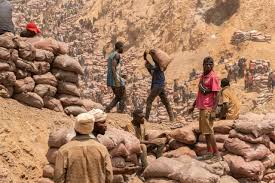
An unknown number of miners are feared to have died after being exposed to a suspected toxic gas at a mining site in Company Zurak, in Wase local government area of Nigeria’s Plateau State.
Local youth leader Shafi Sambo said he was alerted to the incident early on Tuesday morning. He said miners working underground were overcome after digging deep into the site. “We were told they went too deep and hit a gas pocket. Many of them died on the spot,” he said.
He claimed that as many as 37 people may have been killed, though this figure has not been officially confirmed. Several others were said to have been rescued and taken to nearby hospitals, but authorities have yet to release details of how many survived.
Join our WhatsApp ChannelSambo said the miners were extracting zinc for what he described as a Chinese-owned mining company operating in the area, although this has not been independently verified.
Soldiers from the Nigerian army were later deployed to the site and sealed off the area to prevent further access and possible exposure to the gas. “The soldiers have cordoned off the place to stop people from entering and to control the situation,” Sambo said.
The Plateau State government has not yet commented on the incident. Calls to the state commissioner for environment and the local council chairman were not returned.
READ ALSO:
Nigeria Defence Minister Warns Gumi Against Supporting Terrorists
Chinese Embassy Denies U.S. Allegations of Illegal Mining, Terror Funding in Nigeria
The incident has renewed concerns over safety standards at mining sites in rural parts of Nigeria, where both informal and company-backed operations are common and regulation is often weak.
Local residents are calling on state and federal authorities to investigate what happened and to ensure that mining companies operating in the area follow safety and environmental rules.

Prosper Okoye is a Correspondent and Research Writer at Prime Business Africa, a Nigerian journalist with experience in development reporting, public affairs, and policy-focused storytelling across Africa
- Prosper Okoye
- Prosper Okoye
- Prosper Okoye
- Prosper Okoye
- Prosper Okoye
- Prosper Okoye
- Prosper Okoye
- Prosper Okoye
- Prosper Okoye
- Prosper Okoye
- Prosper Okoye
- Prosper Okoye
- Prosper Okoye
- Prosper Okoye
- Prosper Okoye
- Prosper Okoye
- Prosper Okoye
- Prosper Okoye
- Prosper Okoye
- Prosper Okoye
- Prosper Okoye
- Prosper Okoye
- Prosper Okoye
- Prosper Okoye
- Prosper Okoye
- Prosper Okoye
- Prosper Okoye
- Prosper Okoye
- Prosper Okoye
- Prosper Okoye
- Prosper Okoye
- Prosper Okoye
- Prosper Okoye
- Prosper Okoye
- Prosper Okoye
- Prosper Okoye
- Prosper Okoye
- Prosper Okoye
- Prosper Okoye
- Prosper Okoye
- Prosper Okoye
- Prosper Okoye
- Prosper Okoye
- Prosper Okoye
- Prosper Okoye
- Prosper Okoye
- Prosper Okoye
- Prosper Okoye
- Prosper Okoye
- Prosper Okoye
- Prosper Okoye
- Prosper Okoye
- Prosper Okoye
- Prosper Okoye
- Prosper Okoye
- Prosper Okoye
- Prosper Okoye



![Electricity Debt: Abuja DisCo Gives Final Disconnection Notice To 25 Govt Agencies [Full List]](https://www.primebusiness.africa/wp-content/uploads/2024/06/Abuja-Electricity-pole.jpg)