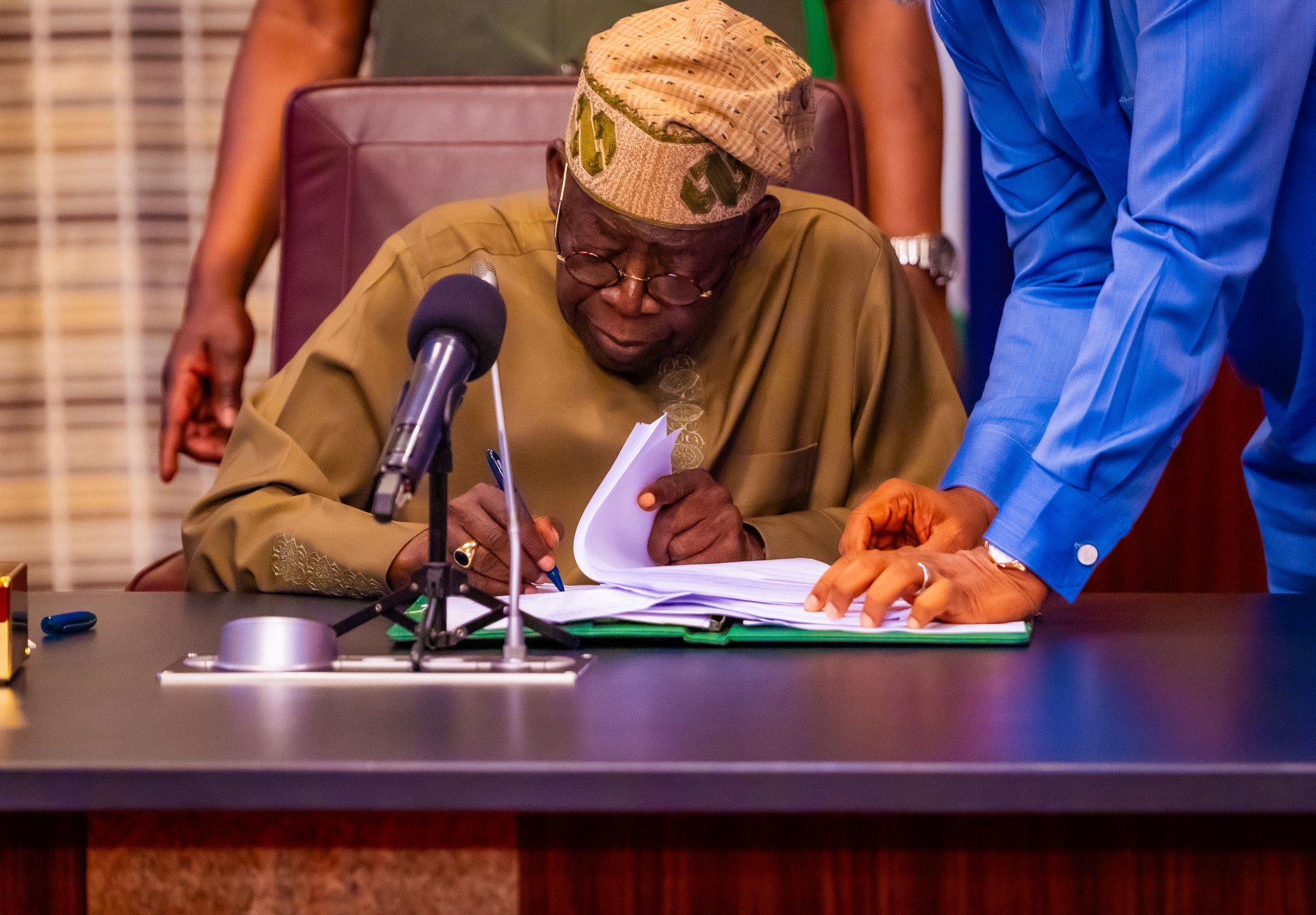
Nigerians are bracing for potential economic and social strains after President Bola Tinubu signed an executive order directing that all oil and gas revenues — including royalty, tax, and profit oil — be paid directly into the Federation Account for distribution to federal, state, and local governments.
The reform, designed to increase transparency and strengthen public finances, could see additional revenue allocations of about N14.57 trillion, based on projected remittances from oil and gas operators in 2025. These include N906.91 billion from management fees and frontier exploration funds collected by the Nigerian National Petroleum Company (NNPC), N7.55 trillion in royalties, and N611.42 billion from gas flaring penalties administered by the Nigerian Upstream Petroleum Regulatory Commission (NUPRC). The Nigeria Revenue Service will also lose authority to collect Petroleum Profits Tax and Hydrocarbon Tax, which generated N4.905 trillion in 2025.
While these measures are aimed at safeguarding revenue for the nation and improving remittances to the Federation Account, experts warn that the policy carries potential risks that could affect everyday Nigerians.
Join our WhatsApp ChannelOne concern is the possible slowdown in infrastructure and service delivery. Operational adjustments required by NNPC, NUPRC, and other agencies could delay actual remittances, meaning funding for schools, hospitals, roads, and local projects might take longer to reach communities.
Higher fuel and energy costs could also result. The Frontier Exploration Fund, previously managed by NNPC, finances high-risk exploration in underdeveloped basins such as the Chad, Sokoto, Bida, Benue, and Dahomey basins. Reductions in these funds may slow production growth, lower domestic fuel supply, and increase the cost of goods and transport nationwide.
Job opportunities could be affected as well. Thousands of Nigerians work in exploration, midstream, and downstream projects. Any disruption in project funding or investor confidence could delay implementation, while ancillary industries like logistics, construction, and services may also see reduced income opportunities.
Inflationary pressures are another concern. Delays or instability in oil and gas production, combined with uncertain government spending, could affect the economy’s liquidity, widening price volatility for essentials and straining household budgets.
Political tensions may also rise. Conflicts between federal and state governments over revenue flows could slow governance and delay public programmes, leaving communities that rely heavily on state or local allocations at a disadvantage.
Finally, Nigeria’s long-term energy security could be at risk. Slower frontier exploration may limit the growth of future oil and gas reserves, increasing dependence on imports and potentially raising energy costs for households.
President Tinubu has defended the reform, arguing that excessive deductions, overlapping funds, and structural distortions have weakened remittances to the Federation Account for too long. “When revenues meant for federal, state, and local governments are trapped in layers of charges and retention mechanisms, development suffers. That must end,” he said.
READ ALSO:
Tinubu Signs Executive Order Redirecting Oil, Gas Revenues to Federation Account
Tinubu Assents to Reworked Electoral Act, Defends Manual Safeguards Ahead of 2027 Polls
The President added that NNPC will now operate strictly as a commercial entity, and that the government will review the Petroleum Industry Act to address structural anomalies. An implementation committee has also been approved to ensure coordinated execution of the order.
Experts have reacted cautiously. Professor Wumi Iledare of the Oil, Gas, and Energy Policy Forum described the EO as a “significant fiscal intervention” but stressed the need for legal clarity and a sequenced rollout to maintain investor confidence and contractual stability. Meanwhile, the Capital Market Academics of Nigeria praised the move as a “bold and historic” step towards equitable revenue distribution.
While the EO is intended to strengthen fiscal discipline and transparency, ordinary Nigerians may experience what analysts call “socioeconomic fallout” — from slower services and higher costs to job uncertainty and inflation — at least in the short to medium term. The ultimate impact will depend on how efficiently the reforms are implemented and how quickly revenues are converted into tangible development outcomes.

Prosper Okoye is a Correspondent and Research Writer at Prime Business Africa, a Nigerian journalist with experience in development reporting, public affairs, and policy-focused storytelling across Africa