 Amanze Chinonye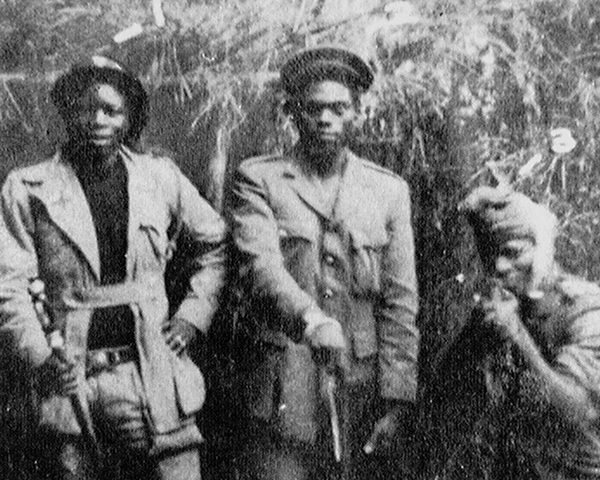
Deep in the forests surrounding Mount Kenya and the Aberdare Range, a guerrilla movement emerged in the 1950s that became one of the most significant anti-colonial conflicts in Africa’s history.
Known globally as the Mau Mau, and referred to by many of its members as the Kenya Land and Freedom Army (KLFA), the movement launched an armed campaign against British colonial rule in Kenya, driven largely by grievances over land ownership, political exclusion and the question of who would control the country’s future after colonial withdrawal.
Join our WhatsApp ChannelREAD ALSO :
Although the rebellion was eventually defeated by British-led security forces, historians widely regard it as a turning point in Kenya’s journey towards independence. The conflict exposed the deep social and political tensions created by colonial rule and contributed to reforms that ultimately paved the way for Kenya’s independence in 1963.
The Rise of Armed Resistance
The roots of the uprising stretched back decades, particularly to disputes over land in Kenya’s fertile central highlands. Under British colonial rule, large areas of land traditionally occupied by African communities were transferred to European settlers, leaving many families, especially among the Kikuyu community, displaced or restricted to smaller areas.
Beyond land dispossession, Africans faced limited political representation, economic inequalities and restrictions that reinforced colonial control. After the Second World War, growing demands for greater political participation and self-rule intensified, but colonial authorities maintained their dominance over Kenya’s political and economic systems.
By the early 1950s, these grievances had developed into organised resistance. In October 1952, Britain declared a State of Emergency in Kenya following escalating attacks attributed to Mau Mau fighters, including the killing of a loyal Kikuyu chief.
At the beginning of the conflict, colonial authorities struggled to contain the uprising. Kenya’s police force was limited and lacked experience operating in rural areas, while Britain’s military presence initially consisted of only three battalions of the King’s African Rifles.
The security response expanded after Lieutenant-General Sir George Erskine was appointed Commander-in-Chief of all security forces in Kenya in 1953. Additional military units were deployed, intelligence operations were strengthened and the campaign evolved into one of Britain’s largest post-war counterinsurgency operations.
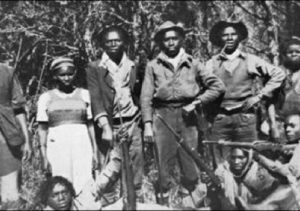
The Mau Mau fighters, however, were poorly equipped compared with British forces. Although their numbers may have reached about 25,000, many relied on homemade weapons, including improvised firearms, swords, spears and bows and arrows. Despite these limitations, they sustained a prolonged guerrilla campaign from forest bases around Mount Kenya and the Aberdare Range.
The movement drew its strongest support from the Kikuyu, Kenya’s largest ethnic group, while also attracting members from the Embu and Meru communities. Fighters targeted colonial officials, European settlers and Africans accused of collaborating with British authorities.
One of the most recognised figures associated with the rebellion was Dedan Kimathi, who emerged as a leading military commander of the Kenya Land and Freedom Army. Operating from forest strongholds, Kimathi became a symbol of resistance and remains one of Kenya’s most prominent figures in the struggle against colonial rule.
The Cost of the Emergency
The British response was extensive and controversial. Security forces carried out military operations, intelligence campaigns, mass arrests and forced relocations aimed at isolating Mau Mau fighters from civilian support networks.
A major turning point came in April 1954 with Operation Anvil, a large-scale security operation in Nairobi that targeted suspected Mau Mau networks. More than 16,000 people were arrested, and the intelligence gathered helped British forces intensify operations against fighters in rural areas.
The colonial administration also created the Kikuyu Home Guard, a locally recruited force that eventually numbered about 25,000 men. While some joined after receiving government protection and promises of reform, others were pressured into supporting the authorities. The Home Guard played a significant role in intelligence gathering and military operations, but some members were also accused of using violence against civilians.
The Kenya Emergency became one of the most contested chapters of Britain’s colonial history because of the violence committed by both sides. Mau Mau fighters killed European settlers, colonial officials and Africans accused of collaboration. Historical records show that 32 European civilians were killed by Mau Mau fighters, while more than 1,800 Africans also lost their lives during the uprising.
The British counterinsurgency campaign resulted in widespread suffering. Thousands of suspected Mau Mau supporters were detained in camps where conditions were often harsh, with documented cases of torture, forced labour, mistreatment and unlawful killings.
The Hola detention camp tragedy in 1959, where 11 detainees died after being assaulted by prison warders, became one of the most notorious examples of abuses during the Emergency.
The capture of Dedan Kimathi in October 1956 dealt a major blow to the rebellion. He was later tried and executed by the colonial government in February 1957. Although organised resistance declined after his capture, smaller groups continued operating until the State of Emergency was lifted in 1960.
By the end of the conflict, the human cost was significant. The National Army Museum estimates that more than 10,000 Mau Mau fighters died during the Emergency, while nearly 2,000 civilians and about 600 security personnel were killed.
Historical Legacy
Despite its military defeat, the Mau Mau rebellion transformed Kenya’s political landscape. The scale of the uprising increased pressure on Britain to reconsider colonial governance and strengthened the movement for African self-determination.
Kenya achieved independence on December 12, 1963, ending British colonial rule. Jomo Kenyatta, who had been arrested during the Emergency over alleged Mau Mau links despite being regarded by many as a moderate nationalist, became the country’s first Prime Minister and later its first President.
For decades after independence, the Mau Mau remained a complex and sensitive subject in Kenya. Former fighters sought recognition for their role in the liberation struggle, while historians continued to examine the movement’s ideology, methods and impact.
The legacy of the rebellion returned to global attention in 2013 when the British government reached a settlement with more than 5,000 Kenyan claimants who alleged they suffered torture and mistreatment during the Emergency. Britain expressed regret for the abuses suffered and agreed to compensation.
The Mau Mau rebellion remains one of Kenya’s defining historical events and one of Africa’s most significant anti-colonial struggles.

Amanze Chinonye is a Staff Correspondent at Prime Business Africa, a rising star in the literary world, weaving captivating stories that transport readers to the vibrant landscapes of Nigeria and the rest of Africa. With a unique voice that blends with the newspaper's tradition and style, Chinonye's writing is a masterful exploration of the human condition, delving into themes of identity, culture, and social justice. Through her words, Chinonye paints vivid portraits of everyday African life, from the bustling markets of Nigeria's Lagos to the quiet villages of South Africa's countryside . With a keen eye for detail and a deep understanding of the complexities of Nigerian society, Chinonye's writing is both a testament to the country's rich cultural heritage and a powerful call to action for a brighter future. As a writer, Chinonye is a true storyteller, using her dexterity to educate, inspire, and uplift readers around the world.