 Amanze Chinonye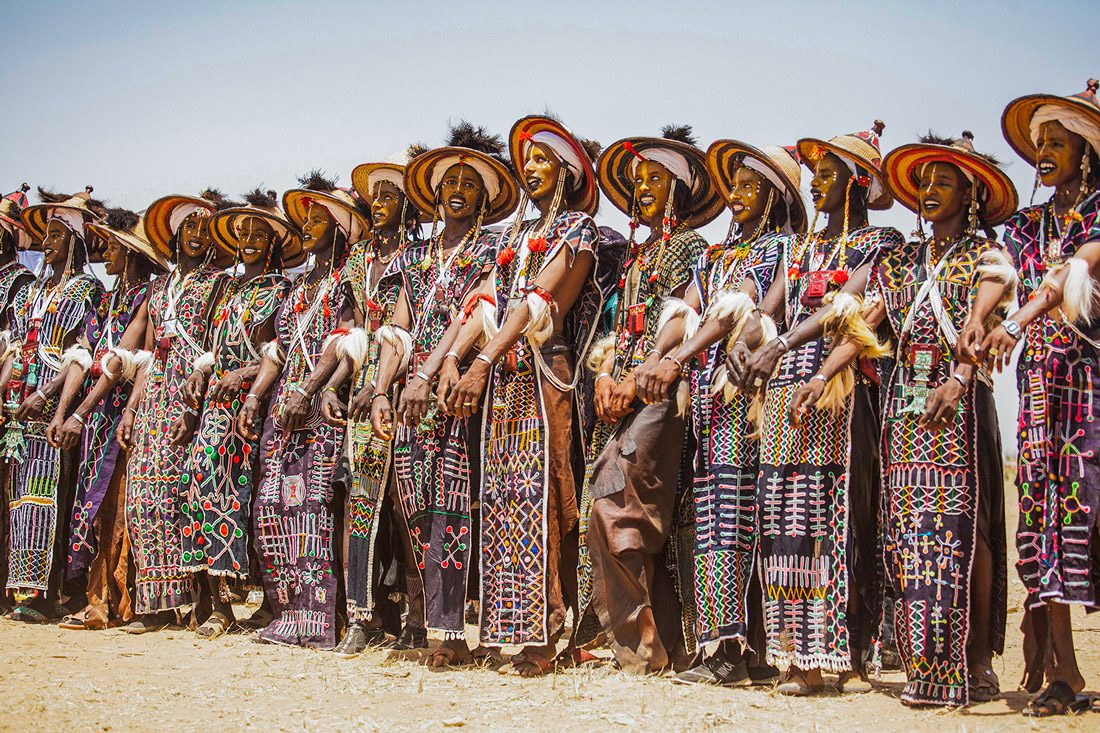
At the end of Niger’s rainy season, Wodaabe pastoralists gather around In Gall in the Agadez region for the Cure Salée, an annual meeting associated with the seasonal movement of nomadic communities.
For the Wodaabe, the gathering also provides the setting for Gerewol, a cultural ceremony centred on music, dance, male beauty and courtship.
Join our WhatsApp ChannelREAD ALSO :
Ka’el Festival: The Ethiopian Tradition Requiring Men to Gain Weight for Community Prestige
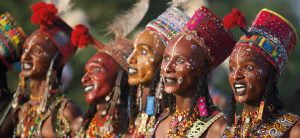
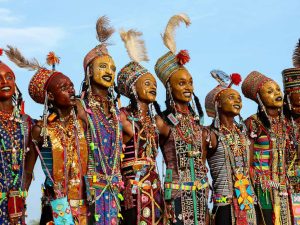
Young men dress in elaborate clothing, decorate their faces and wear beads, feathers and other ornaments before taking part in the Yaake, a traditional dance performed in a line. They sing, move rhythmically and use distinctive facial expressions as women observe the performers.
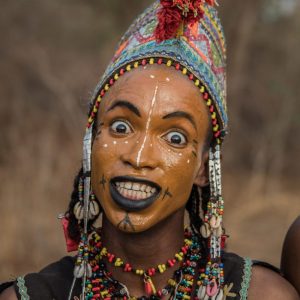
The ceremony has attracted international attention for its unusual reversal of conventional beauty-contest roles: the men are the principal subjects of display, while women assess their appearance and performance.
But Gerewol is rooted in a much wider social tradition. It is connected to the seasonal gathering of Wodaabe communities, their pastoral way of life and customs surrounding courtship and marriage.
Beauty and Courtship
The preparation for Gerewol is deliberate.
Wodaabe men use cosmetics and facial decoration and dress in traditional garments and ornaments for the performance. Their appearance is designed to reflect established Wodaabe standards of male beauty, with particular emphasis on features such as bright eyes and white teeth.
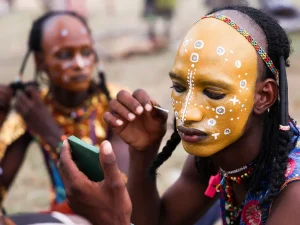
During the Yaake, dancers widen or roll their eyes and display their teeth while maintaining the movements and expressions required by the performance. The dance combines singing, rhythmic movement and physical presentation.
Historical accounts identify young women as participants in judging the male performers.
The emphasis on female assessment is an important part of the ceremony’s courtship function. The men present themselves through appearance and performance, while women observe the qualities displayed by the participants.
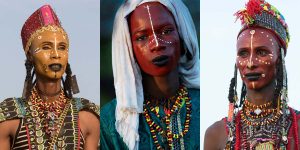
Gerewol should therefore not be reduced simply to a beauty contest. The ceremony brings together appearance, performance and courtship within a recognised cultural setting.
The Yaake itself can continue for extended periods, with dancers maintaining their movements and songs under the heat of the Sahel. Historical documentation of the ceremony describes the dance as a demanding performance requiring sustained movement and concentration.
A Seasonal Gathering
The setting for Gerewol is equally important.
In Gall, it is traditionally associated with the Cure Salée, or “salt cure”, a seasonal gathering of pastoral communities at the end of the rainy season.
The gathering is linked to the movement of Tuareg and Wodaabe pastoralists and their livestock towards areas containing seasonal pasture and salt-rich water and ground. The salt is important to pastoralists and their animals after the dry season.
The Cure Salée is consequently both a pastoral and social event.
For communities whose livelihoods depend on livestock and seasonal movement, the gathering creates an opportunity for people who may have spent months dispersed across the Sahel to meet again.
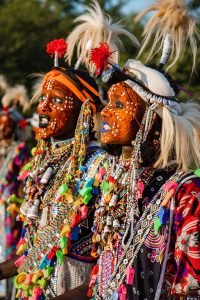
The International Work Group for Indigenous Affairs, in a report on Niger, describes the annual movement towards the In Gall plains after the rainy season as part of the Cure Salée and notes that the associated week of festivities includes traditional songs and dances, camel races and beauty contests.
Gerewol forms part of this broader cultural landscape.
The ceremony’s timing is closely linked to the pastoral calendar, while its social functions extend into courtship, relationships between communities and the transmission of cultural practices.
Tradition Beyond the Spectacle
The distinctive appearance of Gerewol has made it a popular subject for photographers and documentary makers.
Images from In Gall show young Wodaabe men in elaborate make-up, feathers and other adornments performing during the Cure Salée. Documentation of a 2014 gathering records the dancers emphasising the eyes and teeth regarded as important elements of the Wodaabe male beauty ideal.
The ceremony, however, predates its international exposure by decades.
Historical records preserved by the Smithsonian document Wodaabe cultural activities in Niger from the early 1970s, including Gerewol-related material. The archive describes the ceremony as an established ritual rather than a contemporary attraction created for visitors.
Its visibility outside Niger has nevertheless shaped how many outsiders encounter the Wodaabe.
Gerewol is connected to the Wodaabe pastoral cycle and to gatherings at which different groups meet after periods of seasonal movement.
It also provides a setting in which cultural knowledge is expressed through dress, music, dance and courtship.
The distinction matters because the festival is not an isolated performance staged for an external audience. It is part of a cultural calendar associated with the Wodaabe way of life.
READ MORE :
Where Music, Fashion, Heritage Converged: Inside Uganda’s First One Festival
A Living Wodaabe Tradition
The continued practice of Gerewol reflects the enduring importance of cultural gatherings among the Wodaabe.
Their traditional pastoral system requires seasonal movement in response to the availability of pasture and water. That mobility also means that social gatherings can play an important role in maintaining connections between people who spend much of the year apart.
Gerewol brings together several aspects of Wodaabe cultural life in one setting: male beauty, music, dance, courtship and community interaction.
The festival is also part of a wider Sahelian pastoral tradition facing a changing environment. Access to grazing areas and water, patterns of mobility and wider social and economic changes continue to shape the lives of pastoral communities across the region.
Against that background, cultural gatherings remain significant because they provide occasions for traditions to be performed and shared across generations.
For outsiders, Gerewol is often described as a male beauty competition because of its striking presentation and the role of women in assessing the dancers.
Within its cultural context, however, the ceremony represents more than appearance.
It is a Wodaabe tradition connected to courtship and social interaction, held within a seasonal gathering that brings pastoral communities together at the end of the rains.
As the Cure Salée ends and pastoralists resume their seasonal movements, the significance of Gerewol extends beyond the performances themselves. The ceremony remains a visible expression of Wodaabe cultural practices and a meeting point for traditions that have developed within the pastoral communities of Niger’s Sahel.

Amanze Chinonye is a Staff Correspondent at Prime Business Africa, a rising star in the literary world, weaving captivating stories that transport readers to the vibrant landscapes of Nigeria and the rest of Africa. With a unique voice that blends with the newspaper's tradition and style, Chinonye's writing is a masterful exploration of the human condition, delving into themes of identity, culture, and social justice. Through her words, Chinonye paints vivid portraits of everyday African life, from the bustling markets of Nigeria's Lagos to the quiet villages of South Africa's countryside . With a keen eye for detail and a deep understanding of the complexities of Nigerian society, Chinonye's writing is both a testament to the country's rich cultural heritage and a powerful call to action for a brighter future. As a writer, Chinonye is a true storyteller, using her dexterity to educate, inspire, and uplift readers around the world.