Amanze Chinonye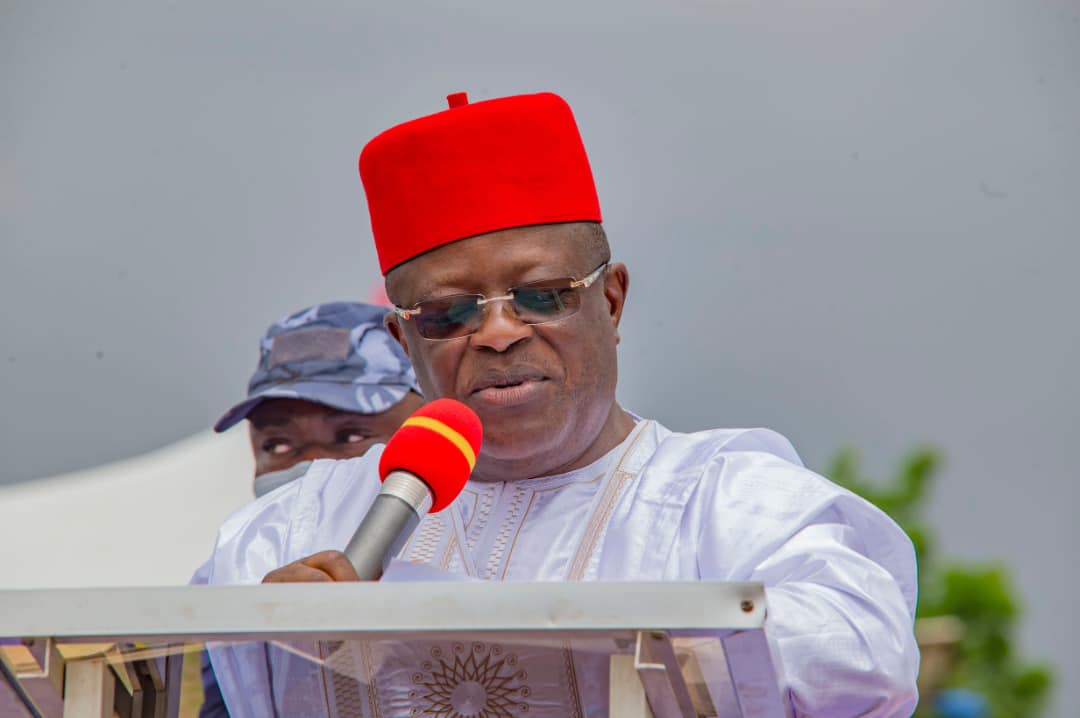
Minister of Works David Umahi has announced that the Lagos-Calabar Coastal Highway has been officially named after President Bola Tinubu in recognition of what he described as the President’s long-standing vision for the landmark infrastructure project, Prime Business Africa reports.
Umahi made the announcement during a media briefing in Abuja on Thursday, where he also disclosed that Tinubu had approved a 400-kilometre extension of the Fourth Legacy Highway, expanding the strategic road corridor from about 700 kilometres to approximately 1,100 kilometres.
Join our WhatsApp ChannelREAD ALSO :
Rowdy Scene in House of Reps as Bid to Summon Tinubu Over Constituency Projects Fails
According to the minister, the decision to name the coastal highway after Tinubu was taken by the Ministry of Works in consultation with the Permanent Secretary, the Minister of State, directors and other officials of the ministry.
“That highway is named the President Bola Ahmed Tinubu Coastal Highway. By the powers conferred on me as Minister of Works, in consultation with my Permanent Secretary, the Minister of State, directors and staff of the ministry, we decided to name it after him because of his dream for it,” Umahi said.
He recalled that Tinubu conceived the coastal highway project about 27 years ago while serving as Governor of Lagos State, noting that the President had now turned that vision into reality.
Umahi described the first section of the 750-kilometre highway, stretching from Victoria Island to Lekki, as a benchmark for modern infrastructure delivery. He said the 47.47-kilometre, six-lane carriageway features a 25-metre-wide median reserved for a future railway line.
The minister also announced that the President had approved an additional 400 kilometres for the Fourth Legacy Highway, extending the Akwanga-Jos-Bauchi-Gombe-Biu-Maiduguri corridor into Taraba State. The extension increases the project’s total length to about 1,100 kilometres and is expected to strengthen connectivity between the North-Central and North-East geopolitical zones while opening up new economic opportunities.
According to Umahi, the extended route will pass through several historic communities, including the hometowns of former Head of State Yakubu Gowon, former Plateau State Governor Solomon Lar and the National Chairman of the All Progressives Congress, before terminating in Taraba State.
Tinubu also approved the reconstruction of the 135-kilometre Lagos-Ibadan Expressway with reinforced concrete pavement after sections of the highway deteriorated less than five years after rehabilitation.
Umahi said the government opted for reinforced concrete because repeated repairs on the existing asphalt pavement had failed to provide a lasting solution. He added that the new pavement is expected to last between 50 and 100 years with minimal maintenance.
READ MORE :
Tinubu Approves Design, Procurement of Two Major South-East Road Projects – Soludo
The President further approved the completion of the abandoned Ibi Bridge project in Taraba State. The bridge, awarded in 2018, stalled after reaching about 40 per cent completion. He also authorised the design, procurement and construction of the 5.76-kilometre Lau Bridge across the Benue River to improve connectivity within the state.
In addition, the Federal Government approved the dualisation of another 400 kilometres of the East-West Road corridor from Lokoja to Benin to improve road safety, facilitate the movement of people and goods, and boost economic activities along the route.
The approvals form part of the Tinubu administration’s Renewed Hope Legacy Projects, a flagship infrastructure programme aimed at modernising Nigeria’s road network, improving interstate connectivity, stimulating trade and supporting long-term economic growth through strategic investments in critical transport infrastructure.

Amanze Chinonye is a Staff Correspondent at Prime Business Africa, a rising star in the literary world, weaving captivating stories that transport readers to the vibrant landscapes of Nigeria and the rest of Africa. With a unique voice that blends with the newspaper's tradition and style, Chinonye's writing is a masterful exploration of the human condition, delving into themes of identity, culture, and social justice. Through her words, Chinonye paints vivid portraits of everyday African life, from the bustling markets of Nigeria's Lagos to the quiet villages of South Africa's countryside . With a keen eye for detail and a deep understanding of the complexities of Nigerian society, Chinonye's writing is both a testament to the country's rich cultural heritage and a powerful call to action for a brighter future. As a writer, Chinonye is a true storyteller, using her dexterity to educate, inspire, and uplift readers around the world.