 Amanze Chinonye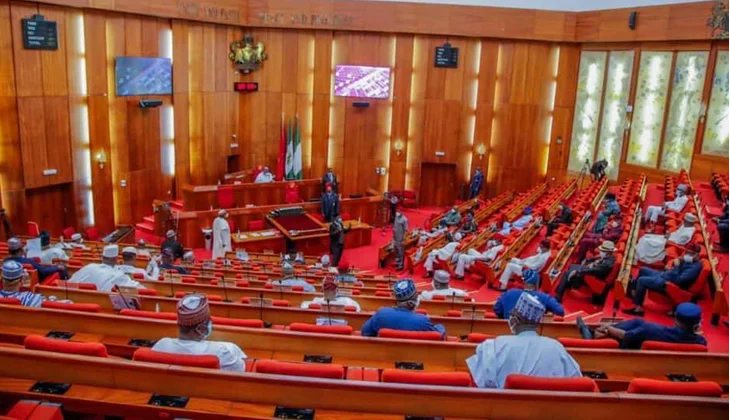
The Senate is expected to address the controversy surrounding the ₦1.3 billion allocation to the controversial Presidential Foreign Intervention Promotion Council (PFIPC) in the 2026 Appropriation Act as lawmakers resume plenary on Tuesday, with the scandal raising fresh concerns over the integrity of Nigeria’s budget process and internal controls within the federal bureaucracy.
The development follows revelations that an alleged forged appointment letter bearing the falsified signature of the Chief of Staff to the President, Femi Gbajabiamila, was reportedly accepted by officials at the Federal Civil Service Headquarters without proper verification, allowing the purported council to gain official recognition and eventually secure a budgetary allocation.
READ ALSO :
Join our WhatsApp ChannelAnatomy of the PFIPC Controversy: The Questions Fueling Nigeria’s Growing Accountability Debate
Investigations indicate that the forged document was allegedly used by Prince Adeniyi Adeyemi Mathew to obtain office space at the Federal Secretariat Complex in Abuja and present the PFIPC as a legitimate government body, despite the Presidency insisting that no such council was ever created.
The controversy deepened after the approved 2026 Appropriation Act listed the Presidential Economic Advisory Council (PEAC)/Presidential Foreign Intervention Promotion Council with a total allocation of about ₦1.303 billion for personnel, overhead and capital expenditure, prompting questions over how a body later declared non-existent by the Presidency found its way into the national budget.
The Office of the Chief of Staff had earlier disowned the PFIPC, describing it as a fictitious organisation, and cautioned ministries, departments and agencies, foreign missions, development partners and the public against dealing with individuals claiming to represent the council.
The Federal Government subsequently arraigned Adeyemi before the Federal High Court in Abuja on charges bordering on forgery, impersonation and related offences. Prosecutors allege that he forged official documents and falsely held himself out as the head of the non-existent council.
The budget allocation has also drawn the attention of the Socio-Economic Rights and Accountability Project (SERAP), which has asked Senate President Godswill Akpabio and Speaker of the House of Representatives Tajudeen Abbas to disclose certified copies of all documents relating to the approval of the ₦1.3 billion allocation and identify those responsible for its inclusion in the 2026 budget.
READ MORE :
SERAP Demands Explanation Over ₦1.3bn Allocation to ‘Fictitious’ Presidential Council
According to reports, preliminary findings suggest the purported council neither independently defended its budget proposal before the relevant National Assembly committees nor underwent the level of scrutiny typically required of government agencies, further fuelling concerns over possible institutional lapses in the appropriation process.
The Senate is expected to examine how the allocation was approved, whether it originated from the Executive’s budget proposal or was introduced during legislative consideration, and whether existing verification mechanisms within the Budget Office, the Civil Service and the National Assembly were circumvented.
The controversy has amplified calls for stronger safeguards in Nigeria’s public finance management system, with governance experts warning that the inclusion of a body disowned by the Presidency in the national budget exposes significant weaknesses in administrative verification, legislative oversight and budget integrity.
With public confidence in the appropriation process at stake, the Senate’s deliberations are expected to determine not only how the controversial allocation was made but also whether officials involved in the processing and approval of the budget item should be held accountable.
The criminal case against Adeyemi remains pending before the Federal High Court in Abuja as investigations into the circumstances surrounding the alleged fraud continue.

Amanze Chinonye is a Staff Correspondent at Prime Business Africa, a rising star in the literary world, weaving captivating stories that transport readers to the vibrant landscapes of Nigeria and the rest of Africa. With a unique voice that blends with the newspaper's tradition and style, Chinonye's writing is a masterful exploration of the human condition, delving into themes of identity, culture, and social justice. Through her words, Chinonye paints vivid portraits of everyday African life, from the bustling markets of Nigeria's Lagos to the quiet villages of South Africa's countryside . With a keen eye for detail and a deep understanding of the complexities of Nigerian society, Chinonye's writing is both a testament to the country's rich cultural heritage and a powerful call to action for a brighter future. As a writer, Chinonye is a true storyteller, using her dexterity to educate, inspire, and uplift readers around the world.