 Amanze Chinonye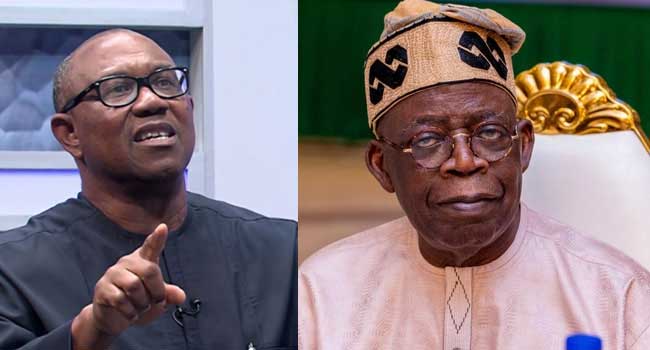
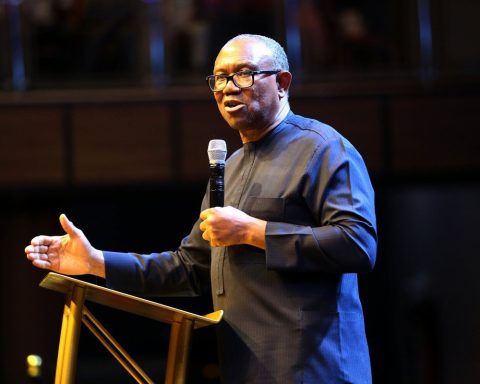
NDC presidential candidate for the 2027 election, Peter Gregory Obi, on Monday invoked President Tinubu’s past calls for the resignation of former President Goodluck Ebele Jonathan as he renewed his demand that Tinubu step down over what he described as worsening insecurity and economic hardship in the country, Prime Business Africa reports.
In a statement issued on Monday, Obi referenced the planned resignation of the British prime minister, Keir Starmer arguing that political leaders should take responsibility when they fail to deliver on campaign promises or improve citizens’ welfare.
Join our WhatsApp ChannelREAD ALSO :
Keir Starmer Resigns as UK Prime Minister Amid Mounting Labour Party Pressure
The former Anambra State governor recalled that prior to the 2015 elections, Tinubu had called for Jonathan’s resignation over insecurity and economic challenges, particularly in the wake of the abduction of schoolgirls in Chibok, Borno State.
Obi argued that the same standard should apply to the current administration, which he accused of presiding over worsening insecurity, unreliable electricity supply, and deepening economic hardship, as well as setbacks in key sectors of the economy.
“I therefore join Nigerians of goodwill in calling for the resignation of the President Bola Tinubu over monumental failure in governance,” Obi said.
The Presidency, however, swiftly rejected the call, describing it as “childish and hollow.”
In a counterstatement also issued on Monday, presidential spokesman Bayo Onanuga said Obi’s comparison between Nigeria and the United Kingdom was misplaced, noting that Nigeria operates a presidential system with fixed tenures, unlike Britain’s parliamentary model.
Onanuga further argued that recent electoral victories recorded by the ruling party in Ekiti State, as well as senatorial by-elections in Nasarawa, Enugu, Ondo and Rivers states, reflected continued public support for President Tinubu and his administration.
Defending the government’s performance, the Presidency cited progress in security operations, including the rescue of kidnapped victims, the neutralisation of terrorist leaders, and expanded deployment of technology in counterinsurgency efforts.
It also highlighted economic indicators such as steady GDP growth, increased foreign reserves, rising oil production, improved government revenue, and gains in the stock market as evidence that ongoing reforms were yielding results.
On infrastructure, the Presidency pointed to projects including the Lagos–Calabar and Sokoto–Badagry superhighways, alongside reforms in the power sector, the student loan scheme, and the expansion of compressed natural gas initiatives.
Responding to Obi’s criticism of electricity supply, Onanuga maintained that Tinubu never promised immediate nationwide 24-hour power supply, but instead pledged reforms aimed at improving generation, transmission, and distribution.
READ MORE :
Tinubu Marks Third Anniversary With Commissioning of Energy, Health Projects Nationwide
While acknowledging the high cost of living, the Presidency attributed parts of the economic pressure to global developments, including geopolitical tensions in the Middle East and disruptions to international supply chains.
The Presidency further accused Obi of engaging in political grandstanding and attempting to distract from ongoing reforms, insisting that Tinubu remained focused on strengthening the economy and improving national security.
The exchange marks one of the sharpest confrontations yet between the Tinubu administration and Obi, a leading opposition figure, as political activities ahead of the 2027 general elections continue to gather momentum.

Amanze Chinonye is a Staff Correspondent at Prime Business Africa, a rising star in the literary world, weaving captivating stories that transport readers to the vibrant landscapes of Nigeria and the rest of Africa. With a unique voice that blends with the newspaper's tradition and style, Chinonye's writing is a masterful exploration of the human condition, delving into themes of identity, culture, and social justice. Through her words, Chinonye paints vivid portraits of everyday African life, from the bustling markets of Nigeria's Lagos to the quiet villages of South Africa's countryside . With a keen eye for detail and a deep understanding of the complexities of Nigerian society, Chinonye's writing is both a testament to the country's rich cultural heritage and a powerful call to action for a brighter future. As a writer, Chinonye is a true storyteller, using her dexterity to educate, inspire, and uplift readers around the world.