 Prosper Okoye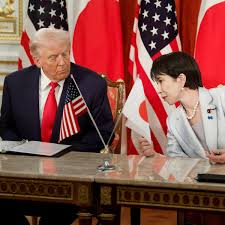
The United States has announced the first wave of Japanese investments under a $550bn trade agreement that saw Washington cut tariffs on imports from Tokyo.
US President Donald Trump said on Tuesday that Japan had committed $36bn to three major infrastructure projects in the US, marking the first drawdown from the much larger investment pledge agreed in 2025.
Writing on his Truth Social platform, Trump said Japan was now “officially, and financially, moving forward” with its commitment, adding that the projects were made possible by the tariff deal between the two countries.
Join our WhatsApp ChannelThe announcement comes ahead of a planned visit to the White House by Japan’s Prime Minister, Sanae Takaichi, following Trump’s trip to Japan last October.
Ms Takaichi said the projects would strengthen the Japan–US alliance by helping both countries build more secure supply chains in areas such as critical minerals, energy and artificial intelligence. In a post on X, she said the investments were designed to deliver “mutual benefit”, boost economic security and support growth in both economies.
The three projects include a natural gas power facility in Ohio, a deep-water oil export terminal in the Gulf of Mexico, and a synthetic diamond manufacturing plant. US Commerce Secretary Howard Lutnick described the announcement as a major trade win for the United States, saying the gas plant would be the largest of its kind and would supply power to data centres and other high-tech facilities.
He said the oil terminal would significantly increase US crude exports, while the synthetic diamond plant would reduce American reliance on foreign suppliers in a market currently dominated by China.
READ ALSO:
Global Shares Edge Higher as US Inflation Cools, Japan’s Growth Stalls
Takaichi’s Poll Victory Sends Japanese Markets Surging
Bank of Japan Poised to Lift Rates to 30-Year High as Inflation Pressures Persist
Under the July trade agreement, Japan pledged to invest $550bn in the US by 2029 in exchange for Washington reducing proposed tariffs on Japanese goods from 25% to 15%. Tokyo has said only a small share of the total will be direct capital, with most coming through loans, bonds and credit guarantees backed by the Japan Bank for International Cooperation.
The deal has been under close watch as Ms Takaichi prepares for her White House visit, with analysts warning that Japanese firms remain cautious because of uncertainty over how the projects will be run and concerns about labour shortages in the US.

Prosper Okoye is a Correspondent and Research Writer at Prime Business Africa, a Nigerian journalist with experience in development reporting, public affairs, and policy-focused storytelling across Africa