 MARCEL MBAMALU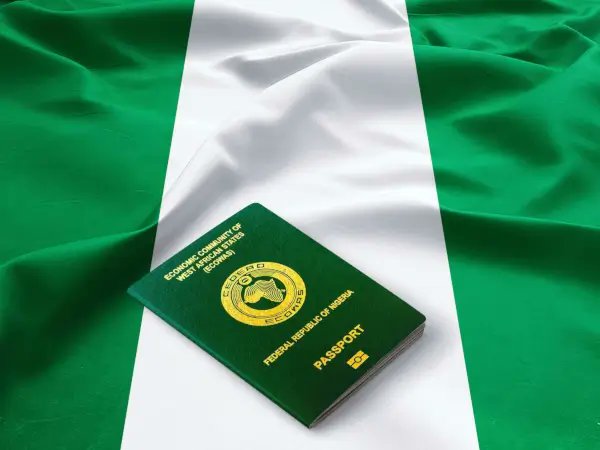
In September 2025 the Federal Government said it was modernising passport production by centralising printing in Abuja. It called it efficiency and global best practice.
Across the South East, many heard something else: exclusion.
Join our WhatsApp ChannelFive months later, the Nigeria Immigration Service issued a clarification. But by then, the damage was already done. A policy meant to speed up service delivery has instead deepened suspicion, exposed a communication gap, and left unanswered questions about access, equity and logistics.
READ ALSO: When Reform Looks Like Punishment; The Enugu Passport Center Question
If passport reform is about serving Nigerians, then the government must answer not just how fast we can print in Abuja, but who gets left waiting.
The claim spread fast, especially in the South East: that passport production had been moved entirely to Abuja, and the region had been quietly removed from the chain. On social media and in town halls, the reform was framed not as modernisation, but as marginalisation.
Government tried to correct the record in February, almost five months after the September 2025 announcement by the Minister of Interior, Olubunmi Tunji-Ojo. NIS spokesperson Akinsola Akinlabi said the Service was running a “phased onboarding system” since 2024, migrating offices, including foreign missions, to the new centralised facility in Abuja. He listed Borno, Yobe, Benue, Kogi, Nasarawa, Niger and Plateau as already onboarded, and insisted the South East was not singled out.
But the rebuttal raised as many questions as it answered. No full list of affected states was published. No clear explanation was given on whether hubs like Lagos or Port Harcourt still play any role in production. And without a step-by-step public guide on how applications move from enrolment to printing to delivery, perception filled the vacuum. In policy, perception is often the reality people live with.
Why centralise everything in Abuja?
To understand the anxiety, we have to look back. Before 1963, Nigerians travelled on British colonial passports. After independence, we began issuing our own in 1963, under a manual, central system. Machine-readable passports came in the 1990s. In 2007, the Nigeria Immigration Service rolled out biometric e-passports with fingerprints and facial capture. Later reforms linked e-passports to the National Identification Number to tighten identity security.
As the technology improved, passport offices also expanded across the country to reduce travel time and congestion. That history is why centralising printing in Abuja now feels like a step backward to many citizens, especially in regions far from the capital.
The Minister of Interior argues that centralisation meets global standards, improves uniformity, and strengthens the integrity of Nigerian travel documents under the Renewed Hope Agenda. The new Abuja facility, he said during inspection, can process 4,500 to 5,000 passports in a few hours, compared to 250 to 300 per day on older machines.
Those are impressive numbers. But the policy rationale has not been fully explained to the public. In a country where access matters as much as output, was the impact on applicants fully considered? Would a distributed model with upgraded regional centres have delivered both efficiency and equity? Are there security or data concerns that were not stated openly? The silence leaves room for speculation.
Other countries separate security printing from public access for a reason. In the United States, applications are taken at over 7,000 acceptance facilities, while regional agencies verify and central facilities print. The United Kingdom does the same through the HM Passport Office: biometrics are captured in many centres, printing happens in secure locations. In both cases, production is centralised, but access is decentralised. Nigeria’s reform concentrates production in Abuja. That makes communication on logistics, timelines and fairness even more critical.
The practical cost to citizens
Beyond policy theory, this reform affects real people. If personalisation is now done only in Abuja, how do passports get back to state offices? Will they be moved by road, by air, by courier? Who bears the risk if documents are lost in transit in a country with serious security and infrastructure challenges? How transparent will tracking be when the digital process ends with a manual handover?
There is also the bottleneck question. If decentralised machines could do 250 to 300 passports a day each, does putting everything in one place actually reduce waiting time, or just move the queue to Abuja? In a time of rising transport costs, asking an applicant from Enugu, Uyo or Maiduguri to travel to Abuja to collect a passport, or to wait weeks for delivery, is not a minor adjustment. It is a barrier.
Even public officials have had to step in. Deputy Speaker of the House of Representatives, Benjamin Kalu, urged South East residents to disregard the speculations, saying “this new approach will serve us better,” referring to the phased onboarding. That is official confidence. But confidence from Abuja is not the same as trust on the ground.
Unanswered questions remain
This is ultimately a governance question. To what extent are major reforms explained before they take effect? Efficiency matters. So does comprehension, acceptance and trust.
The February clarification from NIS was necessary, but it came late and sounded reactive. Calling public concerns “entirely false and a gross misrepresentation” assumes bad faith, instead of addressing the information gap that allowed the rumour to grow.
Until the government publishes a clear, zone-by-zone breakdown of how the system works, who prints where, how delivery is handled, and what role regional offices retain beyond enrolment, suspicion will persist. The South East is asking loudly. But the question concerns every Nigerian who needs a passport.
If the goal is truly modernisation, then modernisation must include communication. Otherwise, a reform designed to speed up service will end up slowing down public trust.
And in a democracy, that is the cost we cannot afford.

Dr. Marcel Mbamalu is a distinguished communication scholar, journalist, and entrepreneur with three decades of experience in the media industry. He holds a Ph.D. in Mass Communication from the University of Nigeria, Nsukka, and serves as the publisher of Prime Business Africa, a renowned multimedia news platform catering to Nigeria and Africa's socio-economic needs.
Dr. Mbamalu's journalism career spans over two decades, during which he honed his skills at The Guardian Newspaper, rising to the position of senior editor. Notably, between 2018 and 2023, he collaborated with the World Health Organization (WHO) in Northeast Nigeria, training senior journalists on conflict reporting and health journalism.
Dr. Mbamalu's expertise has earned him international recognition. He was the sole African representative at the 2023 Jefferson Fellowship program, participating in a study tour of the United States and Asia (Japan and Hong Kong) on inclusion, income gaps, and migration issues.
In 2020, he was part of a global media team that covered the United States presidential election.
Dr. Mbamalu has attended prestigious media trainings, including the Bloomberg Financial Journalism Training and the Reuters/AfDB Training on "Effective Coverage of Infrastructural Development in Africa."
As a columnist for The Punch Newspaper, with insightful articles published in other prominent Nigerian dailies, including ThisDay, Leadership, The Sun, and The Guardian, Dr. Mbamalu regularly provides in-depth analysis on socio-political and economic issues.