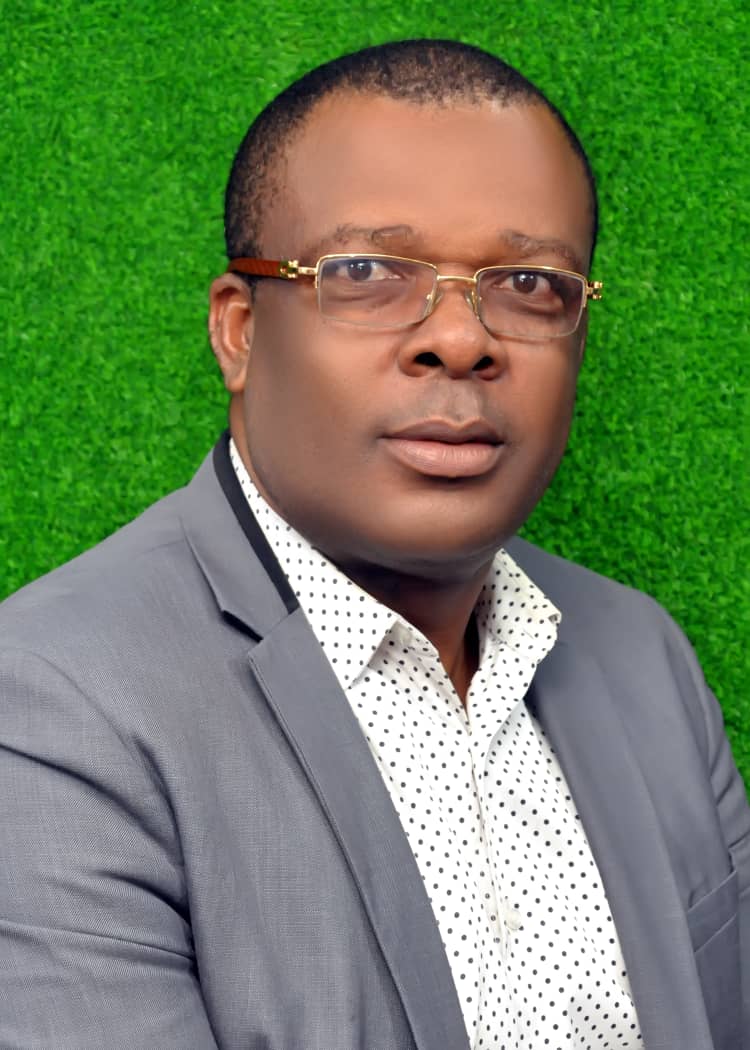
 MARCEL MBAMALU
For over 20 years Nigeria has debated state police while insecurity has grown worse. We worry that governors might abuse state forces. We rarely ask who holds federal policing powers to account.
As the National Assembly moves closer to a constitutional amendment for state police, the question has shifted. It is no longer whether governors can be trusted. It is whether a country as vast and diverse as Nigeria can keep pretending that one police force in Abuja can secure every community.
READ ALSO: Nigeria’s State Police Plans: Before We Democratize Terrorism
Join our WhatsApp ChannelIf security is about saving lives, then fear of decentralisation cannot be the reason we delay it.
A proposal that is closer this time
The current proposal before the National Assembly feels different from past attempts. It would allow states to establish police services alongside the Nigeria Police Force. The draft includes safeguards to prevent governors from using them for partisan, ethnic or personal purposes.
What is missing is the same level of scrutiny for federal policing power.
That gap matters because our hesitation has history.
Before 1966, Nigeria ran a more decentralised system. Regional and local authorities maintained law and order through Native Authority Police, which worked alongside national structures. The idea was simple: those closest to a problem should help solve it. But some regional governments were accused of using these forces against political opponents. That experience left a scar on our politics.
After the 1966 military coup, Nigeria centralised rapidly. The military weakened regional autonomy and pulled key institutions, including security, under federal control. Policing followed. When democracy returned in 1999, the centralised model remained. Section 214(1) of the 1999 Constitution states: “there shall be a police force for Nigeria.” Any other force requires constitutional amendment. That single provision has blocked state police for 25 years.
Three decades of deferred reform
Successive governments have felt the strain.
Under President Olusegun Obasanjo, 1999 to 2007, the focus was on capacity and equipment for the Nigeria Police Force. Devolution was discussed, but not pursued.
Under President Goodluck Jonathan, the 2014 National Conference recommended state police as part of security reform. The logic was clear: communities facing kidnapping, communal clashes and insurgency needed policing that understood their terrain. The recommendation stalled for lack of political will and constitutional change.
Under President Muhammadu Buhari, 2015 to 2023, insecurity deepened. Terrorism, banditry and kidnapping spread. The response was the Police Act 2020 and community policing, but still within a single national structure.
Even within the ruling APC, the case was made. In 2017, the Committee on True Federalism led by then Kaduna Governor Nasir El-Rufai recommended federal, state and community policing with clear responsibilities. The January 2018 report was submitted and shelved.
Now under President Bola Tinubu, the debate is back with more urgency. In 2024, the Federal Government, governors and stakeholders began serious talks. The amendment before the National Assembly is the most advanced attempt yet.
The fears are real. So are the contradictions
But we keep repeating the same pattern. We admit centralisation is not working, then we pause because we fear what governors might do with guns.
Those fears are not imaginary. Without strong guardrails, governors could use state police to intimidate opponents, influence elections, or settle political scores. There is also the anxiety that more state control over security could weaken national cohesion.
That is why the current draft builds in checks. Senate Leader Opeyemi Bamidele says the framework is designed to prevent partisan, ethnic, religious or personal use. States may “choose” to establish police services. The Nigeria Police Force would retain federal duties: counter-terrorism, organised crime, cybercrime, border security, arms trafficking and interstate crime. The Federal Government can also intervene in cases of breakdown of order, rights violations, electoral intimidation, or threats to national security.
All of that is necessary. But “choose” reveals the contradiction. If states must operate inside a framework where Abuja keeps the biggest powers and the final say, are we creating state police, or just adding another layer to a centralised system?
The imbalance in accountability
Here is where *The Bottom Line* must be direct. We cannot ignore the possibility of abuse at any level. Our history demands oversight wherever coercive power sits.
But the debate cannot end with governors. A federal system must also ask: who checks the President and the Inspector-General when federal policing powers are misused?
For years we have focused only on one side. That imbalance is dangerous, and the cost is already visible.
Boko Haram showed how difficult it is for a single command in Abuja to respond quickly across regions with different languages, terrains and threats.
#EndSARS in 2020 showed a deeper problem: a trust deficit. Years of complaints about SARS — harassment, extortion, brutality — boiled over. Dissolving the unit did not fix the structural issue, which is accountability, and who controls the police citizens meet daily.
The practical gap
The problem also shows up during emergencies. Governors are the first people citizens blame when there is insecurity. Yet most do not command the police expected to respond.
We saw this in May after the abduction of schoolchildren and teachers in Oyo State. Following protests led by Martins Otse, popularly known as VeryDarkMan, Governor Seyi Makinde explained publicly that he could not order the Commissioner of Police directly. He needed approval from the Inspector-General. To a parent whose child is missing, that chain of command sounds like bureaucracy, not security.
This is the strongest case for decentralisation. Nigeria is too large and too complex for every security decision to start and end in Abuja. Criminal networks live in communities. They use local roads, hide in local forests, and recruit locally. Residents often know the suspects, the patterns, and the terrain. An officer posted from 800 kilometers away will always be at a disadvantage compared to one who grew up in that LGA.
Local officers understand traditional rulers, vigilantes, and the informal networks intelligence depends on. This is not an argument against the Nigeria Police Force. It is an argument for a security architecture that matches our size, diversity and threats.
What the amendment must answer
Which brings me back to the proposal before the National Assembly. If safeguards are real, they must apply both ways. We need independent oversight for state police, and for federal police. We need clear rules for intervention, and consequences when any level of government abuses power.
Without that balance, we risk a system where responsibility is local but authority remains federal. Governors will keep being blamed for failures they cannot control. Citizens will keep waiting for decisions that must travel to Abuja and back.
So I ask again, as I have always asked: why call it state police if states cannot exercise meaningful authority over it?
A democracy cannot protect citizens by concentrating all coercive power in one place. Fear of governors abusing state police is valid. But it must be managed with law, oversight and consequences, not by denying states the tools they need.
Citizens’ welfare must be the priority. Not politics. Not party. Not the comfort of old structures.
If, at the end of this process, states cannot recruit, train, fund and deploy their police with real operational independence, then let us be honest. We will not have created state police. We will have repackaged federal policing under a new name.
And that will not be enough to keep Nigerians safe.
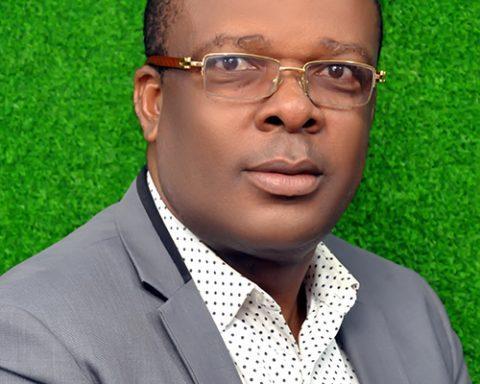
Dr Mbamalu is a Communication scholar and Publisher of Prime Business Africa

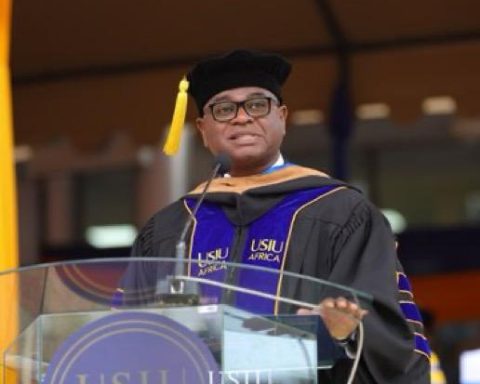
Dr. Marcel Mbamalu is a distinguished communication scholar, journalist, and entrepreneur with three decades of experience in the media industry. He holds a Ph.D. in Mass Communication from the University of Nigeria, Nsukka, and serves as the publisher of Prime Business Africa, a renowned multimedia news platform catering to Nigeria and Africa's socio-economic needs.
Dr. Mbamalu's journalism career spans over two decades, during which he honed his skills at The Guardian Newspaper, rising to the position of senior editor. Notably, between 2018 and 2023, he collaborated with the World Health Organization (WHO) in Northeast Nigeria, training senior journalists on conflict reporting and health journalism.
Dr. Mbamalu's expertise has earned him international recognition. He was the sole African representative at the 2023 Jefferson Fellowship program, participating in a study tour of the United States and Asia (Japan and Hong Kong) on inclusion, income gaps, and migration issues.
In 2020, he was part of a global media team that covered the United States presidential election.
Dr. Mbamalu has attended prestigious media trainings, including the Bloomberg Financial Journalism Training and the Reuters/AfDB Training on "Effective Coverage of Infrastructural Development in Africa."
As a columnist for The Punch Newspaper, with insightful articles published in other prominent Nigerian dailies, including ThisDay, Leadership, The Sun, and The Guardian, Dr. Mbamalu regularly provides in-depth analysis on socio-political and economic issues.