 Zita Offor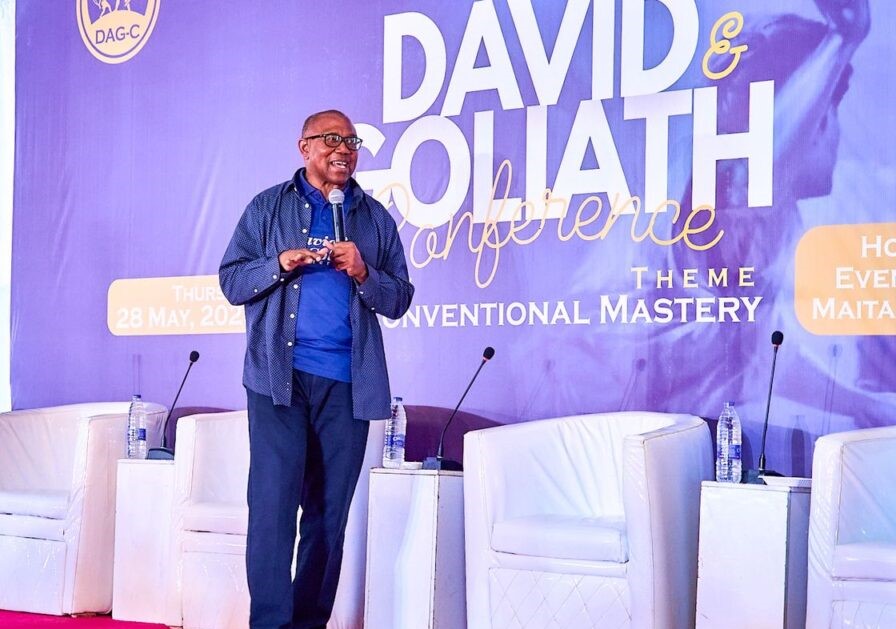
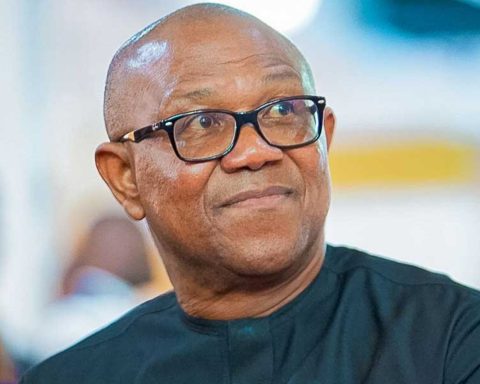
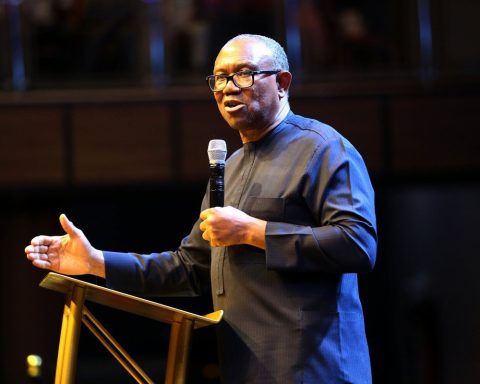
The former Anambra State governor and presidential candidate, Peter Obi, on Thursday challenged Nigerian youths to confront what he described as the country’s greatest “Goliath”: failed governance, corruption, and systemic dysfunction at the maiden edition of the David and Goliath Conference (DAG-C).
The conference, themed “Unconventional Mastery”, was convened by Rev. Fr Chinenye Oluoma of the Catholic Archdiocese of Abuja on May 28, 2026, at the Holy Trinity Event Centre, Maitama, Abuja.
The conference had young leaders, professionals, clergy members, panellists, and guests. Among the invited guests was Dr Chichi Aniagolu, who was briefly introduced during the event.
Join our WhatsApp ChannelIntroducing Obi, Rev. Fr C. Oluoma described him as a leader whose interventions continue to inspire young Nigerians seeking national transformation and accountable governance.
During his keynote address, Obi outlined his views on governance, economic reform, corruption, youth responsibility, and national development.
A Call for Honest Engagement
In a reflective tone, Obi insisted that leadership should be rooted in listening, accountability, and sincerity. “I want to listen, and I want to learn,” he told the audience. He urged young Nigerians to consistently remind political leaders of their promises and hold them accountable.
He lamented that while Nigerians grapple with insecurity, kidnappings, unemployment, and worsening economic conditions, political actors remain preoccupied with elections and power contests. “Our children are kidnapped today. People are dying. But we the politicians are preparing for the next election. It shouldn’t be so,” he said.
The Real Goliath Facing Nigeria
Drawing from the biblical story of David and Goliath, Obi argued that Nigeria’s greatest obstacle is not poverty itself but poor leadership. “The number one Goliath in your life today is with the politicians,” he declared.
Referencing economist Professor James Robinson’s book ‘Why Nations Fail’, he maintained that Nigeria already understands the solutions to its problems but lacks the political will to implement them consistently.
According to him, nations only progress when they prioritise productivity, education, healthcare, and strong institutions.
Youths Must Defend Democracy
Responding to concerns about the aftermath of the 2023 elections, Obi emphasised that democratic change requires persistence and civic responsibility. “If all of us are determined that our votes will count, it will count,” he said.
He stressed that throughout history, societal transformation has often been driven by young people who refuse to accept injustice or mediocrity. “Every society in the world was changed by its youth,” he added.
He further accused entrenched political actors of sustaining a dysfunctional system that limits opportunities for younger generations, urging youths to demand structural reform and accountability.
Economy, Productivity and Hard Work
A central theme of his address was Nigeria’s struggling economy and the shrinking opportunities available to young people. “Everything is stacked against you,” Obi admitted, citing poor electricity supply, weak infrastructure, limited access to credit, and widespread unemployment.
He criticised what he described as a culture of dependency and unrealistic expectations, insisting that national prosperity can only emerge through productivity, discipline, and hard work. “There is no magic money anywhere. God only blesses hard work,” he said.
Obi also warned against excessive spending on luxury, ceremonies, and social appearances at the expense of savings, education, and long-term investment.
Leadership and the Cost of Waste
The former governor strongly criticised what he called wasteful governance structures and political elitism.
He asked not to be addressed as “Your Excellency”, insisting instead on being called “Peter Obi”, adding that “nobody in this country is excellent”.
He questioned the continued existence of heavily funded ceremonial offices, including the Office of the First Lady, arguing that public funds should be redirected toward critical sectors like healthcare, education, and infrastructure.
For him, governance must be defined by service delivery and measurable impact, not prestige or political luxury.
Human Development: A True Measure of Progress
National development should be measured by human outcomes such as education quality, healthcare access, and life expectancy, he stressed.
Comparing Nigeria with countries such as Indonesia, Bangladesh, Vietnam, and India, Obi mentioned that those nations advanced because they deliberately invested in education, healthcare, entrepreneurship, and industrial growth.
Using Indonesia as an example, he pointed to its extensive healthcare system and strong support for small businesses and youth entrepreneurship.
READ ALSO: Obidient Movement Urges Unity Ahead of NDC Primaries, Warns Against Internal Crisis
Security, Power, and Corruption
On insecurity, Obi maintained that criminal groups must never be allowed to become stronger than the state, attributing Nigeria’s security challenges largely to weak governance and lack of political resolve. “There’s no way non-state actors can be more powerful than the state,” he said.
He also described Nigeria’s electricity crisis as a failure of leadership rather than capacity, citing countries such as Egypt and India that rapidly expanded power generation through deliberate reforms.
On corruption, he argued that accountability must begin at the highest levels of leadership. “If the person in charge is not stealing, if the wife is not stealing, if the children are not stealing, you reduce corruption by 50 per cent,” he said.
Drawing from his tenure as governor of Anambra State, he noted that his administration cleared debts, paid salaries and pensions, and still left savings after leaving office.
Religion and Ethnic Manipulation
Obi condemned the manipulation of religion and ethnicity for political gain. According to him, political actors often make use of identity divisions to divert attention from governance failures. He called on young people to reject such narratives and focus on nation-building.
Final Message to Young Nigerians
In his closing remarks, Obi encouraged youths to remain disciplined, focused, and hopeful for a better Nigeria despite challenges. He advised them to avoid unhealthy comparisons, embrace simplicity, and pursue excellence through hard work and integrity.
According to him, true fulfilment is not found in titles or material accumulation but in service to humanity, ethical living, and meaningful impact.