 Prosper Okoye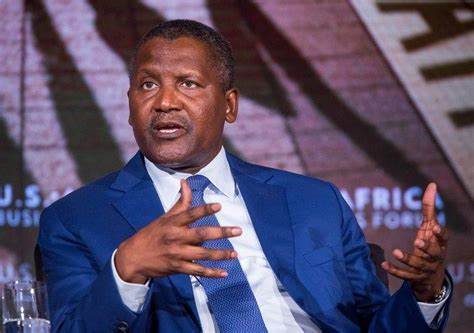
The Chairman of the Dangote Group, Aliko Dangote, has said that current government policies could significantly strengthen the naira against the US dollar, potentially bringing the exchange rate down to as low as ₦1,100 to $1.
Dangote made the remarks on Tuesday at the launch of the Nigeria Industrial Policy in Abuja, an event attended by Vice President Kashim Shettima, Secretary to the Government of the Federation George Akume, and representatives from the Manufacturers Association of Nigeria and the United Nations.
Policies Seen as Driving Currency Strength
Addressing the audience, Dangote said government measures restricting imports and promoting local manufacturing are creating “visible results” for Nigerian businesses.
Join our WhatsApp Channel“Today, if you look at it, people have started seeing the impact of the policies, and manufacturers are very happy,” he said. “If the naira gets stronger, it will lower costs across the board because we rely heavily on imports, which we should be producing locally.”
Local Industry Needs Support
Dangote also called on the government to provide incentives and infrastructure, particularly reliable power, to support local investors and industrial growth. He stressed that the industrial policy must be backed by practical measures to drive industrialisation, job creation, and economic growth.
READ ALSO:
Dangote Signs $400m Equipment Deal to Fast-Track Refinery Expansion
Dangote Refinery Highlights Fuel Distribution Capacity, Warns of Rising Costs from Coastal Logistics
Dangote Refinery Dismisses Shutdown Claims
Private Sector Role Highlighted
Vice President Shettima emphasised the importance of the private sector in implementing the policy, noting that Dangote Cement alone paid nine hundred billion naira in taxes in 2025.
Last week, Nigerian businessman Femi Otedola similarly said the naira could strengthen, pointing to increased local refinery capacity as a factor supporting the currency.
The Nigeria Industrial Policy is expected to enhance value addition, industrial linkages, and export competitiveness across the country.

Prosper Okoye is a Correspondent and Research Writer at Prime Business Africa, a Nigerian journalist with experience in development reporting, public affairs, and policy-focused storytelling across Africa