 Amanze Chinonye
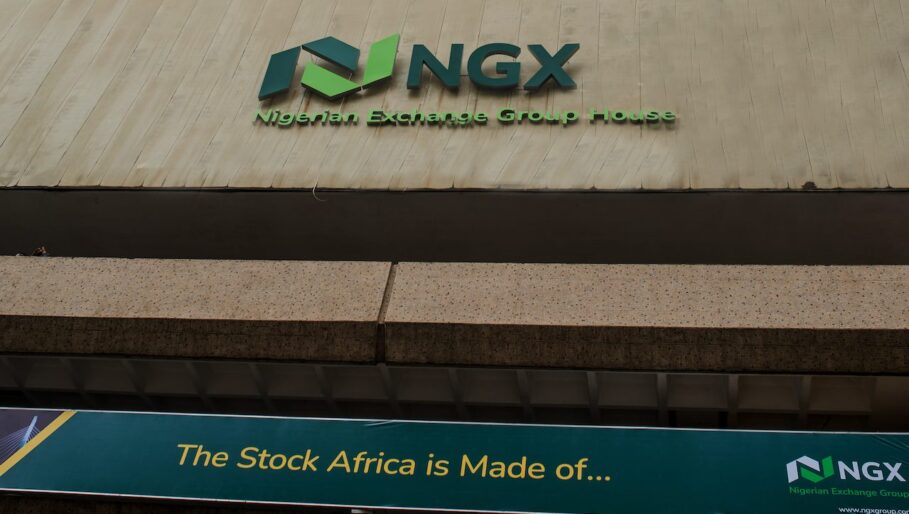
The Sustainability Professionals Institute of Nigeria (SPIN) has urged the Financial Reporting Council of Nigeria (FRC) to focus on regulating corporate sustainability reporting, warning against positioning itself as the authority on sustainability practice or competing with the professionals it regulates, Prime Business Africa reports.
In a statement issued in Lagos, SPIN reaffirmed its support for Nigeria’s adoption of the International Sustainability Standards Board (ISSB) Sustainability Disclosure Standards, IFRS S1 and IFRS S2, describing the country as an early adopter of the global reporting framework.
READ ALSO :
Join our WhatsApp Channel
The institute, however, expressed concern over what it described as a growing narrative that equates the two disclosure standards with the entirety of sustainability practice and portrays them as the exclusive preserve of the accounting profession.
SPIN stressed that sustainability reporting is only one component of a much broader discipline that includes governance, environmental stewardship, climate resilience, biodiversity, human rights, labour practices, stakeholder engagement, responsible investment, the circular economy, community development and long-term value creation.
“Reporting is the final expression of sustainability performance,” the institute said, adding that organisations cannot credibly disclose sustainability information without first establishing sound governance structures, measuring performance, managing risks and implementing meaningful improvements.
The institute noted that while IFRS S1 and IFRS S2 provide guidance on sustainability-related financial disclosures for investors, they are designed around financial materiality and enterprise value rather than the full spectrum of sustainability issues.
According to SPIN, global sustainability practice also relies on internationally recognised frameworks and principles such as the European Sustainability Reporting Standards, the Global Reporting Initiative, the UN Guiding Principles on Business and Human Rights, the OECD Guidelines for Multinational Enterprises and the UN Global Compact.
The institute argued that portraying sustainability primarily as an accounting function risks narrowing professional competence in a field that is inherently multidisciplinary.
“Sustainability has always been multidisciplinary,” SPIN said, noting that the field draws expertise from environmental science, engineering, economics, finance, governance, law, public policy, climate science, communications, social performance and risk management.
The institute also cautioned regulators against extending their mandate beyond oversight of corporate reporting into implementation, commercial capacity-building or activities that place them in direct competition with the professionals and organisations they regulate.
It maintained that a credible national sustainability ecosystem depends on collaboration among regulators, academic institutions, professional bodies, businesses, civil society organisations, development partners and practitioners across multiple disciplines.
READ MORE :
SPIN called on stakeholders involved in sustainability education and capacity-building to present the ISSB Sustainability Disclosure Standards within their broader context and promote training that reflects the full breadth of sustainability knowledge and practice.
The institute reaffirmed its commitment to working with the Federal Government, regulators, the private sector and development partners to strengthen sustainability governance, professional competence and responsible business conduct through balanced, technically sound and internationally aligned approaches.
Concluding the statement, SPIN emphasised that sustainability reports derive their value from accurately reflecting organisational performance, stating that while reports are important, they cannot substitute for genuine sustainability practice.

Amanze Chinonye is a Staff Correspondent at Prime Business Africa, a rising star in the literary world, weaving captivating stories that transport readers to the vibrant landscapes of Nigeria and the rest of Africa. With a unique voice that blends with the newspaper's tradition and style, Chinonye's writing is a masterful exploration of the human condition, delving into themes of identity, culture, and social justice. Through her words, Chinonye paints vivid portraits of everyday African life, from the bustling markets of Nigeria's Lagos to the quiet villages of South Africa's countryside . With a keen eye for detail and a deep understanding of the complexities of Nigerian society, Chinonye's writing is both a testament to the country's rich cultural heritage and a powerful call to action for a brighter future. As a writer, Chinonye is a true storyteller, using her dexterity to educate, inspire, and uplift readers around the world.