 MARCEL MBAMALU
A few days before the 15 August governorship election in Osun State, an action by the Economic and Financial Crimes Commission (EFCC) has once again called into question the powers and independence of Nigeria’s anti-corruption agency. The commission had recently restricted the accounts of the Osun State Government, citing an investigation into the alleged diversion of about N11 billion in Ecology Funds, Intervention Funds and allocations from the Federation Account.
The timing was striking, coming barely 10 days before voters in the state were due to choose their governor. It immediately triggered concern from Governor Ademola Adeleke, who had warned that the EFCC was preparing to freeze the state’s accounts and described such an action as an attempt to paralyse his government.
Join our WhatsApp ChannelBut what followed was even more consequential. On 6th August, President Bola Tinubu directed the EFCC to return to court and vacate the order. Explaining the intervention, Tinubu said he felt“deeply embarrassed not by the EFCC’s exercise of its mandate backed by a court order, but by the timing of the agency’s action.”
Yet, that intervention has raised a fundamental question about the limits of presidential intervention in the work of an anti-corruption agency.
READ: Deeply Embarrassed by the Timing: Tinubu Orders EFCC to Reverse Osun Account Freeze
Can an election suspend an anti-corruption investigation?
Mr Adeleke had questioned the legal basis for the proposed action and at that point, the EFCC had not publicly announced any freeze.
Hours later, officials of Osun State Government confirmed that its account domiciled with First Bank was placed on Post-No-Debit status. While rejecting the action, its Attorney-General and Commissioner for Justice, Oluwole Jimi-Bada, questioned EFCC’s legal authority to restrict the account and alleged that the commission had not followed due process.
The state subsequently challenged the action in court, seeking reliefs against the EFCC and damages over what it described as an unlawful restriction of the state’s funds.
The EFCC later confirmed the restriction. In a statement by its Head of Media and Publicity, Dele Oyewale, the commission said its investigation into the finances of the Osun State Government had been ongoing since March, with several officials, including the Accountant-General, already questioned. It said investigators later noticed “precipitate and unwarranted movement of funds” from government accounts into several corporate entities. But the commission did not clarify whether there was a court order authorising the restriction.
Rather, its explanation focused on its statutory power to impose a temporary restriction; thefollowing day, President Tinubu intervened and directed the EFCC to return to court and vacate the order.
Given that the EFCC says its investigation into the finances of the Osun State Government began in March, months before the governorship election, while several officials had already been questioned, should the investigation stop because an election was approaching? If the funds genuinely required protection and the commission had credible evidence that public funds were being diverted, should the law not apply before, during and after an election?
These are legitimate questions because the President’s intervention was based substantially on the timing of the EFCC’s action.
Tinubu said he did not want anything done that could create the impression that a federal agency was being used to interfere with the electoral process. But what exactly was the objection to the timing of a lawful enforcement action? Was the concern that the action could influence the election, or that the EFCC had chosen an unnecessarily disruptive way to conduct an investigation that had already been running since March? And will the investigation continue with the same urgency after the election, especially when the court order was not only suspended, but the EFCC was directed to seek its vacation?
Indeed, the President’s own words make the question even more unavoidable. Tinubu said that “anti-corruption and law enforcement agencies must be allowed to discharge their statutory responsibilities independently, professionally, without fear or favour, or political interference.” He added that he had “deliberately refrained from directing or interfering in the operational activities of the EFCC.” Yet, in the same statement, he directed the commission to approach the court and vacate the order.
The reverse question is equally important. Can the proximity of an election justify an anti-corruption agency taking politically consequential action without sufficiently explaining what it is doing and why?
When the restriction first became public, the commission’s explanation centred on its statutory power. Its Director of Public Affairs, Wilson Uwujaren, said the commission had observed suspicious activity on the account and had acted to preserve the funds and explained that the commission could place a temporary restriction on an account for up to 72 hours without a court order and will seek judicial backing if the restriction needed to continue.
Yet, on the same day, President Tinubu said the EFCC had obtained a court order to freeze the account. The President’s statement therefore introduced a court order that had not featured prominently in the EFCC’s initial public explanation. While subsequent reports revealed that the order covered three Osun Government accounts, including two Zenith Bank accounts, thedifference was significant because it raised questions about when the order was obtained, what powers the EFCC initially relied upon, and what exactly the court had authorised.
According to Section 34 of the EFCC Act, the Commission, where it is satisfied that money in an account is connected to an offence, may apply to a court ex parte for an order to freeze the account.
The confusion here is whether the EFCC was already being enforced pursuant to the Federal High Court order the President later disclosed? And why was that order not at the centre of the EFCC’s initial explanation? At what point did the court order take effect?
Since the President directed the EFCC to return to court and vacate the order, did that directive apply to all three accounts? Did the commission return to court? Were all three accounts subsequently released? And does the underlying investigation continue?
These questions are particularly important because an anti-corruption agency must be free to investigate public officials even during an election period. But that independence comes with an equally important obligation: to exercise its powers transparently, within the law and in a manner that does not unnecessarily undermine public confidence in the electoral process.
If a court has authorised a restriction, should the judicial process not determine whether that order should remain or be vacated? An intervention of this nature only reinforces what the public has long said about the perceived lack of independence of the judiciary and the EFCC.
Nigerians deserve answers to these questions because the powers of the state must be exercised in a way that the people can understand, scrutinise and trust. Again, the principle established by such an intervention is one Nigeria might not be comfortable handing to every future President.
Tinubu may have been right to be concerned about the politically sensitive timing of the EFCC’s action. But does Nigeria need institutions whose actions change with political circumstances, or institutions governed by clear laws and accountable procedures?
Why was the phone call necessary?
There is another detail in this episode that deserves closer scrutiny: the telephone conversation between the President and Governor Adeleke.
Shortly after the President’s directive, his spokesperson, Bayo Onanuga, announced on X that the President had spoken with Adeleke and personally informed him that he had directed the EFCC to return to court and vacate the order freezing the Osun State Government’s accounts. But why was the phone call necessary in a matter concerning the investigation of alleged mismanagement of public funds?
The President had already announced and issued the directive, and the EFCC and the public already knew about the order. Why, then, was it necessary for the President to personally call the governor to communicate a decision that had already been made public? And why did Nigerians need to know that the call had taken place?
When a governor seeking re-election has publicly endorsed the President for another term, and that same President subsequently intervenes in an EFCC action involving the governor’s government days before the governor’s election, what should Nigerians make of that relationship?
These may appear to be minor questions, but they matter in a democracy where public institutions are expected to operate through established procedures rather than personal relationships.

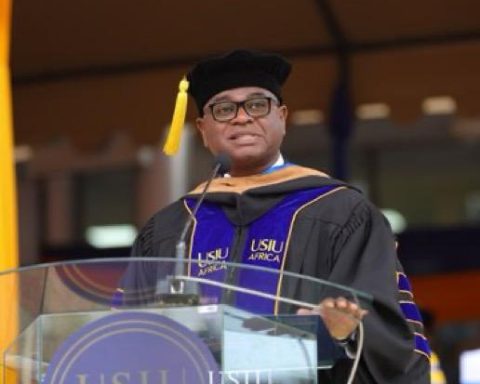
Dr. Marcel Mbamalu is a distinguished communication scholar, journalist, and entrepreneur with three decades of experience in the media industry. He holds a Ph.D. in Mass Communication from the University of Nigeria, Nsukka, and serves as the publisher of Prime Business Africa, a renowned multimedia news platform catering to Nigeria and Africa's socio-economic needs.
Dr. Mbamalu's journalism career spans over two decades, during which he honed his skills at The Guardian Newspaper, rising to the position of senior editor. Notably, between 2018 and 2023, he collaborated with the World Health Organization (WHO) in Northeast Nigeria, training senior journalists on conflict reporting and health journalism.
Dr. Mbamalu's expertise has earned him international recognition. He was the sole African representative at the 2023 Jefferson Fellowship program, participating in a study tour of the United States and Asia (Japan and Hong Kong) on inclusion, income gaps, and migration issues.
In 2020, he was part of a global media team that covered the United States presidential election.
Dr. Mbamalu has attended prestigious media trainings, including the Bloomberg Financial Journalism Training and the Reuters/AfDB Training on "Effective Coverage of Infrastructural Development in Africa."
As a columnist for The Punch Newspaper, with insightful articles published in other prominent Nigerian dailies, including ThisDay, Leadership, The Sun, and The Guardian, Dr. Mbamalu regularly provides in-depth analysis on socio-political and economic issues.