 Amanze Chinonye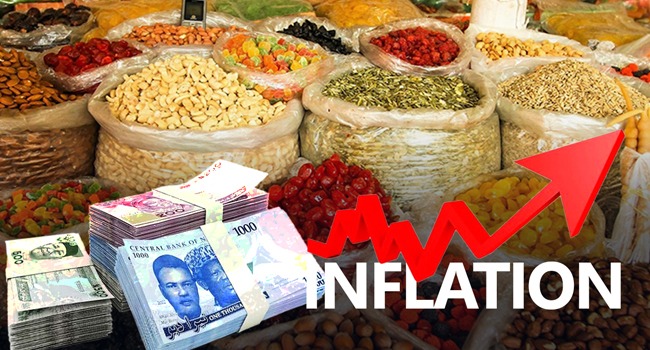
Nigeria’s headline inflation rate fell to 15.43 per cent in July 2026 from 15.91 per cent in June, extending the recent moderation in overall price pressures despite a sharp increase in food inflation, Prime Business Africa reports.
Join our WhatsApp Channel
The National Bureau of Statistics (NBS) disclosed this in its Consumer Price Index and Inflation Report for July 2026, released on Monday.
The July rate was 0.48 percentage points lower than the June figure and significantly below the 24.94 per cent recorded in July 2025.
READ ALSO :
Nigeria’s Inflation Eases to 15.91% in June, Raising Expectations of Interest Rate Hold
On a month-on-month basis, headline inflation also moderated to 1.57 per cent in July from 1.66 per cent in June, indicating a slower increase in the average prices of goods and services during the month.
The broader decline, however, was accompanied by renewed pressure on food prices.
Food inflation rose to 20.31 per cent year-on-year in July, while the monthly rate increased to 5.56 per cent from 3.75 per cent in June.
The NBS attributed the monthly increase to higher prices of several food items, including crayfish, fresh pepper, onions, carrots, rice, water yam, tomatoes, garri, plantain, beef, eggs, guinea corn, ginger and plantain flour.
Food and non-alcoholic beverages remained the largest contributor to annual headline inflation, accounting for 6.18 percentage points. Restaurants and accommodation services contributed 1.99 percentage points, while transport accounted for 1.64 percentage points.
At the other end of the scale, recreation, sport and culture contributed 0.05 percentage points, followed by alcoholic beverages, tobacco and narcotics at 0.06 percentage points and insurance and financial services at 0.07 percentage points.
READ MORE :
Core inflation, which excludes volatile agricultural produce and energy prices, also moderated. It fell to 14.97 per cent year-on-year in July from 23.95 per cent a year earlier.
On a month-on-month basis, core inflation dropped to 0.15 per cent from 1.66 per cent in June.
The Consumer Price Index rose to 145.3 points in July from 143.0 points in June, a 2.2-point increase, indicating that the general price level continued to rise even as the annual inflation rate slowed.
The data showed differing trends across the major components of the inflation basket. Energy recorded a negative monthly rate of -2.39 per cent in July, compared with -7.54 per cent in June, while farm produce increased to 4.66 per cent from 4.42 per cent.
Services inflation fell to 0.49 per cent from 1.60 per cent, while goods inflation declined to 1.70 per cent from 1.94 per cent. Imported food inflation also eased to 1.19 per cent from 1.73 per cent.
Inflation remained higher in urban areas than in rural areas. Urban inflation stood at 16.12 per cent year-on-year in July, compared with 13.77 per cent in rural areas.
On a monthly basis, urban inflation declined to 1.90 per cent from 2.13 per cent in June, while rural inflation increased to 0.78 per cent from 0.52 per cent.
At the state level, Adamawa recorded the highest annual headline inflation at 33.03 per cent, followed by Yobe at 25.21 per cent and Anambra at 23.99 per cent.
Nasarawa recorded the lowest annual headline inflation at 7.86 per cent, while Kebbi and Borno followed at 9.12 per cent each.
Adamawa also recorded the highest monthly headline inflation at 12.48 per cent, followed by Anambra at 9.95 per cent and Delta at 9.54 per cent. Niger recorded the largest monthly decline at -5.86 per cent, followed by Enugu at -5.71 per cent and Kebbi at -4.89 per cent.
Food inflation was highest in Adamawa at 51.36 per cent year-on-year, followed by Katsina at 30.84 per cent and Zamfara at 30.65 per cent.
Borno recorded the lowest annual food inflation at -0.31 per cent, followed by Nasarawa at 6.88 per cent and Kebbi at 12.50 per cent.
READ ALSO :
US-Iran Conflict Could Fuel Inflation in Nigeria – CPPE
On a month-on-month basis, food inflation was highest in Adamawa at 17.02 per cent, followed by Lagos at 13.48 per cent and Borno at 13.26 per cent. Jigawa recorded the largest monthly decline at -3.68 per cent, followed by Kebbi at -3.67 per cent and Bauchi at -1.85 per cent.
The July figures point to continued moderation in broad-based inflationary pressures, particularly as both headline and core inflation declined. However, the acceleration in food inflation highlights persistent pressure on household budgets.
The fall in the headline rate does not mean that consumer prices declined. Rather, it indicates that prices increased at a slower annual pace than in the preceding period.
The continued rise in the CPI, alongside higher food inflation, suggests that the improvement in overall inflation may not immediately translate into lower living costs for households.

Amanze Chinonye is a Staff Correspondent at Prime Business Africa, a rising star in the literary world, weaving captivating stories that transport readers to the vibrant landscapes of Nigeria and the rest of Africa. With a unique voice that blends with the newspaper's tradition and style, Chinonye's writing is a masterful exploration of the human condition, delving into themes of identity, culture, and social justice. Through her words, Chinonye paints vivid portraits of everyday African life, from the bustling markets of Nigeria's Lagos to the quiet villages of South Africa's countryside . With a keen eye for detail and a deep understanding of the complexities of Nigerian society, Chinonye's writing is both a testament to the country's rich cultural heritage and a powerful call to action for a brighter future. As a writer, Chinonye is a true storyteller, using her dexterity to educate, inspire, and uplift readers around the world.