 Amanze Chinonye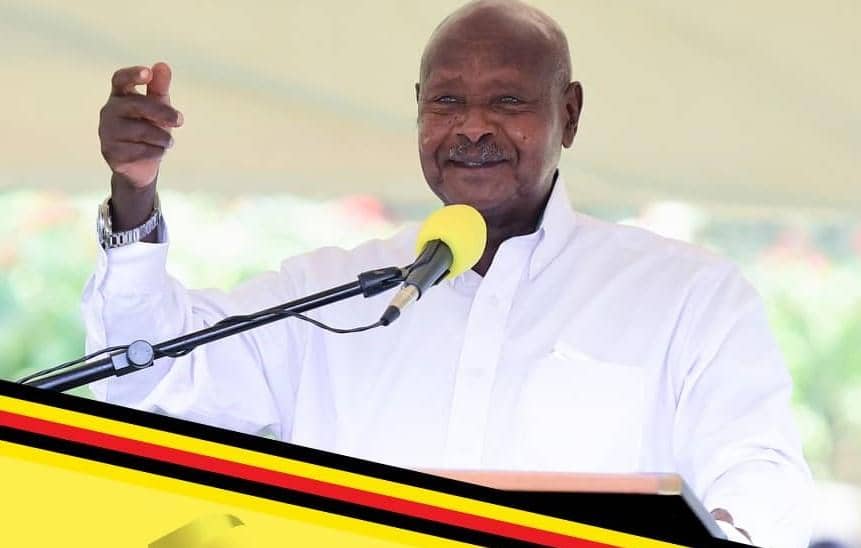
President Yoweri Museveni is under renewed scrutiny following a death sentence that could set Uganda on course for its first civilian execution in 27 years, marking a pivotal moment in the country’s long-standing but informal moratorium on capital punishment, Prime Business Africa reports.
A High Court in Kampala sentenced 39-year-old Christopher Okello Onyum to death on April 30, 2026, for the killing of four toddlers in a nursery school attack that occurred on April 2, 2026. The ruling has since triggered national debate over criminal justice, executive authority, and the future of the death penalty in Uganda.
Delivering judgment, Justice Alice Komuhangi Khaukha held that the attack was premeditated, citing digital forensic evidence recovered from the convict’s electronic devices. This included online searches such as “schools near me” and “ISIS beheading,” which the court said demonstrated planning and intent.
Join our WhatsApp ChannelREAD ALSO :
Okello was accused of disguising himself as a parent to gain entry into the nursery before carrying out the attack, which lasted only minutes. Police said he was subdued by a security guard shortly after the incident, while members of the public attempted to assault him before his arrest.
The trial was conducted under a fast-tracked “mobile court” arrangement aimed at expediting justice in high-profile cases. However, the process has drawn criticism from the Uganda Law Society, which warned that the open-air proceedings risked undermining fair trial standards and due process.
Okello had pleaded not guilty, with his defence team arguing that he suffered from long-standing mental illness and was not criminally responsible. The court, however, rejected the claim, stating that no credible evidence was presented to support it.
Despite the death sentence, execution is not automatic under Ugandan law. Any implementation requires a presidential warrant signed by Museveni, who retains exclusive authority over capital punishment enforcement.
READ MORE :
Bangladesh’s Ousted PM Hasina Sentenced to Death for 2024 Student Crackdown
Uganda Prisons Service Commissioner General Johnson Byabashaija said the system is prepared to carry out an execution within 72 hours if such approval is granted, adding that operational procedures are already in place.
However, Uganda has not carried out a civilian execution since 1999, despite courts continuing to impose death sentences in serious criminal cases. The long absence of executions has effectively created a de facto moratorium, shaped largely by presidential restraint.
Legal limitations also complicate the matter. A 2009 Supreme Court ruling requires that death row inmates who remain in custody for more than three years must have their sentences commuted to life imprisonment. Okello also has 14 days to appeal his conviction, leaving the case legally unresolved.
The developments have reignited debate over Uganda’s continued retention of the death penalty and the gap between sentencing and enforcement.
While some members of the public have welcomed the ruling as a proportionate response to a violent crime that shocked the nation, human rights advocates have warned that resuming executions could draw international criticism and reverse years of informal restraint.
For now, the final decision rests with Museveni. His action or inaction will determine not only the fate of the convicted man, but also whether Uganda maintains its decades-long pause on capital punishment or enters a new chapter in its criminal justice history.

Amanze Chinonye is a Staff Correspondent at Prime Business Africa, a rising star in the literary world, weaving captivating stories that transport readers to the vibrant landscapes of Nigeria and the rest of Africa. With a unique voice that blends with the newspaper's tradition and style, Chinonye's writing is a masterful exploration of the human condition, delving into themes of identity, culture, and social justice. Through her words, Chinonye paints vivid portraits of everyday African life, from the bustling markets of Nigeria's Lagos to the quiet villages of South Africa's countryside . With a keen eye for detail and a deep understanding of the complexities of Nigerian society, Chinonye's writing is both a testament to the country's rich cultural heritage and a powerful call to action for a brighter future. As a writer, Chinonye is a true storyteller, using her dexterity to educate, inspire, and uplift readers around the world.