 Amanze Chinonye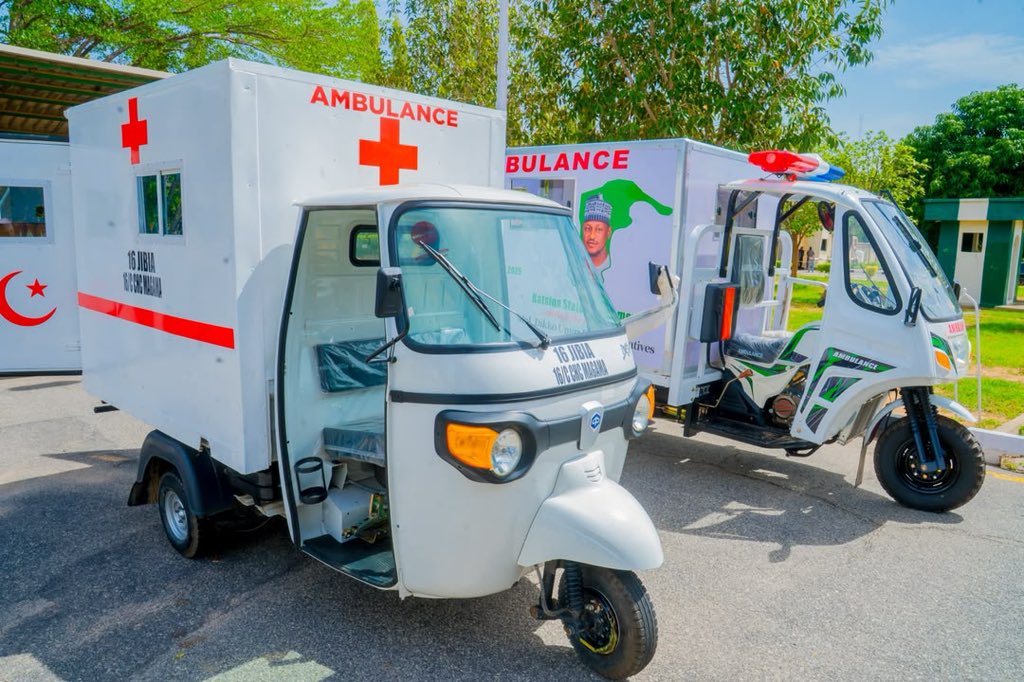
Public debate over Katsina State’s emergency medical response strategy has increasingly centred on one defining development: the deployment of tricycle ambulances popularly known as “keke ambulances” across all 361 political wards of the state.
While the government presents the initiative as a pragmatic response to rural healthcare access gaps, it has triggered a wider national conversation on emergency care standards, system design, and healthcare delivery in underserved communities.
READ ALSO :
Join our WhatsApp Channel
Emergency Care Structure
Governor Dikko Umaru Radda, on June 30, 2026, inspected and unveiled 361 specially assembled tricycle ambulances at Muhammadu Buhari House in Katsina, ahead of their deployment across the state.
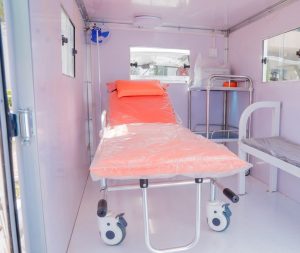
Each unit is assigned to a political ward and linked to Primary Healthcare Centres (PHCs). The rollout follows a one-ward, one-ambulance model designed to strengthen emergency response in rural areas where access to conventional ambulances remains limited.

Officials say the initiative is intended to close persistent gaps in emergency evacuation, particularly in remote communities where poor road conditions and long distances often delay access to medical care.
Dual Ambulance System
The tricycle ambulances form part of a broader emergency medical framework that also includes 15 Intensive Care Unit (ICU) equipped ambulances, procured under the State Emergency Medical Services and Ambulance System (SEMSAS) and received earlier in the year.
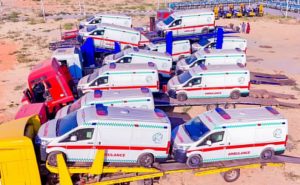
These ICU ambulances are deployed along major highways to manage critical emergencies, road traffic accidents, and inter-facility transfers requiring advanced medical support.
Together, the system operates as a two-tier response model:
- ICU ambulances for highway and critical care emergencies
- Keke ambulances for last-mile evacuation from communities to PHCs
Officials describe the arrangement as a coordinated structure designed to extend emergency coverage across both urban corridors and hard-to-reach rural settlements.

Policy Rationale
At the core of the initiative is a logistical challenge rather than a clinical one: delayed access to emergency care in rural communities.
In many parts of Katsina State, conventional ambulances are constrained by poor road networks, long distances between settlements and health facilities, and limited fleet availability.
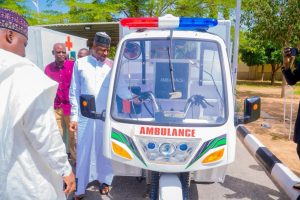
The tricycle ambulances are therefore positioned as last-mile transport units, intended to move patients from homes and villages to nearby PHCs, where stabilisation and referral decisions can be made.
The policy is also framed within Nigeria’s broader maternal and neonatal health challenges, where delays in reaching care remain a major contributor to preventable deaths. Supporters argue that improving evacuation time directly addresses the “first delay” in emergency care delivery.

Voices From the Field
The initiative has generated mixed reactions, with public commentary sharply divided over its appropriateness and necessity.
Yusuf Hassan, a local commentator, argued that the debate should not be reduced to ridicule or partisan framing, but understood within the broader context of rural health emergencies.
According to him, many major health indicators in Northern Nigeria particularly maternal mortality, newborn deaths, and weak referral systems underscore the urgency of practical interventions.
He noted that in many communities, “the difference between life and death for a pregnant woman is not always a specialist doctor first; sometimes, it is whether she can leave her village and reach a PHC or referral facility on time.” He further argued that emergency transport solutions must reflect local realities, including poor roads and scattered settlements, adding that “a flawed but functional solution is better than elegant speeches while people continue to die because no vehicle came.”
READ MORE :
Motorbike ambulance saves mothers and babies in Kenya: UNFPA
In the same vein, Dr. HM Okpanachi, a medical doctor with field experience in rural settings, said critics often misunderstand conditions on the ground. Recalling his experience with an NGO in Katsina State, he noted that even unconventional transport systems have historically been used for patient movement in hard-to-reach areas. He described the keke ambulance as “a step forward to ensure wider reach,” while cautioning against premature judgment from outside the operational context.
These perspectives align with a broader argument from supporters that emergency systems in low-resource environments often rely on hybrid and adaptive transport models, including motorcycles, community vehicles, and other non-standard options, to bridge infrastructural gaps.
A System in Transition
The Katsina “keke ambulance” initiative sits at the intersection of healthcare reform, rural infrastructure constraints, and competing expectations of medical standards.
On one hand, it forms part of a broader effort to expand emergency medical services through ward-level coverage, ICU-level response capacity, and integration with Primary Healthcare Centres.
On the other, it raises important questions about sustainability, clinical adequacy, and long-term system efficiency.
Ultimately, the initiative reflects a broader reality in resource-constrained health systems: emergency care is often built incrementally, balancing immediate access needs with the gradual strengthening of higher-standard infrastructure.

Amanze Chinonye is a Staff Correspondent at Prime Business Africa, a rising star in the literary world, weaving captivating stories that transport readers to the vibrant landscapes of Nigeria and the rest of Africa. With a unique voice that blends with the newspaper's tradition and style, Chinonye's writing is a masterful exploration of the human condition, delving into themes of identity, culture, and social justice. Through her words, Chinonye paints vivid portraits of everyday African life, from the bustling markets of Nigeria's Lagos to the quiet villages of South Africa's countryside . With a keen eye for detail and a deep understanding of the complexities of Nigerian society, Chinonye's writing is both a testament to the country's rich cultural heritage and a powerful call to action for a brighter future. As a writer, Chinonye is a true storyteller, using her dexterity to educate, inspire, and uplift readers around the world.