Amanze Chinonye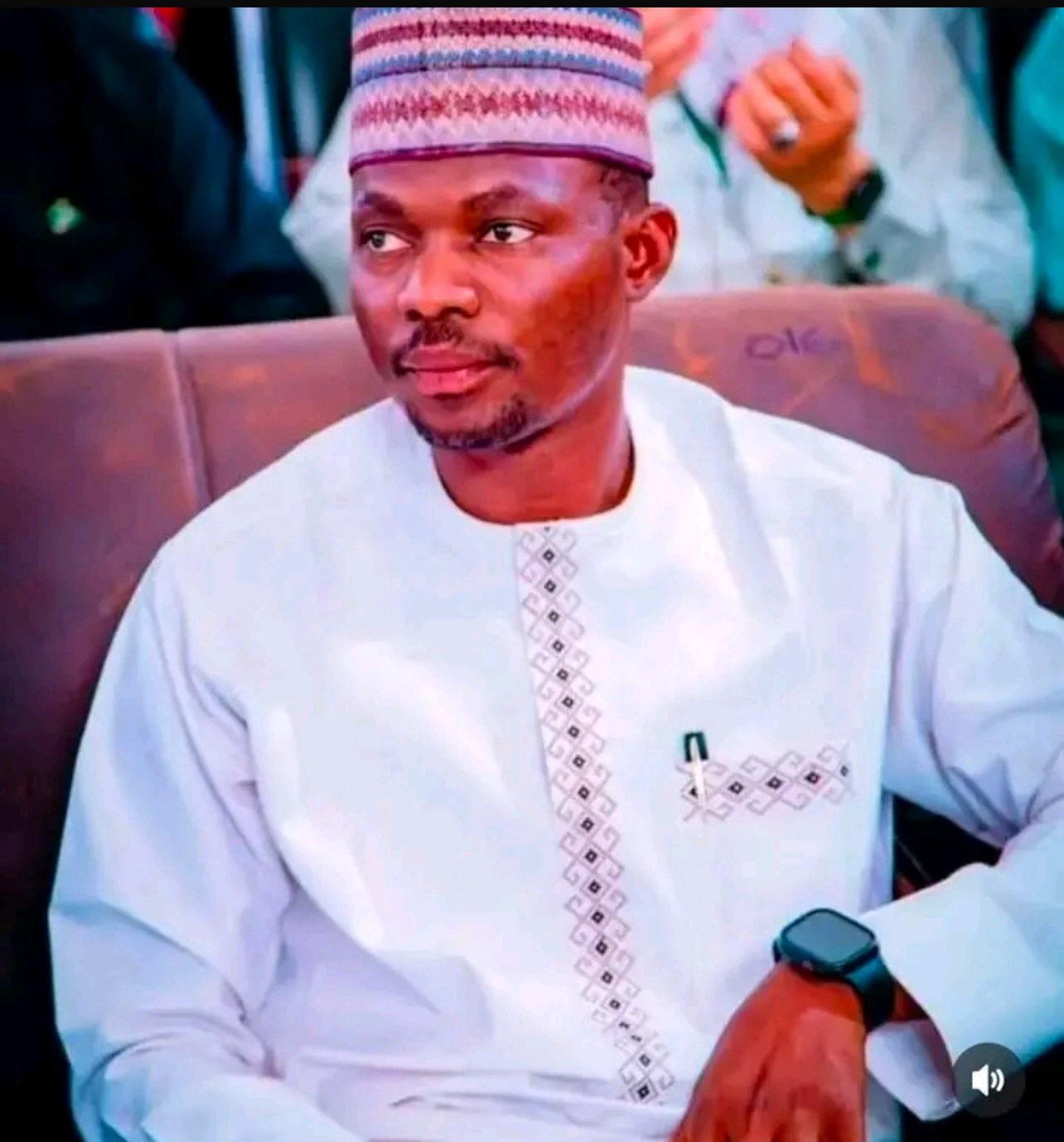
Nuru Aliyu Garwa once worked inside the machinery of government, holding a role tied to community development and public trust.
Today, security operatives allege he operated within a kidnapping syndicate that preyed on the very communities he was once meant to serve.
That contrast has placed him at the centre of one of Katsina State’s most politically sensitive criminal investigations in recent months a case that has moved beyond the abduction of an eight-year-old boy into a broader examination of how ransom kidnapping networks may intersect with local structures of influence, access, and authority.
Join our WhatsApp ChannelGarwa, a former Senior Special Assistant to the Katsina State Governor on the Community Development Programme (CDP), was arrested alongside five other suspects for allegedly masterminding the abduction of an eight-year-old boy in Katsina metropolis a case that has exposed the operational and financial architecture of ransom kidnapping in the North-West.
READ ALSO :
A Ransom Operation That Followed a Precise Chain
The victim was abducted on May 13, 2026, at about 6:00 p.m. while returning from an Islamic school in Katsina metropolis.
According to the Katsina State Police Command spokesperson, DSP Abubakar Sadiq Aliyu, the kidnappers contacted the family the following day and demanded ₦50 million.
After negotiations, the demand was reduced to ₦17 million.
The ransom was paid.
The child was released.
At face value, it appeared to be another entry in the North-West’s long-running kidnapping crisis.
But the case did not end at release. It moved into investigation.
Following a complaint by the victim’s family, operatives of the newly established Violent Crime Response Unit (VCRU) launched an intelligence-led operation that led to the arrest of six suspects on May 23, 2026.
Those arrested include:
- Nura Aliyu (39), identified as the alleged mastermind and a neighbour to the victim’s family
- Abubakar Aminu (37)
- Ibrahim Muhammad (51)
- Iliyasu Sani (51)
- Abubakar Muhammad (27)
- Abdullahi Isma’il (30)
One suspect identified as “Abdul” remains at large.

Police also say the suspects allegedly confessed during interrogation.

Security sources further claim that ₦7.5 million part of the ₦17 million ransom was recovered in cash, alongside a Peugeot 307 vehicle and a Boxer motorcycle allegedly used in the operation.
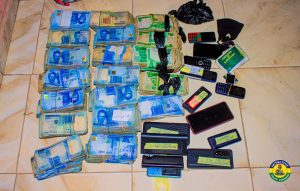
Each recovery strengthens the evidentiary trail. Each detail narrows the space for ambiguity.
READ MORE :
A Former Government Aide and the Politics of Proximity
Garwa’s arrest has added a politically sensitive layer to an already volatile case.
Before his detention, he served as Senior Special Assistant on the Community Development Programme under the Katsina State Government. He was later suspended over allegations involving the diversion of empowerment materials intended for communities in Batsari Local Government Area.
Officials also confirmed he had expressed interest in contesting a seat in the Katsina State House of Assembly.
That trajectory from community development office to suspension to political ambition to kidnapping allegations has placed him at the centre of public scrutiny.
It also raises a more difficult institutional question: how does a figure embedded in community-facing government programmes become a key suspect in a ransom kidnapping network operating within the same communities?
The state government has distanced itself from the allegations while acknowledging his previous role, and Governor Dikko Umaru Radda has described the development as unfortunate, while commending security agencies for their response.
When Kidnapping Stops Looking External
Katsina remains one of the epicentres of Nigeria’s North-West insecurity crisis, with repeated abductions in local government areas including Batsari, Jibia, Safana, and Faskari.
For years, official narratives have framed kidnapping as the work of armed groups operating from forest corridors outside settled communities.
This case complicates that framing.
It presents a sequence of events that appears less random and more structured from abduction to negotiation, ransom payment, release, arrests, and recovery of funds.
A system that behaves with coordination rather than chaos.
That is what makes the implications more sensitive than the crime itself.
Because if kidnapping networks can operate with that level of organisation and potentially intersect with individuals linked to local administrative structures then the problem is no longer confined to insecurity alone.
It becomes a question of institutional proximity.
And in Katsina, that is the line this case has forced into public view.

Amanze Chinonye is a Staff Correspondent at Prime Business Africa, a rising star in the literary world, weaving captivating stories that transport readers to the vibrant landscapes of Nigeria and the rest of Africa. With a unique voice that blends with the newspaper's tradition and style, Chinonye's writing is a masterful exploration of the human condition, delving into themes of identity, culture, and social justice. Through her words, Chinonye paints vivid portraits of everyday African life, from the bustling markets of Nigeria's Lagos to the quiet villages of South Africa's countryside . With a keen eye for detail and a deep understanding of the complexities of Nigerian society, Chinonye's writing is both a testament to the country's rich cultural heritage and a powerful call to action for a brighter future. As a writer, Chinonye is a true storyteller, using her dexterity to educate, inspire, and uplift readers around the world.