 Prosper Okoye
The video is loud. The reactions are louder. But behind the trending clips and political arguments is a familiar Nigerian story — one about trust, memory, and how quickly old issues can return in new forms.
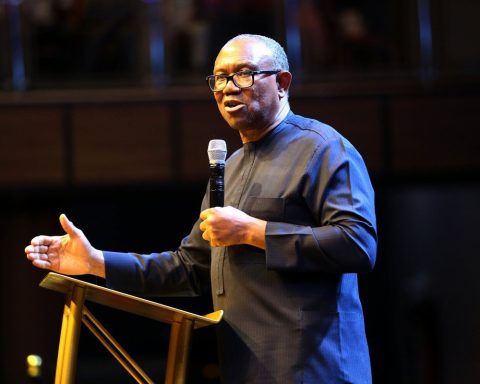
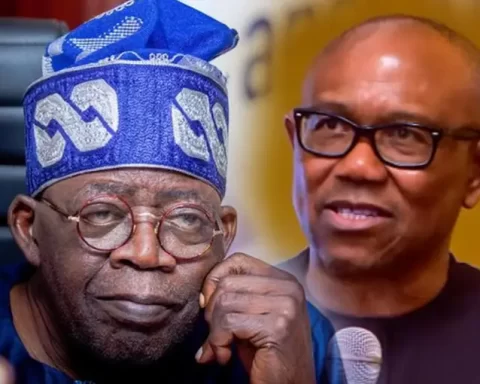
Since the weekend, social media has been flooded with a viral video targeting Peter Obi. It is not him speaking. Instead, it is a sharply edited exposé-style clip, complete with documents, captions, and narration, suggesting that he acquired sudden wealth during the era of Sani Abacha.
For many Nigerians scrolling through X, Facebook, or Instagram, the claim is simple and striking: how did a man linked to a government task force in April 1996 allegedly pay £1 million cash for a London house just months later?
Join our WhatsApp ChannelBut the reality, as often happens in Nigeria’s political space, is more layered — and for ordinary people watching, what matters is not just the facts, but what those facts say about credibility.
The video itself leans heavily on timing. It shows what is presented as an official letter co-opting Obi into a federal task force during Abacha’s regime. Then it overlays a second claim: that he bought a London property in September 1996, paid in full, without a mortgage. The implication is clear, even if not directly proven — that proximity to power may have played a role.
READ ALSO:
Kano Governor Dismisses ADC as Politically Irrelevant Ahead of 2027
2027: Obidient Movement Alleges APC Plot to Stop Obi From Contesting
Atiku Hires US Lobby Firm in $1.2m Push to Shape Image Ahead of 2027
That suggestion has struck a nerve because Obi has built his public image around prudence and personal discipline. To supporters, he represents a different kind of politician. To critics, that image makes him a bigger target.
What many younger viewers may not realise is that this controversy is not new. It dates back years.
During the political season around 2022, Obi himself addressed the same London property in a resurfaced video now circulating again. In it, he explained that Nigeria’s anti-graft agency had questioned him about the house. He said he provided proof of payment — a £1 million transaction — and insisted the purchase came from his business earnings long before he entered politics.
Long before becoming governor in 2006, Obi was known in commercial circles as a trader dealing in imported goods. His allies argue that by the mid-1990s, he was already financially established enough to afford such an investment. They also point out that he has publicly declared his assets in the past.
Yet, for critics, the issue is not just ownership — it is timing. The brief link to an Abacha-era task force, however limited, raises suspicion in a country where many still associate that period with large-scale corruption.
That tension is exactly why the video is spreading so fast.
Across Nigeria, reactions have split along familiar lines. Some see the clip as evidence that no politician is truly different. Others dismiss it as a recycled political attack, strategically revived as debates over leadership and the future intensify.
For the average Nigerian, however, the bigger question goes beyond Obi himself.
It speaks to a deeper frustration: why do so many political conversations revolve around the past, with the same allegations resurfacing, instead of clear answers about today’s economic hardship, rising prices, and insecurity?
As of now, Obi has not directly responded to the resurfaced video. His recent public messages have focused on national issues rather than the controversy.
But the silence may not slow the conversation.
Because in Nigeria’s digital age, perception often travels faster than clarification — and once a narrative takes hold, it becomes part of the political story, whether new or recycled.
In the end, this is not just about a house in London in 1996. It is about how Nigerians judge credibility in 2026 — and how quickly the past can be pulled into the present.

Prosper Okoye is a Correspondent and Research Writer at Prime Business Africa, a Nigerian journalist with experience in development reporting, public affairs, and policy-focused storytelling across Africa