Admin
Admin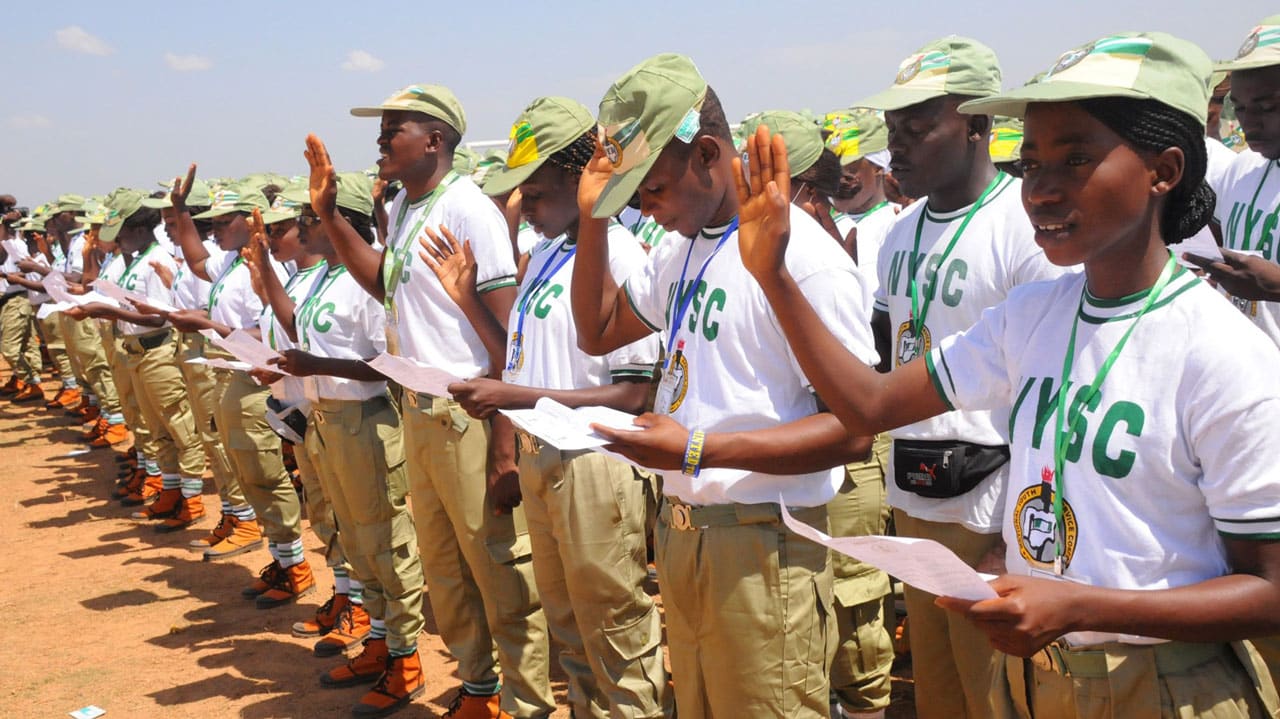
The National Youth Service Corps (NYSC) stands at the threshold of what could be the most comprehensive transformation in its 53-year history. Established in 1973 as an instrument of national reconciliation after the Nigerian Civil War, the scheme has evolved over the decades into one of the country’s most enduring institutions for promoting national unity, youth development, and community service. More than 5.5 million Nigerian graduates have passed through its ranks, serving in every corner of the federation and contributing to education, healthcare, agriculture, public administration, and rural development.
Yet Nigeria today is vastly different from the country that gave birth to the NYSC. Rising insecurity, rapid technological change, persistent graduate unemployment, shifting labor market demands, and growing concerns about corps members’ safety have exposed structural weaknesses in the scheme. These realities have fueled repeated calls for its abolition, regionalization, or radical restructuring.
The Federal Government has now responded with what appears to be a bold middle course—not scrapping the NYSC but reinventing it for the twenty-first century. Speaking on the proposed reforms, the Special Adviser to President Bola Tinubu on Policy Coordination, Hadiza Bala Usman, unveiled a far-reaching restructuring that seeks to transform the NYSC from a largely ceremonial national service programme into a modern platform for leadership development, professional training, entrepreneurship and national productivity.
Among the most significant proposals is the restructuring of the orientation program into three carefully designed phases. Rather than concentrating almost exclusively on military drills, lectures, and physical exercises, the new orientation camp will become an intensive six-week development programme.
Join our WhatsApp ChannelThe first phase will focus on civic responsibility, patriotism, leadership development, national values, and nation-building—objectives central to the NYSC’s founding philosophy. The second phase will equip corps members with practical knowledge in career planning, entrepreneurship, financial literacy, business development, and access to finance. The final phase will introduce specialised professional training tailored to participants’ educational backgrounds and career aspirations.
Perhaps the most innovative aspect of the reform is the creation of eleven specialised service streams. Corps members will choose from Agric Corps, Medical Corps, Education Corps, Tech and Digital Corps, Legal Corps, Public Service Corps, Infrastructure Corps, Green Corps, Enterprise Corps, Creative Economy Corps, and Paramilitary and Security Corps. The objective is simple yet profound: to bridge the long-standing disconnect between university education and labor market expectations by providing practical, career-oriented experience during national service.
Equally noteworthy is another proposal that has attracted less public attention but may prove historically significant. Under the reform agenda, the NYSC will no longer be headed by a military officer. Instead, it is proposed that the Director-General be a civilian, a departure from a tradition dating back to the scheme’s establishment under military rule. This seemingly administrative adjustment carries profound symbolic and institutional significance. The NYSC has matured beyond its origins as a post-war, military-inspired integration programme. Today, its core responsibilities focus on education, skills development, entrepreneurship, youth empowerment, and community service rather than military administration. Placing the organisation under civilian leadership reflects this evolution and aligns it more closely with contemporary public-sector governance.
However, implementing this proposal will not be straightforward. Because the appointment of the Director-General is provided for in the NYSC Act, replacing the long-standing military leadership structure will require an amendment to the enabling legislation by the National Assembly. It is therefore not merely an administrative decision but an important legislative reform that could redefine the institutional character of one of Nigeria’s most recognisable public institutions.
The emphasis on specialized training also represents a major shift in national workforce planning. For decades, employers have complained that many Nigerian graduates possess academic qualifications but lack practical workplace competencies. Universities have equally struggled to keep pace with technological disruption and rapidly changing industry requirements.
The proposed reforms acknowledge this gap by making employability an explicit objective of national service. Rather than merely posting graduates to organisations for one year, the government intends to use the NYSC as a bridge between higher education and productive employment.
This approach mirrors successful practices in several developed economies. In Germany, the former civilian service programme and today’s voluntary federal service programmes have long combined national service with practical skills development, preparing participants for careers in healthcare, education, and social services.
Singapore integrates compulsory national service with continuous leadership development, advanced technical training, and post-service educational opportunities, producing a disciplined workforce that supports both national security and economic competitiveness. Although Israel is primarily a military power, it has become an important incubator for technological innovation. Many entrepreneurs who later built globally recognized technology companies acquired leadership, cybersecurity, and engineering skills during national service.
Similarly, South Korea increasingly incorporates specialised technical assignments that enable graduates in medicine, research, engineering, and public administration to apply their professional expertise while fulfilling national obligations. Nigeria’s proposed specialised corps streams reflect elements of these international experiences while adapting them to local development priorities.
Another important dimension of the reforms addresses perhaps the greatest threat to the continued survival of the NYSC — security. In recent years, kidnappings, banditry, insurgency, and communal violence have fundamentally altered public perceptions of national service. Many graduates and their parents now view deployment not as an opportunity for national integration but as a potential security risk.
Research has shown that an increasing number of prospective corps members seek redeployment immediately after mobilisation, often citing health or marital considerations to avoid deployment to insecure areas. Beyond physical danger, the psychological burden associated with uncertain postings has also become a growing concern.
Against this background, the proposed review of the deployment process, with greater consideration of prevailing security realities, may prove to be one of the most consequential elements of the reform package. The government appears to have accepted an important reality: national integration cannot be pursued at the expense of the lives and well-being of young graduates.
The reforms also offer an opportunity to strengthen existing initiatives, such as the Skill Acquisition and Entrepreneurship Development (SAED) program. Although SAED introduced entrepreneurship into the NYSC years ago, numerous evaluations indicate that inadequate financing, weak mentoring structures, and poor post-service support have limited its impact. Many participants acquire valuable skills but lack access to capital, business incubation, or structured follow-up after completing national service. Embedding entrepreneurship, financial literacy, and career planning directly into the redesigned orientation programme may therefore provide a more integrated pathway to employment and self-reliance.
Nevertheless, successful implementation will require much more than policy announcements. The specialised streams will demand modern training facilities, digital infrastructure, qualified instructors, industry partnerships, and sustained funding. Ministries, universities, professional bodies, and private-sector organisations must collaborate to ensure that specialised training is matched by equally relevant deployment.
A graduate trained through the Tech and Digital Corps, for instance, should ideally serve in technology hubs, innovation centers, or digital government agencies. Medical Corps participants should support primary healthcare facilities, while Education Corps members should strengthen schools facing acute teacher shortages. Only then can specialised service translate into measurable national development.
The reforms also reopen an old conversation about rural development. Available evidence shows that corps members remain indispensable in many rural communities where they serve as teachers, healthcare workers, and development facilitators. Their contributions are especially significant in education, healthcare, and community development. Yet poor accommodation, inadequate infrastructure, and limited incentives continue to discourage service in rural areas. Addressing these disparities should become an integral component of the ongoing reforms.
Ultimately, the significance of the proposed restructuring lies not simply in changing the orientation curriculum or creating new service streams. It lies in redefining the very philosophy of the NYSC. The scheme is gradually evolving from a post-war integration mechanism into a comprehensive national human capital development strategy, one that simultaneously seeks to promote unity, improve employability, encourage entrepreneurship, enhance productivity, and support national development. That transformation is both timely and necessary.
However, Nigeria’s experience with public-sector reforms offers an important caution. Many ambitious policies have faltered because implementation did not match the original vision’s quality. The NYSC reforms will therefore require sustained political commitment, legislative backing, adequate funding, and rigorous monitoring. If these conditions are met, the proposed reforms could become the most significant milestone in the NYSC’s history since General Yakubu Gowon’s administration established it in 1973.
Fifty-three years after its birth, the NYSC is once again preparing to reinvent itself. This time, the mission is no longer to heal a nation emerging from civil war. It is to prepare a generation of Nigerian graduates to compete, innovate, lead, and contribute meaningfully to national development in an increasingly complex global economy. That is a reform agenda worthy of national attention—and one whose success could define the future relevance of one of Nigeria’s greatest nation-building institutions.
Dr Onyima, a media scholar, teaches at Paul University, Awka.