 Amanze Chinonye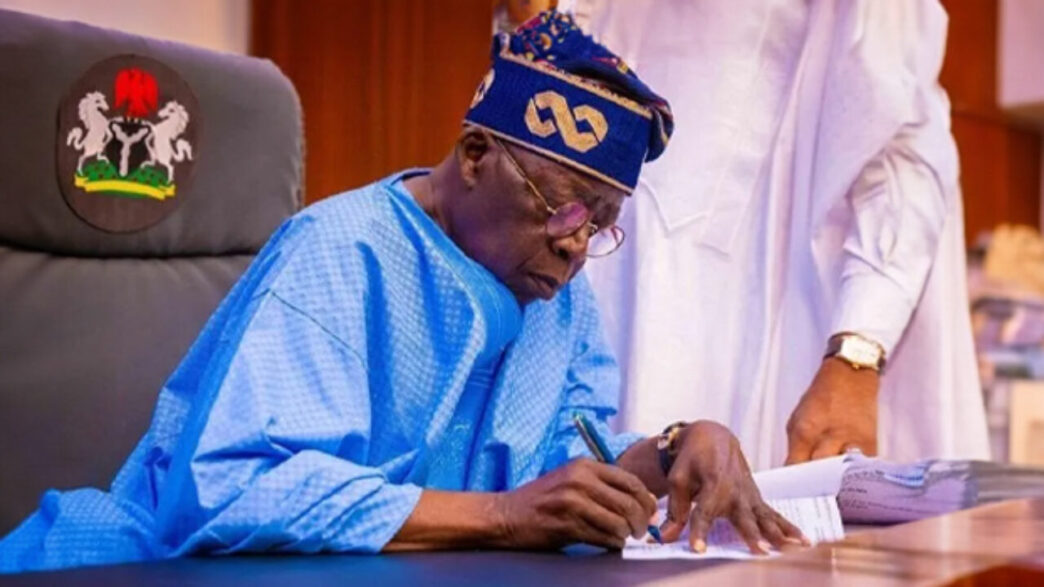
The Federal Government has directed banks, capital market operators, bureaux de change and other designated non-financial businesses and professions to immediately freeze the assets of individuals and entities linked to terrorism financing, as authorities intensify efforts to dismantle financial networks sustaining extremist groups, Prime Business Africa reports.
The directive, issued by the Nigeria Sanctions Committee (NSC), follows recent sanctions imposed by the United States government on a Nigerian national and three bureaux de change accused of facilitating financial transactions for the Islamic State West Africa Province (ISWAP).
READ ALSO :
Join our WhatsApp ChannelUS Sanctions Lagos-Based ISIS Financier, Three Nigerian Bureaux de Change
In a statement on Thursday, the committee reiterated that all financial institutions and designated non-financial businesses and professions (DNFBPs) must comply fully with sanctions obligations, including asset-freezing requirements, the filing of Suspicious Transaction Reports (STRs), and the reporting of relevant matches to appropriate authorities.
The order underscores the government’s determination to target not only terrorist operatives but also the financial infrastructure that enables them to recruit members, procure logistics and sustain operations.
The U.S. government, acting under Executive Order 13224, recently sanctioned Lagos-based financier Mukhtar Adamu Muhammad and three bureaux de change Generation Currency Bureau De Change Limited, Nine to Nine Exchange Bureau De Change Limited and Manhattan Bureau De Change Limited for moving funds on behalf of ISIS as part of a wider crackdown on the group’s financial networks across Europe, the Middle East and West Africa.
The NSC welcomed the U.S. action, describing it as a significant reinforcement of measures already taken by Nigerian authorities.
According to the committee, Mukhtar Adamu Muhammad, Nine to Nine BDC Limited and Generation Currency BDC Limited were among those included in an update to the Nigeria Sanctions List published on June 18, 2026.
The committee said the designation of six individuals and three entities followed extensive intelligence gathering, financial investigations and inter-agency assessments that established reasonable grounds to believe they had facilitated, financed, supported or otherwise contributed to the activities of ISWAP and affiliated terrorist networks.
Those listed by Nigerian authorities include Ibrahim Yakubu Ogirima, Adamu Chiroma, Ibrahim Abubakar, Abdullahi Umar Usman, Babangida Muhammed, Adamu Hammajam and Abbal Bako & Sons Bureau De Change Limited.
“Nigeria remains resolute in its commitment to ensuring that terrorists and their financiers find no safe haven within the country’s financial system,” the committee said.
It also commended the Federal Ministry of Justice, the Office of the National Security Adviser (ONSA), the Central Bank of Nigeria (CBN), the Department of State Services (DSS), the Economic and Financial Crimes Commission (EFCC) and the Nigerian Financial Intelligence Unit (NFIU) for their roles in identifying and disrupting financial networks linked to terrorism.
The latest enforcement action reflects growing cooperation between Nigeria and its international partners in tracking and blocking financial flows linked to terrorism across West Africa and the Sahel.
READ MORE :
Nigerian Govt Freezes Bank Accounts Of Simon Ekpa, 16 Others For Terrorism
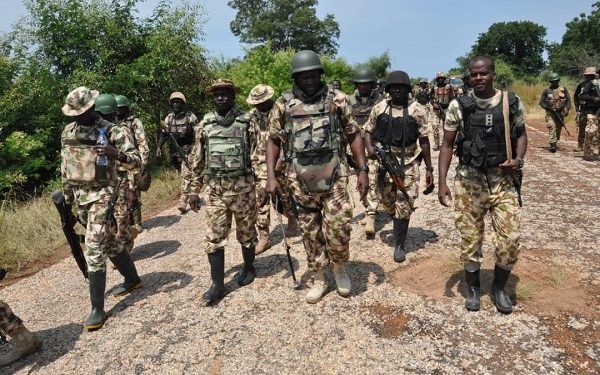
In a related development, the Chief of Defence Intelligence, Lt. Gen. Emmanuel Undiandeye, said the military had significantly degraded terrorist groups operating in the country through coordinated operations with allied partners, including the United States, the United Kingdom and France.
Speaking during the Second Quarter Operations Briefing for Foreign Defence Advisers and Attachés at the Defence Intelligence Agency headquarters in Abuja, Undiandeye said Nigerian forces had dismantled key terrorist structures and neutralised several commanders, logistics operatives and support networks.
“Our forces have assaulted, decimated and decapitated them so much that their logistics, arms and ammunition couriers and other supporting networks have been vanquished,” he said.
The intelligence chief added that enhanced intelligence gathering, improved operational capabilities and stronger international collaboration had contributed to recent successes against terrorist groups.
The simultaneous tightening of financial sanctions and sustained military pressure highlights Nigeria’s evolving counterterrorism strategy, which increasingly targets both armed fighters and the financial channels that sustain them.
Analysts say disrupting terrorist financing networks could further weaken extremist groups by restricting their access to funds, reducing operational capacity and limiting their ability to expand their activities.

Amanze Chinonye is a Staff Correspondent at Prime Business Africa, a rising star in the literary world, weaving captivating stories that transport readers to the vibrant landscapes of Nigeria and the rest of Africa. With a unique voice that blends with the newspaper's tradition and style, Chinonye's writing is a masterful exploration of the human condition, delving into themes of identity, culture, and social justice. Through her words, Chinonye paints vivid portraits of everyday African life, from the bustling markets of Nigeria's Lagos to the quiet villages of South Africa's countryside . With a keen eye for detail and a deep understanding of the complexities of Nigerian society, Chinonye's writing is both a testament to the country's rich cultural heritage and a powerful call to action for a brighter future. As a writer, Chinonye is a true storyteller, using her dexterity to educate, inspire, and uplift readers around the world.