 Amanze Chinonye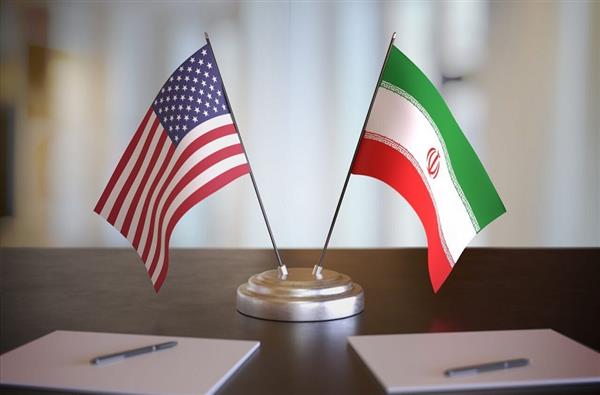
Iran has rejected U.S. claims that billions of dollars in unfrozen Iranian assets would be restricted to purchases of American agricultural products, exposing fresh divisions between Washington and Tehran despite ongoing diplomatic engagements.
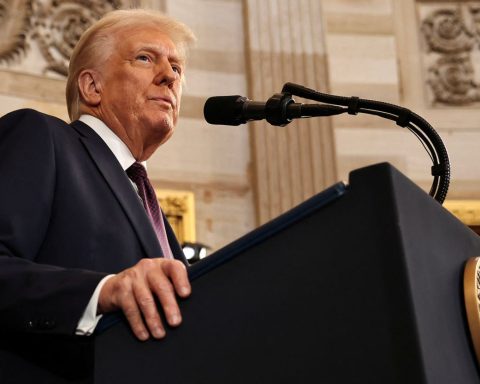
The dispute emerged after U.S. President Donald Trump and Vice President JD Vance said the funds would be held in a U.S.-controlled escrow arrangement and used exclusively to purchase American corn, wheat and soybeans.
However, Iranian officials insist no such condition exists in the agreement under discussion.
Join our WhatsApp Channel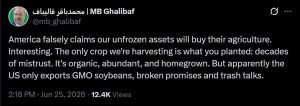
Iranian Parliament Speaker Mohammad Bagher Ghalibaf dismissed the U.S. position in a sharply worded statement, accusing Washington of misrepresenting the terms governing the release of Iranian assets.
“America falsely claims our unfrozen assets will buy their agriculture,” Ghalibaf said. “The only crop we’re harvesting is what you planted: decades of mistrust.”
READ ALSO :
Trump Says Iran Won’t Charge Ships in Strait of Hormuz, Plans Food Purchases From U.S. Farmers
The exchange underscores lingering disagreements over key elements of recent U.S.-Iran negotiations, including sanctions relief and the management of Iranian funds frozen abroad.
While U.S. officials have portrayed the talks as a step toward easing tensions between the two countries, Iranian authorities have repeatedly challenged Washington’s interpretation of several provisions, raising questions about the durability of any emerging understanding.
The disagreement comes amid heightened regional tensions, particularly over Israel’s military presence in southern Lebanon.
Iran’s Quds Force Commander, Esmail Qaani, warned that Israel would eventually be compelled to leave the area if it did not withdraw voluntarily.
“If Israel does not withdraw from southern Lebanon voluntarily today, it will be forced to flee tomorrow,” Qaani said.
His comments reflect Tehran’s continued support for demands by Lebanese authorities and allied groups for a complete Israeli withdrawal from southern Lebanon.
READ MORE :
US-Iran Talks Yield 60-Day Roadmap as Lebanon Dispute Threatens Progress
Israeli officials, however, have maintained that troops will remain in parts of the border region for security reasons, arguing that the deployment is necessary to counter threats from armed groups operating near its northern frontier.
The latest rhetoric from Tehran highlights the fragile state of diplomacy in the Middle East, where disputes over sanctions, regional security arrangements and military deployments continue to complicate efforts to secure broader stability.
With Washington and Tehran still at odds over the interpretation of key commitments, analysts say the path toward a lasting agreement remains uncertain despite recent diplomatic progress.

Amanze Chinonye is a Staff Correspondent at Prime Business Africa, a rising star in the literary world, weaving captivating stories that transport readers to the vibrant landscapes of Nigeria and the rest of Africa. With a unique voice that blends with the newspaper's tradition and style, Chinonye's writing is a masterful exploration of the human condition, delving into themes of identity, culture, and social justice. Through her words, Chinonye paints vivid portraits of everyday African life, from the bustling markets of Nigeria's Lagos to the quiet villages of South Africa's countryside . With a keen eye for detail and a deep understanding of the complexities of Nigerian society, Chinonye's writing is both a testament to the country's rich cultural heritage and a powerful call to action for a brighter future. As a writer, Chinonye is a true storyteller, using her dexterity to educate, inspire, and uplift readers around the world.