PBA Reporter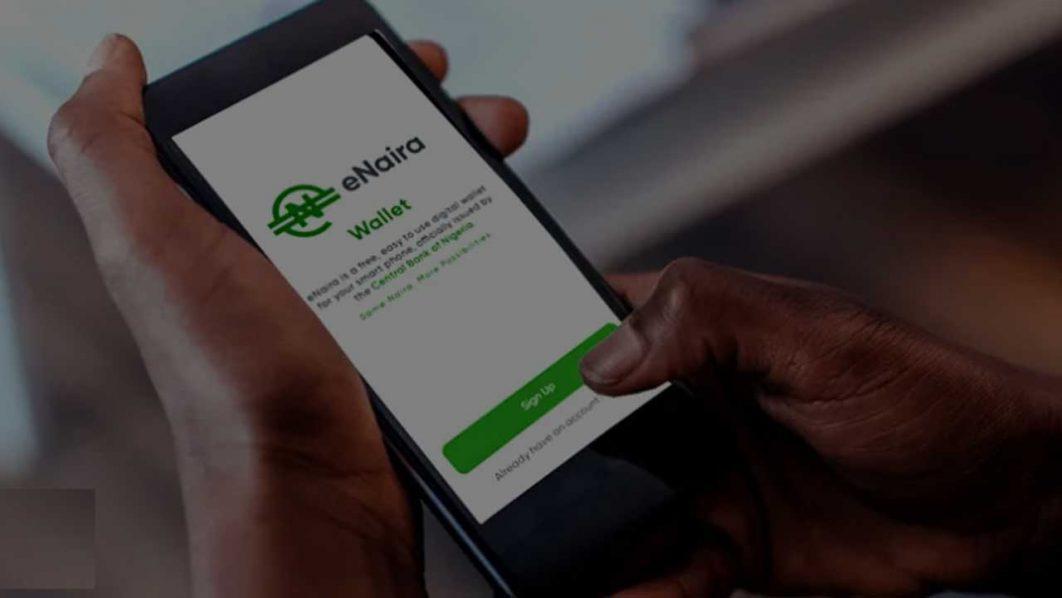
The Central Bank of Nigeria (CBN) is considering a series of options to push the adoption of the eNaira, including the possibility of making it a payment gateway.
Prime Business Africa is aware that the payment gateway is a technology merchants use to accept debit or credit card purchases from customers. It collects customer card information and encrypts it for processing.
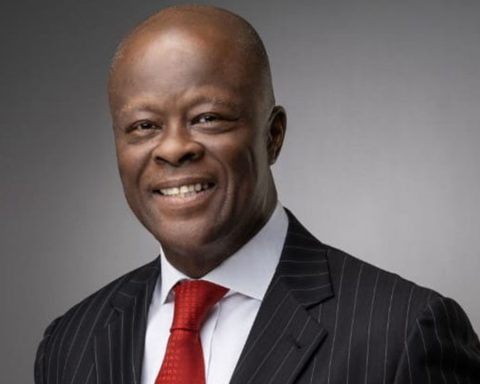
Speaking at the 2021 Business Luncheon of the Chartered Institute of Taxation of Nigeria (CITN) on Wednesday, the Director, Payments System Management Department of the bank, Musa Jimoh, said: “conversations were ongoing with financial technology (fintech) stakeholders” on the possibility of making eNaira a gateway.
Join our WhatsApp Channel“Ultimately, the apex bank is looking at expanding the use cases of the Central Bank digital currency (CBDC), increasing its adoption and making it more relevant to the payment ecosystem. The pilot phase was unveiled with limited use cases, with a focus on person-to-person (P2P) and person-to-business (P2B) transactions.
Jimoh, who was represented by Chai Gang, said the next phase of the project would see the use cases expanded to make eNaira more scalable and relevant to all socio-economic strata.
He disclosed CBN was also looking at onboarding Nigerians without smartphones and leveraging unstructured supplementary service data (USSD) to reach “the financially-excluded individuals” as well as places with low Internet connectivity.
“We are looking at developing offline use cases through USSD, which does not need strong data. Wearables will also help in areas where there is no Internet network. With these, people could just tap and transact as they go,” the director said.
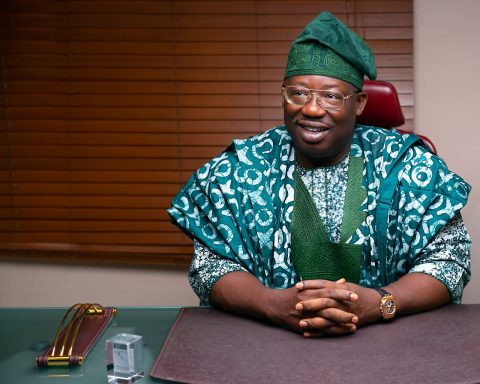
CITN President, Adesina Adebayo, is hopeful a wider adoption of digital naira will help the government to increase tax revenue as it is expected to help relevant agencies to monitor and track transactions. He said the CBN would also provide a regulatory backbone for the disruptive cryptocurrency.
“Look at taxation from the perspective of incomes and transactions. When you have income and transact using eNaira, it is easy to track both income and profit margin on the transaction. Tax comes in when the relevant agencies can track the transaction and ascertain the profits,” Adebayo said.
He noted that Nigeria’s tax-to-gross domestic product (GDP) is low because the country is deepening the tax net or expanding the horizon of the implementation framework.
“If these are the basis for accessing the low tax-to-GDP, it is important to ask how many Nigerians pay taxes. The second question would be how many people pay the right amount. eNaira will expand the net and boost tax revenue. This is the advantage of eNaira,” the CITN President stated.
Special Adviser to the Senate President on Economic Matters, Nasifi Abdullahi, said the government needed to fine-tune strategies to leverage the digital economy to expand its revenue.
Abdullahi, who represented Senate President Ahmad Lawan, noted that the digital economy could no longer be ignored as businesses were fast-moving online. He described the low tax-to-revenue profile of the country as both a prospect and a challenge to the economy.

- PBA Reporter
- PBA Reporter
- PBA Reporter
- PBA Reporter
- PBA Reporter
- PBA Reporter
- PBA Reporter
- PBA Reporter
- PBA Reporter
- PBA Reporter
- PBA Reporter
- PBA Reporter
- PBA Reporter
- PBA Reporter
- PBA Reporter
- PBA Reporter
- PBA Reporter
- PBA Reporter
- PBA Reporter
- PBA Reporter
- PBA Reporter
- PBA Reporter
- PBA Reporter
- PBA Reporter
- PBA Reporter
- PBA Reporter
- PBA Reporter
- PBA Reporter
- PBA Reporter
- PBA Reporter
- PBA Reporter
- PBA Reporter
- PBA Reporter
- PBA Reporter
- PBA Reporter
- PBA Reporter
- PBA Reporter
- PBA Reporter
- PBA Reporter
- PBA Reporter
- PBA Reporter
- PBA Reporter
- PBA Reporter
- PBA Reporter
- PBA Reporter
- PBA Reporter
- PBA Reporter
- PBA Reporter
- PBA Reporter
- PBA Reporter
- PBA Reporter
- PBA Reporter
- PBA Reporter
- PBA Reporter
- PBA Reporter
- PBA Reporter
- PBA Reporter