Bisina Somto, PBA Journalism Mentee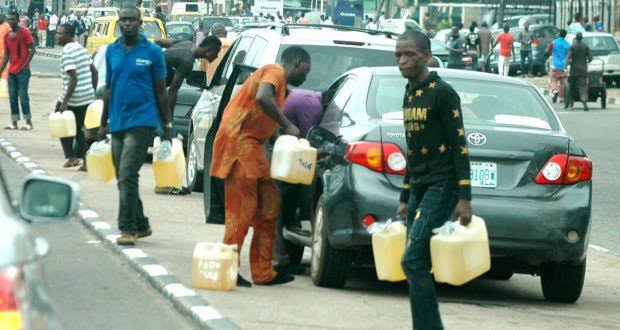
The average Nigerian motorist and, indeed, every Nigerian are grappling with the lingering nationwide fuel scarcity that has refused to go away.
The scarcity, particularly of Premium Motor Spirit (PMS), has paved way for black marketers to make brisk business hawking the product to stranded motorists in different parts of Lagos.
Join our WhatsApp ChannelLong petrol queues around filling stations are growing by the day. There is no part of the country where the price of this vital commodity has not gone up astronomically. It started with. Lagos and Abuja but has spread to other cities across the nation due to continued disruption of the supply chain.
The fuel scarcity appears to have defied all measures put in place by the Nigerian National Petroleum Company Limited (NNPCL), the Nigerian Midstream and Downstream Petroleum Regulatory Authority (NMDPRA) and the independent marketers.
The scarcity has caused a surge in price of fuel in both filling stations and black marketers as many Nigerians are in desperate need of the product on daily basis.
Prime Business Africa reports that pump prices of petrol at filling stations now sell between 250 and 270 per litre in Lagos and Abuja.
At the black market, the product sells for between N350 and N500 per litre at Ajah and Victoria Island, and N450 at Ejigbo and other areas in Lagos.
Some reports indicate that a good number of retail outlets have formed a cartel and are ration the days they sell petrol to normal end users, preferring to sell to black marketers, who buy in bulk to resell.
This has led to sudden increase in number of black marketers on streets and highways, taking advantage of the situation and further worsening the plight of residents as a result of the fuel scarcity.
The scarcity has consequently led to hike in transport fare for various routes by at least 200 per cent, also pushing up prices of some consumer goods. This makes nonsense of official inflation statistics released by the National Bureau of Statistics.
In fact, the World Bank recently said that runaway inflation had eaten up Nigeria’s official minimum wage of N30,000 to some N19,000 in real terms.
Kenneth, a Lagos-based motorist, told Prime Business Africa that he had resorted to buying fuel from black marketers around Ikotun area when he could not afford to be on long queue at filling stations to buy petrol.