PBA Reporter
The World Bank’s report has claimed that import restrictions and non-flexible exchange rate management of the Central Bank of Nigeria are the major driving forces for food inflation in Nigeria.
Join our WhatsApp ChannelThis was contained in the Washington-based bank in new biannual report by the World Bank known as Africa’s Pulse.
It read in part: “Rising food prices are the underlying factor behind the surge of headline inflation in Nigeria. Food prices have increased due to import restrictions and a nonflexible exchange rate management.
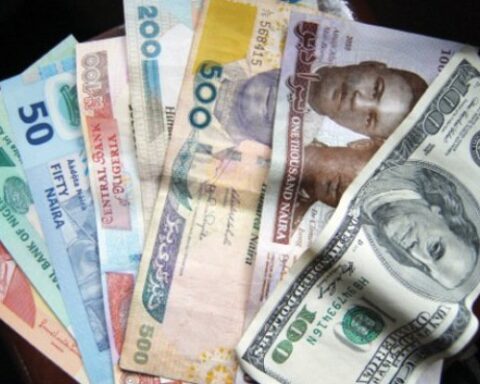
“The current regime is keeping the official exchange rate of the naira artificially strong while the naira has weakened significantly on the parallel market. Additionally, the central bank has restricted importers’ access to foreign currency for 45 products and has reduced the supply to other importers.
“Inflation reached a four-year high at 18.2 per cent in March 2021, then eased to 16.0 per cent in October 2021 as food price inflation fell from a peak of 22.9 per cent in March to 18.3 per cent. Headline inflation rose to 15.7 per cent in February 2022, up by 0.1 percentage point from the two preceding months.”
The bank maintained that food and fuel shortages weighed on consumer prices despite fuel subsidies, adding that the war in Ukraine would likely worsen inflation rates.
According to it, “Food and fuel shortages put pressure on consumer prices despite fuel subsidies. Inflation is expected to remain high as the negative effects of the war in Ukraine are still coming through, with an annual projection of 14.8 per cent for 2022.
“Going forward, headline inflation is forecast to decline gradually to 13 and 11 per cent in 2023 and 2024, respectively”
The National Bureau of Statistics reported that Nigeria’s Consumer Price Index rose to 15.92 per cent in March.
The rise in the inflation rate in March showed that Nigeria is not left out in the global inflation surge currently being witnessed.

- PBA Reporter
- PBA Reporter
- PBA Reporter
- PBA Reporter
- PBA Reporter
- PBA Reporter
- PBA Reporter
- PBA Reporter
- PBA Reporter
- PBA Reporter
- PBA Reporter
- PBA Reporter
- PBA Reporter
- PBA Reporter
- PBA Reporter
- PBA Reporter
- PBA Reporter
- PBA Reporter
- PBA Reporter
- PBA Reporter
- PBA Reporter
- PBA Reporter
- PBA Reporter
- PBA Reporter
- PBA Reporter
- PBA Reporter
- PBA Reporter
- PBA Reporter
- PBA Reporter
- PBA Reporter
- PBA Reporter
- PBA Reporter
- PBA Reporter
- PBA Reporter
- PBA Reporter
- PBA Reporter
- PBA Reporter
- PBA Reporter
- PBA Reporter
- PBA Reporter
- PBA Reporter
- PBA Reporter
- PBA Reporter
- PBA Reporter
- PBA Reporter
- PBA Reporter
- PBA Reporter
- PBA Reporter
- PBA Reporter
- PBA Reporter
- PBA Reporter
- PBA Reporter
- PBA Reporter
- PBA Reporter
- PBA Reporter
- PBA Reporter
- PBA Reporter