 Amanze Chinonye
The Federal Government of Nigeria has released detailed transition guidelines to support the implementation of its Tax Acts 2025, setting out how taxpayers, businesses, investors and public authorities will move from the current tax regime to a newly restructured system scheduled to take effect on January 1, 2026, Prime Business Africa reports.
Issued by the Federal Ministry of Finance, the guidelines are intended to ensure an orderly shift between the existing tax framework and the new laws, which represent one of the most comprehensive overhauls of Nigeria’s tax system in decades. They clarify how ongoing tax obligations, disputes, audits and compliance matters that span both regimes will be treated during the transition period.
READ ALSO :
Join our WhatsApp ChannelStrategy, Timing, Trust Key to Nigeria’s Tax Reform Success – CPPE
The reforms introduce a consolidated legal framework comprising the Nigeria Revenue Service (Establishment) Act, the Nigeria Tax Act, the Nigeria Tax Administration Act and the Joint Revenue Board (Establishment) Act. Each component law will take effect according to its stipulated commencement date, with the main operational tax law becoming effective on January 1, 2026.
Under the guidelines, tax liabilities and enforcement actions relating to periods before that date will continue to be governed by existing legislation. Conversely, all obligations arising from January 1, 2026, onward will fall under the new tax framework.
Tax filings will also follow a split regime: returns covering accounting periods ending before January 1, 2026, will be processed under the current system, while those ending after that date will be administered under the new laws.
The transition document further outlines how key tax categories including income tax, transaction-based taxes, development levies, incentives, exemptions, and record-keeping obligations will be handled where transactions span both regimes.
To provide continuity and investor confidence, the government confirmed that existing tax incentives and exemptions granted under previous laws will remain valid until their scheduled expiration. However, any new or pending applications will be assessed under the new legal framework.
READ MORE :
Tax Reform Bills: Why Authorities Must Integrate Technology In Tax System– Expert
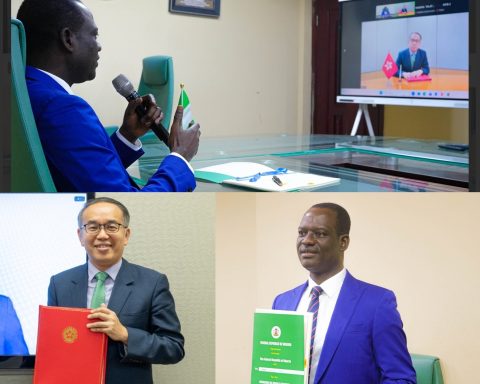
Speaking on the release of the guidelines, Nigeria’s Minister of Finance and Coordinating Minister of the Economy, Taiwo Oyedele, said the framework is designed to manage transitional complexities while ensuring that the new tax laws are not applied retroactively.
He described the reforms as a landmark in Nigeria’s fiscal modernisation agenda, adding that the guidelines provide structured rules for handling existing obligations, ongoing cases and future transactions under a unified system.
According to him, the transition framework is anchored on three principles: clarity, fairness and administrative certainty aimed at reducing ambiguity for taxpayers and ensuring consistent application by revenue authorities.
The Ministry said the guidelines are expected to support coordinated implementation across federal, state and local tax authorities, as well as tax professionals and businesses operating in the country.
The release of the framework comes as Nigeria prepares for a significant restructuring of its tax system, with policymakers positioning the reforms as a tool to improve revenue administration, strengthen compliance, and enhance the country’s investment climate.
Analysts say the transition guidelines are a critical step in reducing legal and operational uncertainty ahead of the 2026 rollout, particularly for multinational companies, investors and domestic businesses navigating overlapping tax obligations during the shift to the new regime.

Amanze Chinonye is a Staff Correspondent at Prime Business Africa, a rising star in the literary world, weaving captivating stories that transport readers to the vibrant landscapes of Nigeria and the rest of Africa. With a unique voice that blends with the newspaper's tradition and style, Chinonye's writing is a masterful exploration of the human condition, delving into themes of identity, culture, and social justice. Through her words, Chinonye paints vivid portraits of everyday African life, from the bustling markets of Nigeria's Lagos to the quiet villages of South Africa's countryside . With a keen eye for detail and a deep understanding of the complexities of Nigerian society, Chinonye's writing is both a testament to the country's rich cultural heritage and a powerful call to action for a brighter future. As a writer, Chinonye is a true storyteller, using her dexterity to educate, inspire, and uplift readers around the world.