 Amanze Chinonye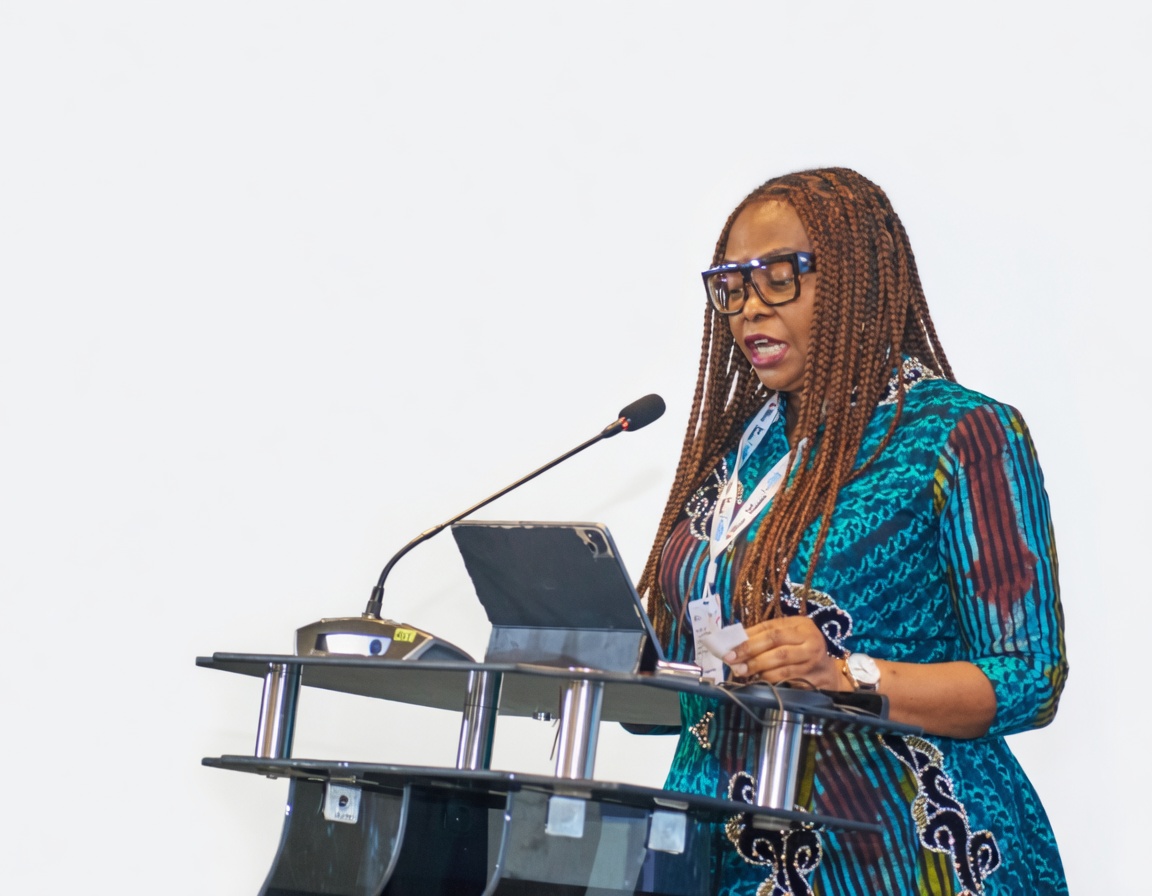
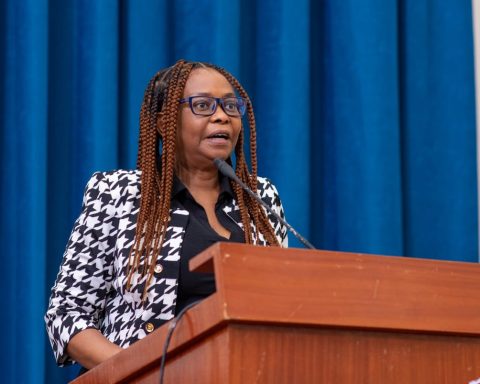
The Ford Foundation’s Office of the West Africa Regional Director, Dr. ChiChi Aniagolu, has challenged long-held assumptions about tribalism in Africa, arguing that ethnic identity, often blamed for political division and underdevelopment, can be transformed into a powerful vehicle for economic growth, community accountability and grassroots development, Prime Business Africa reports.
Speaking during a webinar organised by the Think Tank for Sustainable Development (TTSD), Aniagolu urged African leaders and communities to rethink tribalism not as a source of conflict, but as a form of social capital that can be harnessed to improve education, infrastructure, entrepreneurship and local governance. She maintained that the continent’s development challenge lies not in the existence of ethnic identities, but in their politicisation and exploitation by elites competing for power and resources.
Join our WhatsApp ChannelREAD ALSO :
Aniagolu: Unsung Women Driving Nigeria’s Economy Must Be Fueled with Finance
Presenting a paper titled “Reinventing Tribalism to Work for Africa’s Development,” the sociologist argued that public discourse on tribalism has largely been trapped between two opposing positions: those who view tribal identity as an essential pillar of cultural belonging and those who believe it must be eliminated to build modern nation-states. According to her, neither approach adequately addresses Africa’s realities.
Instead, she proposed what she described as a reinvention of Tribalism one that redirects ethnic loyalty inward toward community advancement rather than outward against rival groups.
“The problem is not ethnic identity itself, but the politicisation of that identity by elites seeking power,” she said.
Under such a model, she argued, cultural pride would be measured not by political dominance or hostility toward other groups, but by tangible indicators such as educational attainment, infrastructure development, economic productivity and social welfare.
Aniagolu also sought to distinguish tribalism from practices commonly associated with it in Nigeria. Appointing political allies from one’s ethnic group, she argued, is more accurately described as cronyism, while voting for candidates solely because they share an ethnic background reflects sentimentalism rather than genuine commitment to communal development.
Tracing the roots of contemporary ethnic tensions, she argued that many of Africa’s present-day divisions were shaped and institutionalised by colonial administrations that transformed fluid social identities into rigid political categories.
Drawing on examples from Nigeria, Rwanda and India, Aniagolu said colonial authorities entrenched ethnic and communal divisions through arbitrary borders, unequal resource allocation and governance systems designed to prevent unified resistance to imperial rule.
She cited the 1914 amalgamation of Nigeria, ethnic classification policies introduced in Rwanda under Belgian rule, and colonial-era religious divisions in India as examples of how imperial powers created structures whose effects continue to influence political competition and governance decades after independence.
According to her, many African countries remain trapped in governance systems where access to state resources is mediated through ethnic mobilisation, turning elections into contests for political patronage rather than opportunities for policy-driven development.
“This is the cycle we are still trapped in,” she said, noting that political elites often exploit ethnic loyalties to secure support while avoiding accountability for poor governance.
Aniagolu maintained that redirecting communal identity toward local development could help reverse that trend. She pointed to examples such as Nigeria’s First Republic, Tanzania’s Ujamaa philosophy and Kenya’s Harambee movement as evidence that strong communal bonds can become engines of development when linked to shared economic and social goals.
She highlighted the Igbo apprenticeship system and town unions, Yoruba traditions of community self-help, and northern cooperative structures as examples of indigenous institutions that have historically enabled communities to build schools, markets, roads and welfare systems through collective effort.
Such an approach, she argued, would strengthen accountability by making community development the benchmark for leadership performance and reducing politicians’ ability to shield themselves from scrutiny through ethnic appeals.
Beyond governance, Aniagolu said a development-oriented form of tribal identity could also contribute to environmental conservation, cultural preservation and tourism by encouraging communities to safeguard local heritage and natural resources.
Addressing concerns that promoting ethnic identity could undermine national unity, she argued that attempts to suppress cultural diversity have often generated instability rather than cohesion.
She cited historical experiences in the Democratic Republic of Congo, Ethiopia, Guinea, Sudan and Cameroon, where efforts to impose uniform national identities triggered resistance, conflict and political fragmentation.
READ MORE :
Nigeria Only Needs Visionary Leadership To Achieve Inclusive Prosperity – Aniagolu-Okoye
By contrast, she pointed to Tanzania’s promotion of Kiswahili alongside ethnic diversity and South Africa’s constitutional recognition of multiple languages and cultures as examples of how national cohesion can coexist with strong local identities.
According to her, sustainable nation-building depends on creating civic systems in which all communities feel recognised and represented rather than forcing assimilation.
Aniagolu ultimately advocated what she termed “pluralistic nationalism” a framework that embraces cultural diversity while fostering a shared commitment to national development.
She argued that Africa’s challenge is not choosing between ethnic identity and modernity, but finding ways to leverage indigenous social structures to strengthen governance, drive economic growth and improve living standards.
“The path forward for Africa does not require choosing between ancestral heritage and modern advancement,” she said. “The true genius of African development lies in synthesis.”
Her presentation adds to growing conversations among African scholars, policymakers and development practitioners about how indigenous institutions and community networks can be leveraged to address governance deficits, strengthen social cohesion and accelerate sustainable development across the continent.

Amanze Chinonye is a Staff Correspondent at Prime Business Africa, a rising star in the literary world, weaving captivating stories that transport readers to the vibrant landscapes of Nigeria and the rest of Africa. With a unique voice that blends with the newspaper's tradition and style, Chinonye's writing is a masterful exploration of the human condition, delving into themes of identity, culture, and social justice. Through her words, Chinonye paints vivid portraits of everyday African life, from the bustling markets of Nigeria's Lagos to the quiet villages of South Africa's countryside . With a keen eye for detail and a deep understanding of the complexities of Nigerian society, Chinonye's writing is both a testament to the country's rich cultural heritage and a powerful call to action for a brighter future. As a writer, Chinonye is a true storyteller, using her dexterity to educate, inspire, and uplift readers around the world.