 Amanze Chinonye
The Nigeria Police Force has barred Point-of-Sale (POS) operators from operating within 200 metres of police stations and formations across the country over concerns linked to extortion and other unprofessional practices involving some police personnel.
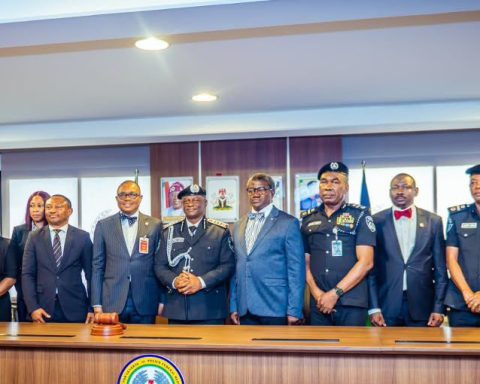
The directive was contained in an internal police wireless message issued from the office of the Inspector-General of Police, Tunji Disu, and circulated to police commands nationwide.
The order directed Commissioners of Police, Assistant Inspectors-General and heads of police formations to ensure immediate enforcement of the policy.
Join our WhatsApp ChannelREAD ALSO :
Tinubu Swears in Disu as Substantive IGP, Backs Police Role in State Police Implementation
Under the directive, no POS operator is permitted to conduct business activities within a 200-metre radius of any police facility nationwide.
Senior police officers were also warned that they could be held vicariously liable for violations within their commands.
The move followed concerns within the police hierarchy over the growing presence of POS operators around police formations and allegations that some operators were being used for transactions connected to extortion and other unethical practices.
The development comes amid recurring public complaints over incidents in which civilians, motorists and suspects were compelled to make instant payments or transfers through nearby POS agents during encounters with security personnel.
The directive has generated reactions online, with some Nigerians describing it as a step toward addressing corruption and extortion within the force, while others argued that broader institutional reforms would still be required to tackle the problem comprehensively.

Amanze Chinonye is a Staff Correspondent at Prime Business Africa, a rising star in the literary world, weaving captivating stories that transport readers to the vibrant landscapes of Nigeria and the rest of Africa. With a unique voice that blends with the newspaper's tradition and style, Chinonye's writing is a masterful exploration of the human condition, delving into themes of identity, culture, and social justice. Through her words, Chinonye paints vivid portraits of everyday African life, from the bustling markets of Nigeria's Lagos to the quiet villages of South Africa's countryside . With a keen eye for detail and a deep understanding of the complexities of Nigerian society, Chinonye's writing is both a testament to the country's rich cultural heritage and a powerful call to action for a brighter future. As a writer, Chinonye is a true storyteller, using her dexterity to educate, inspire, and uplift readers around the world.