 MARCEL MBAMALU
Lagos alone is worth more than Botswana, Namibia, Rwanda and Mauritius combined.
Let that sink in.
With an economy of N41.17 trillion — about $102 billion in 2021 — Lagos State dwarfed the entire GDP of four countries. Rivers, Akwa Ibom, Delta and Bayelsa sit on oil wealth that funds nations. Ogun, Anambra and Imo churn out goods, services and commerce that would make small economies jealous.
By the numbers, Nigeria’s states are giants.
But walk the streets of Lagos and you will still find mothers cooking with firewood. Drive through Port Harcourt and you will see communities drinking water polluted by the same oil that makes the state’s GDP glow. Visit Umuahia, Abeokuta, or Minna and ask the average trader what “trillion-naira economy” means to her dinner table.
The answer is: nothing.
That viral video telling you “10 Nigerian states are richer than countries” is both true and a lie. True, because the 2021 BudgIT figures don’t lie — Lagos at N41.17trn, Rivers at N7.96trn, and so on. A lie, because those numbers are GDP, not prosperity. They measure how much economic activity happens _in_ a place, not how much of it reaches the people who live there.
A country with $7,778 GDP per capita like Botswana will still feed its citizens better than a state with $102 billion in total output but $2,058 per capita like Nigeria. A state can host a port, an oil rig, and a tech hub, yet fail to build a hospital that works.
So the real question isn’t “Which state is bigger than which country?”
The real question, and the one our governors should lose sleep over, is this: When your economy is bigger than a nation, why are your people still living like they have nothing?
In this edition of The Bottomline, we follow the money from GDP to gutter — and ask why Nigeria’s trillion-naira states have not become trillion-naira lives.
READ ALSO: Why Dangote Refinery Is Absorbing Fuel Delivery Costs Across More Nigerian States
Figures are old, but the sting is still fresh
The viral numbers are not new. They were lifted straight from BudgIT’s 2022 _State of States_ report and reflect 2021 estimates: Lagos at N41.17 trillion, followed by Rivers at N7.96 trillion, Akwa Ibom at N7.77 trillion, Imo at N7.68 trillion, Delta at N6.19 trillion, Anambra at N5.14 trillion, Ondo at N5.10 trillion, Ogun at N5.03 trillion, Bayelsa at N4.63 trillion and Niger at N4.58 trillion.
The trick is in the timing. To pitch those 2021 figures against 2025 country GDPs is statistical fraud. Nigeria has since rebased. The NBS moved the base year from 2010 to 2019, and the whole map shifted. Lagos itself has moved on: its 2025 _Lagos Economic Development Update_ puts the state at N43.06 trillion in 2023, with forecasts of N54.77 trillion for 2024 and N66.47 trillion for 2025. Those are projections, not fresh NBS post-rebasing observations, but they tell you the direction: up.
There is no debate that Lagos is Nigeria’s economic engine. From a colonial port to federal capital until 1991, it never lost momentum. Today trade, manufacturing, ports, telecoms, tech, entertainment, real estate and finance all cluster in just 3,345 square kilometres. Compare that footprint to Botswana’s 581,730 sq km, Namibia’s 825,615 sq km, Rwanda’s 26,338 sq km, and Mauritius’ 2,040 sq km. Yet in 2021, Lagos’ $102 billion economy was several times larger than Botswana’s $19.9 billion, Namibia’s $15.1 billion, Rwanda’s $16.4 billion and Mauritius’ $16.2 billion in 2025 World Bank figures.
That comparison is legitimate. The conclusion people draw from it is not.
GDP is a flow, not a bank account
GDP tells you how much value was produced in a territory. It does not tell you who owns it, who earns it, or whether the roads work, the lights stay on, or the hospital has drugs.
A state can run a trillion-naira economy and still have mothers boiling water on firewood. A country can have a smaller GDP and deliver a better life. Look at the per capita numbers: Botswana at $7,778, Namibia at $5,309, Mauritius at $11,819. Nigeria sits at about $2,058. Even Rwanda, at just $773 per capita, has pushed its $3-a-day poverty rate down to 38.6 per cent — proof that size is not destiny.
The oil states expose the fraud most brutally. Rivers, Akwa Ibom, Delta and Bayelsa rank high because petroleum inflates their GDP. But oil wealth does not flow into state coffers in equal measure, and it certainly does not flow into household wallets. BudgIT’s own fiscal sustainability index proves this. In 2022, Rivers topped overall fiscal performance despite Lagos having the biggest economy. A big economy without revenue discipline, jobs, and services is just a billboard.
THE BOTTOMLINE
Nigeria does not have a GDP problem. We have a translation problem.
We have pockets of enormous economic power. Lagos. Rivers. Akwa Ibom. Ogun. Anambra. Delta. The output is real. What is missing is the bridge between that output and ordinary life.
Until economic activity creates real jobs, until IGR rises and addiction to federal allocation falls, until infrastructure supports production instead of strangling it, those trillion-naira figures will remain a cruel joke.
So let the video go viral. Let Lagos be “bigger than Botswana.”
But governors, commissioners, and citizens should ask only one question:
If my state can outproduce a country, why can’t it out-deliver a decent life for the people who call it home?
Until we answer that, we are not rich. We are just big.
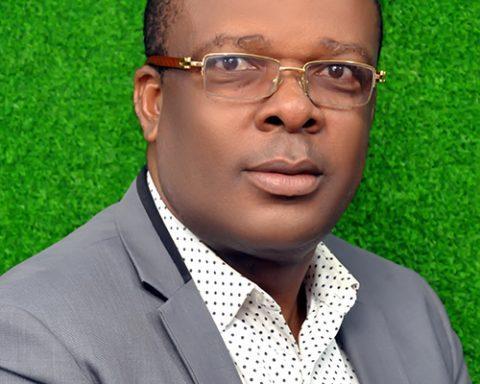
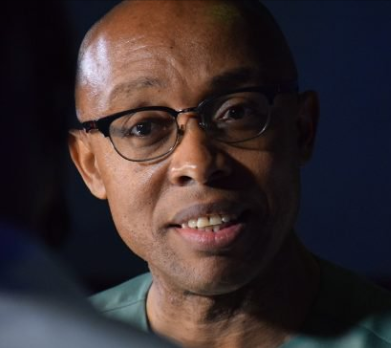
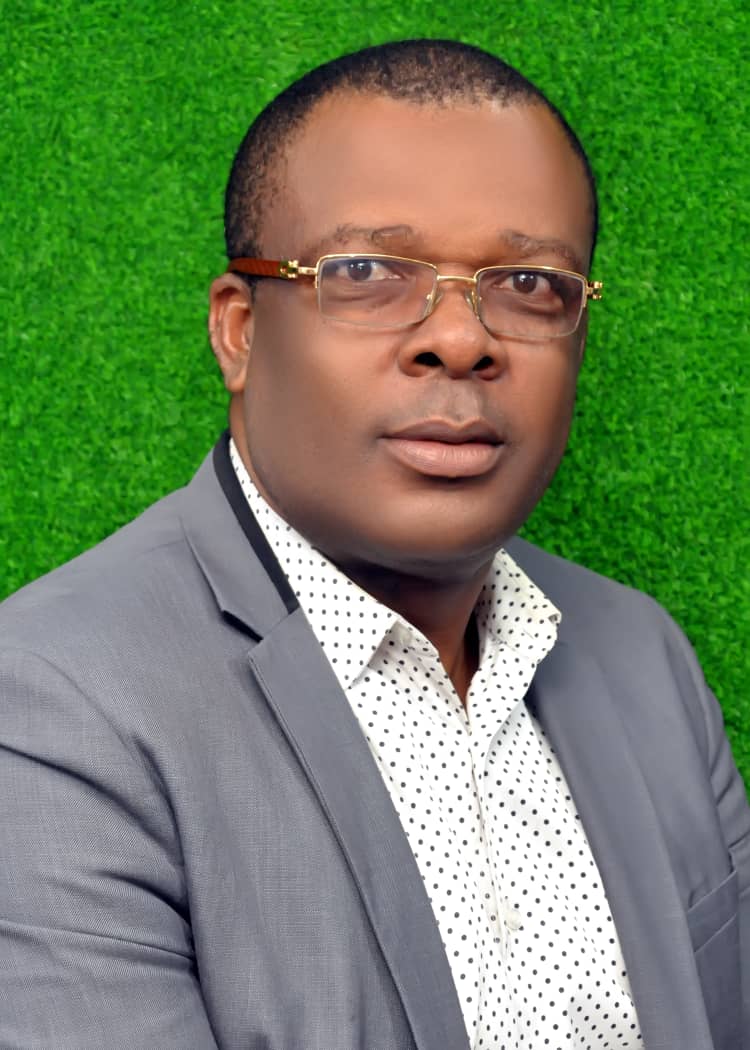
Dr. Marcel Mbamalu is a distinguished communication scholar, journalist, and entrepreneur with three decades of experience in the media industry. He holds a Ph.D. in Mass Communication from the University of Nigeria, Nsukka, and serves as the publisher of Prime Business Africa, a renowned multimedia news platform catering to Nigeria and Africa's socio-economic needs.
Dr. Mbamalu's journalism career spans over two decades, during which he honed his skills at The Guardian Newspaper, rising to the position of senior editor. Notably, between 2018 and 2023, he collaborated with the World Health Organization (WHO) in Northeast Nigeria, training senior journalists on conflict reporting and health journalism.
Dr. Mbamalu's expertise has earned him international recognition. He was the sole African representative at the 2023 Jefferson Fellowship program, participating in a study tour of the United States and Asia (Japan and Hong Kong) on inclusion, income gaps, and migration issues.
In 2020, he was part of a global media team that covered the United States presidential election.
Dr. Mbamalu has attended prestigious media trainings, including the Bloomberg Financial Journalism Training and the Reuters/AfDB Training on "Effective Coverage of Infrastructural Development in Africa."
As a columnist for The Punch Newspaper, with insightful articles published in other prominent Nigerian dailies, including ThisDay, Leadership, The Sun, and The Guardian, Dr. Mbamalu regularly provides in-depth analysis on socio-political and economic issues.