 Amanze Chinonye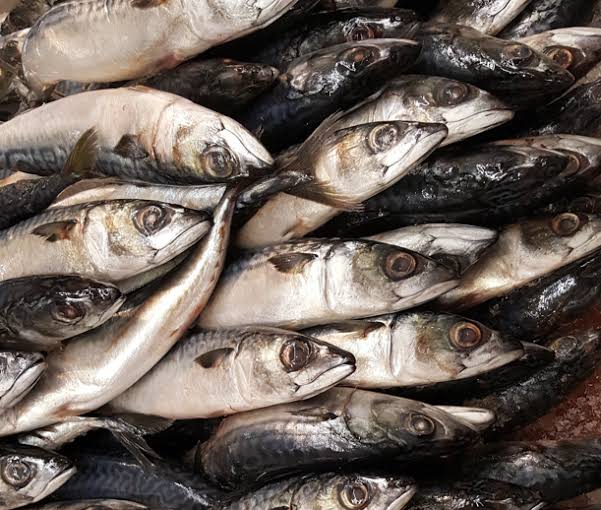
For Nigeria, the significance of its new seafood agreement with China extends beyond the removal of tariffs. The bigger test is whether preferential access to one of the world’s largest consumer markets can translate into sustained export earnings, investment and jobs at home.
Join our WhatsApp Channel
Nigeria and China have signed a protocol establishing inspection and quarantine requirements for Nigerian wild aquatic products entering China, opening the Chinese market to eligible Nigerian seafood under zero-tariff treatment.
READ ALSO :
Nigeria Plans Review Of Bilateral Air Service Agreements With 37 African Nations
The agreement, reached after nearly five years of negotiations, comes as trade between the two countries is expanding rapidly. Bilateral trade reached $18 billion in the first half of 2026, up 35% year on year, while Chinese imports from Nigeria rose 80% to $2.3 billion, according to Chinese Ambassador to Nigeria Yu Dunhai.
China’s zero-tariff policy for 53 African countries with which it has diplomatic relations took effect on May 1, 2026, covering all tariff lines. The policy is designed to expand African access to the Chinese market and deepen trade ties between China and the continent.
For Nigeria’s fisheries sector, the potential is substantial. China’s market of about 1.4 billion consumers offers Nigerian exporters an opportunity to expand beyond the domestic market and build a stronger presence in one of the world’s largest consumer economies.
But the economic opportunity is not simply about selling more fish.
The agreement could stimulate investment in processing plants, cold-chain infrastructure, packaging, certification and logistics if Nigerian producers can establish a reliable foothold in China. Such investment would enable exporters to retain more value within Nigeria instead of relying primarily on the shipment of unprocessed commodities.
That matters for an economy seeking to diversify its sources of foreign exchange. The Federal Government has repeatedly promoted non-oil exports as part of efforts to reduce Nigeria’s dependence on crude oil, and seafood could become one component of a broader agricultural-export strategy.
Power Minister Joseph Tegbe has urged exporters and other stakeholders to move quickly to take advantage of the agreement, saying the protocol should translate into higher exports, increased foreign-exchange earnings and new opportunities for Nigerian businesses.
The urgency reflects the difference between market access and market penetration.
Removing tariffs can make Nigerian products more competitive, but it does not guarantee that Chinese buyers will purchase them at scale. Exporters must still meet China’s inspection, quarantine, sanitary and quality requirements while maintaining reliable supply and competitive prices.
That puts the Nigeria Agricultural Quarantine Service at the centre of the initiative. The agency will support exporters in meeting the technical, inspection and certification requirements needed to enter the Chinese market.
For Nigerian producers, compliance could become both a challenge and an opportunity. Meeting international standards could encourage investment in formal processing and quality-control systems, potentially improving the competitiveness of Nigerian products in other export markets as well.
READ MORE :
Inside Nigeria’s Agribusiness Supply Chain: Seeds, Fertilizers, Markets
The broader trade figures suggest there is room for such expansion.
Nigeria-China bilateral trade of $18 billion in the first six months of 2026 represents about 64% of the $28 billion recorded throughout 2025. At the same time, Nigerian exports to China increased significantly, indicating that the trade relationship is generating greater commercial activity on both sides.
The challenge is to ensure that rising exports do not remain concentrated in a narrow range of raw or minimally processed commodities.
The greatest economic benefit would come if Nigerian companies use the Chinese opening to build domestic processing capacity, create jobs and export higher-value products. A seafood industry capable of processing, packaging, preserving and certifying products for demanding international markets would generate considerably more value than one focused mainly on supplying raw commodities.
That consideration extends beyond fisheries.
If the aquatic-products protocol is implemented successfully, it could provide a model for expanding other Nigerian agricultural exports into China. The experience gained in meeting Chinese sanitary, quarantine and certification requirements could strengthen Nigeria’s capacity to access other international markets.
China’s broader zero-tariff initiative has already begun to influence trade flows between China and Africa. The Chinese government has said the policy is intended to increase African exports to China and promote more balanced trade.
READ ALSO :
Farm To Shelf: Logistics Of Getting Healthy Food Into Urban Markets
For Nigeria, the question is therefore no longer simply whether China has opened its market.
It is whether Nigerian producers have the capacity to fill it.
If exporters can overcome constraints around production, certification, cold storage, logistics and consistent supply, the seafood protocol could develop from a trade agreement into a catalyst for investment, industrial development and export diversification.
If those constraints remain unresolved, however, zero tariffs could deliver far less than the headline suggests.
The economic test for Nigeria is ultimately straightforward: turn access to China’s 1.4 billion consumers into products Nigerian businesses can produce competitively, export consistently and process profitably at home.

Amanze Chinonye is a Staff Correspondent at Prime Business Africa, a rising star in the literary world, weaving captivating stories that transport readers to the vibrant landscapes of Nigeria and the rest of Africa. With a unique voice that blends with the newspaper's tradition and style, Chinonye's writing is a masterful exploration of the human condition, delving into themes of identity, culture, and social justice. Through her words, Chinonye paints vivid portraits of everyday African life, from the bustling markets of Nigeria's Lagos to the quiet villages of South Africa's countryside . With a keen eye for detail and a deep understanding of the complexities of Nigerian society, Chinonye's writing is both a testament to the country's rich cultural heritage and a powerful call to action for a brighter future. As a writer, Chinonye is a true storyteller, using her dexterity to educate, inspire, and uplift readers around the world.