Amanze Chinonye
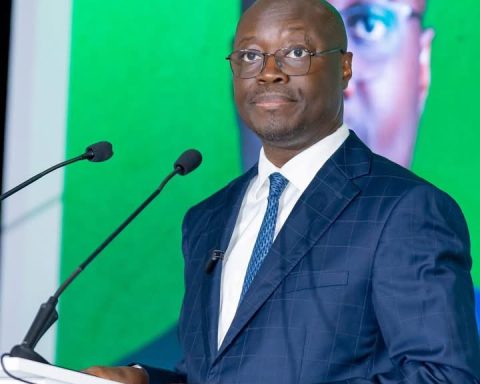
Africa must use its critical-mineral wealth to develop local processing and manufacturing industries rather than remain primarily an exporter of raw materials, MTN Group Chairman Mcebisi Jonas said.
Join our WhatsApp Channel
Jonas said African countries could retain more economic value from their mineral resources by negotiating collectively and using their combined strength to attract investment beyond mining and into processing and manufacturing.
He made the remarks while addressing fellows of the fifth cohort of the MTN Media Innovation Programme during a study visit to South Africa.
“We need leaders who understand that, actually, if we are to be effective, we have to act as a collective,” Jonas said.
“Because we must emphasise the fact that before you are Nigerian or South African, you are African.”
READ ALSO :
Africa has significant deposits of cobalt, copper, lithium, graphite, manganese and other minerals used in electric vehicles, batteries, renewable-energy systems and advanced technologies.
Jonas said those resources, combined with the continent’s growing young population, gave Africa important leverage as the global economy moves towards a more multipolar order.
“We have the highest concentration of minerals in the world, particularly critical minerals, and we have a very growing young population,” he said.
But he warned that Africa could lose much of that advantage if countries negotiate separately and fail to secure greater value before minerals leave the continent.
“Negotiating individually could weaken Africa’s influence and bargaining power,” Jonas said.
“If we can use that collective strength effectively, it will take us somewhere.”
The challenge extends beyond attracting mining investment. Africa has limited processing and manufacturing capacity for many of the minerals it produces, leaving much of the higher-value activity to countries outside the continent.
The International Energy Agency estimates that Africa captures less than 1% of the value generated from manufacturing clean-energy technologies and their components, despite its role as a major supplier of minerals used in those industries.
The African Union’s Africa Green Minerals Strategy promotes mineral beneficiation, regional value chains and industrial development to increase the economic returns from the continent’s resources.
Jonas said African countries should use their negotiating strength to attract investment in refining, processing and downstream manufacturing, rather than focusing solely on mineral extraction.
His comments come as major economies seek secure supplies of critical minerals and diversify their supply chains, intensifying competition for African resources.
READ MORE :
Ghana’s Galamsey Crisis: Research Links Illegal Mining To Hundreds Of Miscarriages
Jonas also identified Africa’s youthful population as another strategic asset, saying demographic growth could strengthen the continent’s economic position if supported by investment and development.
He linked Africa’s broader economic prospects to MTN’s long-term future.
“MTN cannot thrive if Africa doesn’t thrive,” he said.
Jonas also urged journalists to maintain ethical standards, warning that the profession could become harmful when captured by political and economic interests.
“Journalism can also be very reactionary and dangerous once it’s captured or serves the interest of an elite,” he said.
“So we must liberate journalism from the shackles of the political and economic elites in our countries and on the continent.”
He urged journalists to give greater voice to poorer and marginalised communities and to report in ways that support progress.
Nigeria’s Consul General in South Africa, Ninikanwa Okey-Uche, said Africa’s challenge was not a lack of stories but limited ownership of the platforms and systems through which those stories were told.
The push for local processing comes as Africa seeks to capture a larger share of the economic value generated by its mineral resources and reduce its reliance on exports of unprocessed commodities.

Amanze Chinonye is a Staff Correspondent at Prime Business Africa, a rising star in the literary world, weaving captivating stories that transport readers to the vibrant landscapes of Nigeria and the rest of Africa. With a unique voice that blends with the newspaper's tradition and style, Chinonye's writing is a masterful exploration of the human condition, delving into themes of identity, culture, and social justice. Through her words, Chinonye paints vivid portraits of everyday African life, from the bustling markets of Nigeria's Lagos to the quiet villages of South Africa's countryside . With a keen eye for detail and a deep understanding of the complexities of Nigerian society, Chinonye's writing is both a testament to the country's rich cultural heritage and a powerful call to action for a brighter future. As a writer, Chinonye is a true storyteller, using her dexterity to educate, inspire, and uplift readers around the world.