 Amanze Chinonye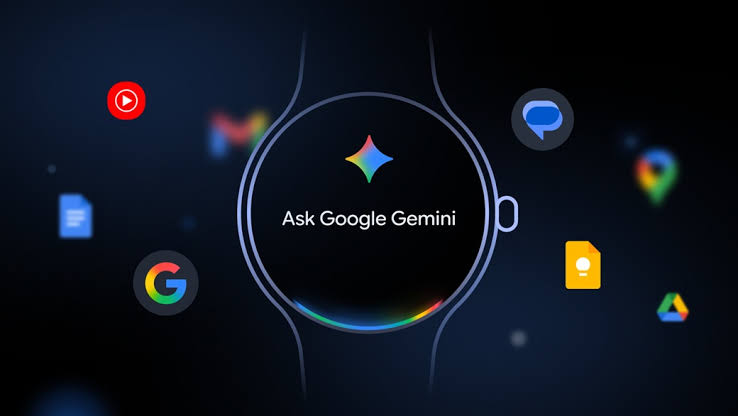
Google has pushed its Gemini artificial intelligence assistant past 1 billion monthly active users, marking a major milestone in the company’s effort to turn its AI technology into a mass-market platform.
Join our WhatsApp Channel
The milestone is the result of a strategy that goes beyond competing with standalone chatbots. Google has increasingly embedded Gemini across products that already have hundreds of millions or billions of users, giving the company a built-in distribution network for its AI services.
READ ALSO :
ChatGPT vs. DeepSeek: Which AI Chatbot Is Better In Performance?
Gemini had about 400 million monthly active users in May 2025. By May 2026, the figure had risen above 900 million, while daily requests to the app had increased more than sevenfold, according to Google.
A central part of the growth strategy has been integration. Google has expanded Gemini across Search, Android, Gmail, Maps, YouTube and other services, allowing users to access AI capabilities within products they already use instead of having to seek out a separate chatbot.
Google said Gemini now powers 13 products with more than 1 billion users each, five of which have more than 3 billion users.
Search has become a particularly important channel for Google’s AI expansion. The company said its AI Overviews feature had more than 2.5 billion monthly users by May, while AI Mode in Search had surpassed 1 billion monthly active users.
Google has also expanded Gemini beyond basic question-and-answer functions. Newer versions are designed to handle research, content creation and more complex, multi-step tasks, with agentic features intended to allow the assistant to carry out actions across Google services.
The company has simultaneously sought to increase engagement with the assistant. Google said daily requests to the Gemini app had risen more than sevenfold between May 2025 and May 2026, while users had generated more than 50 billion images using its Nano Banana image-generation models.
The expansion is being supported by a major investment in computing infrastructure. Google said its AI systems were processing more than 3.2 quadrillion tokens a month across its products and platforms by May, compared with about 480 trillion a year earlier.
Gemini’s reach also extends into the corporate market. Google said in February that more than 120,000 enterprises were using Gemini, while more than 2,800 companies had purchased more than 8 million paid Gemini Enterprise seats.
The strategy, however, comes with significant costs. Alphabet expects capital expenditure of between $180 billion and $190 billion in 2026 as it expands data centres, computing capacity and other infrastructure required to support its AI ambitions.
READ MORE :
Musk Predicts AI Future Where Salaries, Money Lose Relevance
The investment reflects the intensifying competition with OpenAI and other AI developers, as technology companies compete for consumers, businesses and developers.
The battle is increasingly shifting beyond the performance of individual AI models to distribution, engagement and the ability to integrate artificial intelligence into products that people already use.
Google’s one-billion-user milestone shows how the company has leveraged its existing ecosystem to accelerate AI adoption: put Gemini inside widely used products, expand what the assistant can do and use Google’s existing distribution channels to turn an AI chatbot into a broader digital platform.

Amanze Chinonye is a Staff Correspondent at Prime Business Africa, a rising star in the literary world, weaving captivating stories that transport readers to the vibrant landscapes of Nigeria and the rest of Africa. With a unique voice that blends with the newspaper's tradition and style, Chinonye's writing is a masterful exploration of the human condition, delving into themes of identity, culture, and social justice. Through her words, Chinonye paints vivid portraits of everyday African life, from the bustling markets of Nigeria's Lagos to the quiet villages of South Africa's countryside . With a keen eye for detail and a deep understanding of the complexities of Nigerian society, Chinonye's writing is both a testament to the country's rich cultural heritage and a powerful call to action for a brighter future. As a writer, Chinonye is a true storyteller, using her dexterity to educate, inspire, and uplift readers around the world.