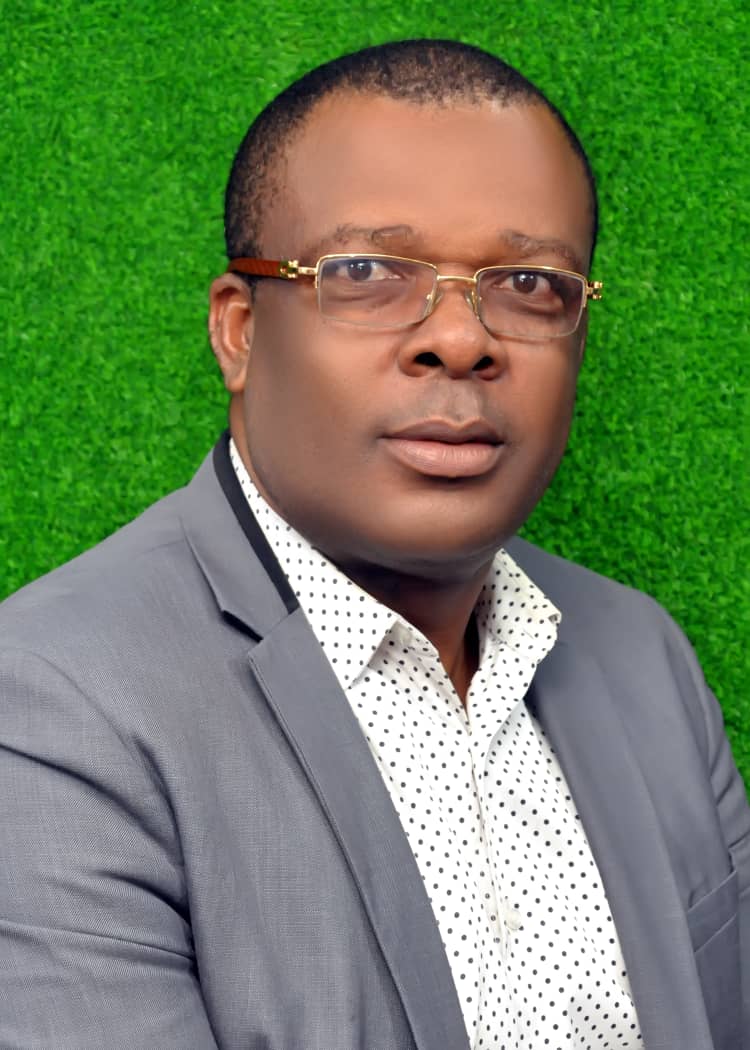
 MARCEL MBAMALU
January 15 marked Armed Forces Remembrance Day, observed nationwide with wreath-laying, the Last Post, gun salutes, and prayers for fallen soldiers. The ceremony honours those who died defending Nigeria, from the Congo peacekeeping missions of the 1960s to the civil war and later internal operations.

For decades, the army was disciplined, feared, and capable, producing figures such as Major General Johnson Aguiyi-Ironsi, General Yakubu Gowon, General Murtala Muhammed, General Olusegun Obasanjo, and later Generals Ibrahim Babangida and Sani Abacha, whose decisions shaped both battlefield and state. Yet, the tributes of January 15 highlight stark contrasts. Since 1999, Nigeria has steadily lost control of large areas to insurgents, bandits, and separatists.
Join our WhatsApp ChannelFrom Chibok in 2014 to Dapchi in 2018, and repeated attacks on military formations in Borno and Niger states, the question is unavoidable: what will the Nigerian Army be remembered for today? Even Section 217(2) of the Constitution charges the military with maintaining territorial integrity, yet large parts of the country remain outside effective state control.
Armed groups now run roadblocks in Zamfara, collect taxes in Borno, and overrun military bases with disturbing regularity. As the ceremonies unfolded, people were still being killed.
In Sokoto’s Isa Local Government, bandits attacked Lugu village on 14 January, abducting at least 15 residents. On the same 15 January, suspected terrorists stormed Kyara town in Birnin Gobir, killing seven, while in Enugu, gunmen attacked a police Distress Response Squad, killing two officers. Mass graves, destroyed communities, widows, and displaced families mark daily life across the North-East and North-West.
This is despite the army’s expanded presence from counterinsurgency to anti-banditry. Military bases in Borno have been overrun repeatedly, and armed groups operate openly in Zamfara and Kaduna, imposing levies on residents.
The gap between ceremonial honours and civilian suffering has never been clearer. Consequently, Armed Forces Remembrance Day now appears largely a ritual for politicians and the military itself, while ordinary Nigerians continue to mourn lives lost, homes destroyed, and communities terrorised, leaving a grim reality the armies of the past would never have tolerated.
When Army failed to protect, but politic
Beyond gaps in territorial security, the military has repeatedly been drawn into politics, undermining the democratic process it is sworn to uphold. Since 1999, there have been documented cases of army deployment during elections in ways that favoured ruling elites, while opposition rallies and voters in volatile regions faced intimidation.
Equally troubling are inequities in protection. While bandits and insurgents operate with impunity across rural communities, ordinary citizens frequently face arrests or harassment for peacefully criticising government policy.
During the End SARS protests in 2020, soldiers and other security operatives were reportedly used to suppress civilians demanding accountability and an end to police brutality, a use of force that starkly contrasted with how some communities are left exposed to bandit violence.
In many recent school abductions and attacks, security forces are reported to delay approaching scenes until after the violence ends. In November 2025, armed bandits stormed St. Mary’s Catholic Primary and Secondary School in Papiri, Agwara Local Government Area of Niger State, abducting more than 300 students and 12 teachers in the early hours of the morning, local church authorities said.
Despite credible intelligence and warnings about heightened threats around the community, the assault unfolded with little effective military intervention.
Data from Save the Children shows since 2023, thousands of schoolchildren have been kidnapped in Nigeria, and a recent analysis covering January 2024 to late 2025 recorded at least 10 school kidnappings affecting about 670 children, including mass abductions of entire classes. These figures illustrate that, despite ceremonial honours and official claims of operational success, the Nigerian Army still cannot protect even children.
The sacrifices and vulnerabilities of soldiers themselves have also been magnified by intelligence failures and systemic lapses. In November last year also, Brigadier General Musa Uba was kidnapped and later killed by ISWAP fighters following an ambush in Borno State.
In the same month, gunmen ambushed and abducted six directors of the Federal Ministry of Defence along the KabbaLokoja highway. These incidents follow a disturbing trend: in 2020 and 2021, Colonel D.C. Bako and Brigadier General Dzarma Zirkusu were both killed in Borno during coordinated attacks by insurgents.
Senior security officials have at times acknowledged the limits of formal defence operations. In mid2025, former Chief of Defence Staff General Christopher Musa reportedly urged Nigerians to develop basic self-defence skills, likening them to everyday survival abilities such as martial arts or swimming. His advice was framed as personal preparedness, not a call to bear arms. Yet it sits uneasily against Nigeria’s firearms laws, which criminalise unauthorised possession of weapons.
The recent death sentence handed down to Victor Solomon by the Kaduna State High Court underscores a stark contradiction. Solomon, arrested by the military and handed over for prosecution, was executed, while armed bandits continued to roam freely.
In Katsina State, the government has reportedly moved to release about 70 suspected bandits from custody as a condition for sustaining peace deals with armed groups. This is notwithstanding that over 1,500 civilians have been killed by bandit attacks in Katsina over five years, leaving wives widowed and entire communities displaced. But suspects still face release in the name of peace.
Defence Minister, General Musa recently allegedly warned Sheikh Gumi, a controversial cleric widely linked to terrorist networks, even as Saudi Arabian authorities barred Gumi from entering the country for the 2025 Hajj, citing security concerns, Nigeria armies cannot arrest him. Nigerians are left asking: if someone like Victor Solomon can be executed, why are known terrorist leaders and suspected bandits effectively rewarded with freedom?
The situation also raises uncomfortable questions about recruitment and professionalism. Rumours of tribalism and favouritism in enlistment continue to fuel public scepticism. Although the military recently encouraged youth to join the institution, the question remains: why now? Are they simply seeking those who will face bandits on the frontlines?
The reality, as recent events make painfully clear, is that the Nigerian Army risks being perceived less as a professional defence force and more as a set of instruments serving government interests, a far cry from the disciplined and respected institution celebrated on Armed Forces Day.
Read Also:
- Nigeria to Spend $455m on Attack Helicopters from US
- Nigeria’s Military Claims 2025 Wins, But Warns: Terrorists Just Relocating
- Retired Nigerian Soldiers Scramble for Food
Reimagining the Nigerian Army
Compared with regional peers, it is clear that the Nigerian Army struggles with training, readiness, and operational discipline. While armies in Ghana, South Africa, and Kenya conduct regular joint exercises and maintain rapid response units, Nigeria’s forces lag. European armies set an even higher benchmark. If the US Army operated like Nigeria’s, it would be hard to imagine how it could capture the president of another country. Recent US airstrikes in Nigeria underscore the gap in operational capability and intelligence.
Equipment and technology deficits remain severe. Outdated armoured vehicles, limited aerial support, and insufficient surveillance systems hamper efficiency. Civilians are left exposed, bandits and insurgents exploit ungoverned spaces, and basic security operations often remain reactive and ineffective. In some areas, armed groups appear better equipped than the military, highlighting a disturbing reversal of power.
These shortcomings are systemic, not the fault of isolated officers. Government policies that overburden the military with policing duties, chronic underfunding, weak leadership, and entrenched corruption all feed operational collapse.
Accountability is shared across policymakers who under-resource the forces, commanders who fail to enforce discipline and strategy, and institutions that tolerate inefficiency. True reform requires confronting these structural flaws without placing unverified blame on individuals.
A professional, apolitical, and effective army is possible but requires deliberate reform. Training must focus on modern warfare, counterinsurgency, and intelligence-led operations. Equipment modernisation from armoured vehicles to drones and communications systems is critical.
Operational efficiency depends on streamlined command, rapid mobilisation, and coordinated actions with other security agencies. Above all, the army must regain the trust of citizens, protecting all Nigerians consistently and equitably.
Hence, Armed Forces Remembrance Day should be a moment to hold the military accountable and demand transformation. Remembrance is not only for the fallen but for the living.
Dr Mbamalu is a Jefferson Fellow (East West Center, Hawaii, United States), Prime Business Africa publisher, and member of the Nigerian Guild of Editors (NGE)

Dr. Marcel Mbamalu is a distinguished communication scholar, journalist, and entrepreneur with three decades of experience in the media industry. He holds a Ph.D. in Mass Communication from the University of Nigeria, Nsukka, and serves as the publisher of Prime Business Africa, a renowned multimedia news platform catering to Nigeria and Africa's socio-economic needs.
Dr. Mbamalu's journalism career spans over two decades, during which he honed his skills at The Guardian Newspaper, rising to the position of senior editor. Notably, between 2018 and 2023, he collaborated with the World Health Organization (WHO) in Northeast Nigeria, training senior journalists on conflict reporting and health journalism.
Dr. Mbamalu's expertise has earned him international recognition. He was the sole African representative at the 2023 Jefferson Fellowship program, participating in a study tour of the United States and Asia (Japan and Hong Kong) on inclusion, income gaps, and migration issues.
In 2020, he was part of a global media team that covered the United States presidential election.
Dr. Mbamalu has attended prestigious media trainings, including the Bloomberg Financial Journalism Training and the Reuters/AfDB Training on "Effective Coverage of Infrastructural Development in Africa."
As a columnist for The Punch Newspaper, with insightful articles published in other prominent Nigerian dailies, including ThisDay, Leadership, The Sun, and The Guardian, Dr. Mbamalu regularly provides in-depth analysis on socio-political and economic issues.