 MARCEL MBAMALU
Nigeria wants to know where every dollar given to an NGO comes from. Fair enough. Foreign aid should be traceable. Grants should be accounted for.
But here’s the problem: the same National Assembly pushing a bill to put civil society under a microscope has spent years ducking the same microscope itself.
Join our WhatsApp ChannelOn 22 July, the Senate advanced the Foreign Aid (Regulation, Coordination, Transparency and Disclosure) Bill, 2026. The reason? Transparency and national security.
Yet when SERAP goes to court to ask about N21 million monthly allowances, or about N110 billion for cars and “support” for lawmakers, the answer is lawsuits and secrecy.
So the question is not whether NGOs should be accountable. They already are — to CAC, to FIRS, to anti-money laundering laws.
The real question is this: If NGOs must account for their money, who will account for the National Assembly’s?
That question deserves attention because civil society has become a critical complement to the Nigerian state, especially where public institutions cannot reach.
READ ALSO :
Ford Foundation at 65: How a Quiet Revolution Shaped West Africa’s Fight for Justice, Inclusion
Their work spans humanitarian relief, healthcare, education, child protection, poverty reduction, women and youth empowerment, conflict resolution and community development. Research also identifies their role in advocacy, human-rights protection, peacebuilding and democratic participation.
Their importance is most visible during crises — conflict, displacement, food insecurity, flooding and public-health emergencies. With Nigeria’s continuing humanitarian needs, government capacity alone is insufficient. Civil-society organisations and international partners provide assistance to people who might otherwise be left with nothing.
Beyond service delivery, NGOs perform a function essential to democracy: they scrutinise government. They investigate abuses, file public-interest cases, monitor elections and public spending, advocate for vulnerable people, and give citizens a platform to demand accountability. The money for that work comes from donations and grants. Which is precisely why regulating how civil society is funded goes beyond money. It goes to power.
This is not the first attempt. Between 2015 and 2016, at least three proposals emerged, including the Registration and Coordination of NGOs Bill and the Civil Society Commission Bill. By September 2017, 23 NGOs had gone to court to challenge the proposed framework.
In 2017, Umar Buba Jibril’s NGO Regulatory Bill passed second reading. Chidi Anselm Odinkalu described it as “Nigeria’s Toxic NGO Regulation Bill,” warning that its licensing powers could give government excessive control over independent organisations.
The issue returned in 2022 when a similar bill resurfaced in the House of Representatives. In May 2024, another lawmaker defended a fresh attempt, arguing government needed greater oversight.
The argument that Nigeria needs new regulation simply to bring NGOs under oversight is difficult to sustain. Organisations registered as incorporated trustees already file with the Corporate Affairs Commission and meet legal and reporting requirements. There are tax obligations. Non-profit status does not mean every income is tax-free. Nor is foreign funding outside the law. Organisations receiving money from abroad operate within corporate registration rules, taxation, financial reporting, and laws against money laundering and financial crimes.
The question before the National Assembly, therefore, is simple: what additional problem does the Foreign Aid Bill solve, and why are existing mechanisms inadequate?
The international comparison is instructive. In the United States, US law places no restriction on NGOs receiving foreign funding. NGOs are subject to applicable laws, but there is no general government approval requirement because funding comes from abroad. In the United Kingdom, charities are regulated by the Charity Commission and must meet reporting, governance and financial-control requirements, including due diligence. In South Africa, registration under the NPO system is voluntary.
These countries show that accountability does not require government control over foreign funding. Nigeria can insist on donor disclosure, grant accounting and proper audits. But before creating another regulatory structure, the Senate must explain what existing laws cannot do.
READ MORE :
SERAP, Editors Threaten Legal Action Over Foreign Aid Bill, Warn of Threat to Civic Space
Senate President Godswill Akpabio supported the bill, arguing foreign aid requires closer scrutiny for transparency and national security. He cited Boko Haram, saying “If there was no oxygen, Boko Haram would not be existing.”
Bill sponsor Senator Ibrahim Hassan Dankwambo said donor-funded projects are often fragmented, duplicated or implemented outside the national budget. Deputy Senate President Barau Jibrin questioned the lack of visibility over funds entering NGOs. Other senators supported mandatory registration and stronger oversight.
But the demand for transparency is not new. Nigerians have used the courts, the Freedom of Information Act, investigative journalism, protests and open-government initiatives to demand answers on public money. Nigeria joined the Open Government Partnership in 2016.
Civil society has led this charge. SERAP has repeatedly challenged public institutions over access to information and expenditure, including the National Assembly’s budget and allowances. In July 2026, it demanded documents on the N1.3 billion allocations for the Presidential Foreign Intervention Promotion Council and Presidential Economic Advisory Council.
SERAP also sued over lawmakers’ salaries and allowances after Senator Kawu Sumaila disclosed that a senator receives about N21 million monthly. It challenged the proposed N110 billion for 465 vehicles and support allowances. In June 2026, the Federal High Court declared the N40 billion vehicle procurement and N70 billion support-allowance schemes unlawful.
BudgIT’s Tracka lets citizens follow projects from budget to community. Dataphyte and ICIR have used FOI requests to investigate spending. Nigerians protested during #EndSARS in 2020 and #EndBadGovernance in 2024, demanding accountability.
Amid all that, the National Assembly has not proposed any bill to scrutinise itself.
Who independently audits legislative spending? How transparent are allowances and constituency projects? How easily can citizens obtain detailed records of expenditure? And why should Nigerians not have the same right to know what happens to public money as the Senate wants to know what happens to foreign money?
The concern deepens when regulation shifts from accountability to control. A government that can determine who receives funding acquires leverage over institutions meant to scrutinise it.
Nigeria has no shortage of issues requiring legislative attention. State police. Local government autonomy. Both have direct consequences for security and governance, yet both remain tied to a slow constitutional review.
So what determines legislative urgency? Why is foreign funding to NGOs a priority, while fundamental questions about security, local government and democratic participation move at a crawl?
Let us not pretend this is only about transparency.
This is about who watches the watchers.
READ ALSO :
Democracy does not survive when power investigates its critics but exempts itself. It survives when rules apply to everyone — to the grant-receiving NGO in Maiduguri, and to the lawmaker approving N110 billion in Abuja.
If the National Assembly truly believes in transparency, start at home. Publish detailed records of legislative spending. Subject allowances and constituency projects to independent audit. Answer FOI requests without going to court.
Until that happens, the Foreign Aid Bill will not look like reform. It will look like fear. Fear of scrutiny. Fear of accountability. Fear of the very organisations that have kept democracy alive when institutions failed.
Nigeria does not need a law to silence its watchdogs.
Nigeria needs lawmakers brave enough to be watched.
Because if NGOs must account for every kobo, then so must the National Assembly.
Anything less is not transparency. It is tyranny in a three-piece suit.

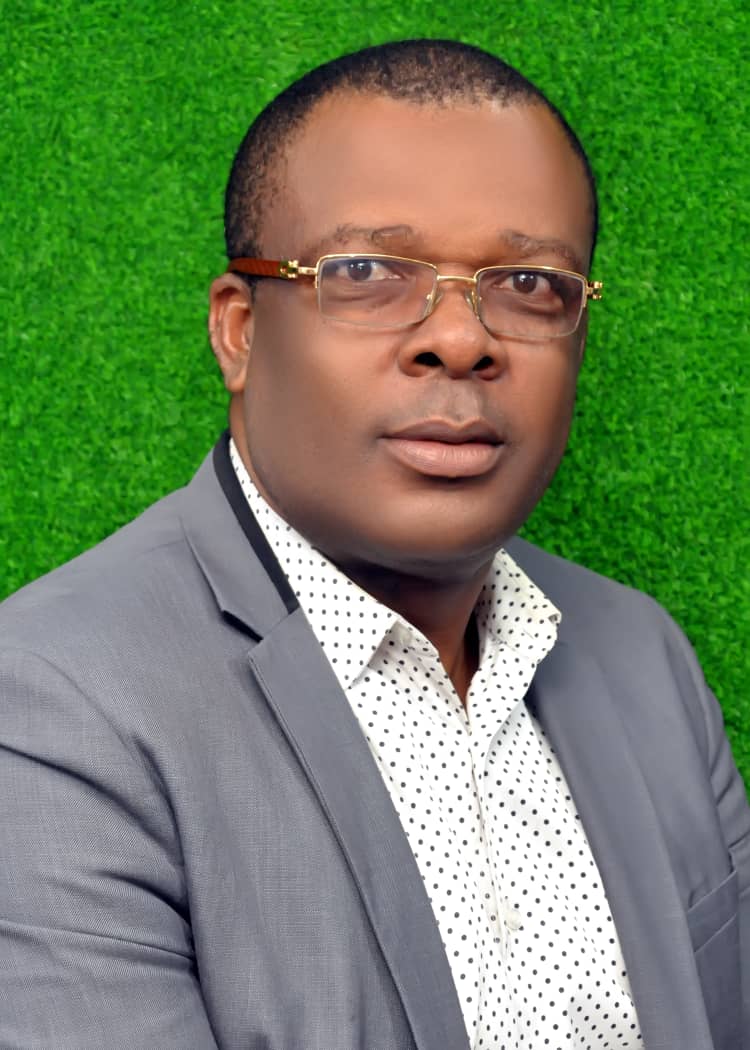
Dr. Marcel Mbamalu is a distinguished communication scholar, journalist, and entrepreneur with three decades of experience in the media industry. He holds a Ph.D. in Mass Communication from the University of Nigeria, Nsukka, and serves as the publisher of Prime Business Africa, a renowned multimedia news platform catering to Nigeria and Africa's socio-economic needs.
Dr. Mbamalu's journalism career spans over two decades, during which he honed his skills at The Guardian Newspaper, rising to the position of senior editor. Notably, between 2018 and 2023, he collaborated with the World Health Organization (WHO) in Northeast Nigeria, training senior journalists on conflict reporting and health journalism.
Dr. Mbamalu's expertise has earned him international recognition. He was the sole African representative at the 2023 Jefferson Fellowship program, participating in a study tour of the United States and Asia (Japan and Hong Kong) on inclusion, income gaps, and migration issues.
In 2020, he was part of a global media team that covered the United States presidential election.
Dr. Mbamalu has attended prestigious media trainings, including the Bloomberg Financial Journalism Training and the Reuters/AfDB Training on "Effective Coverage of Infrastructural Development in Africa."
As a columnist for The Punch Newspaper, with insightful articles published in other prominent Nigerian dailies, including ThisDay, Leadership, The Sun, and The Guardian, Dr. Mbamalu regularly provides in-depth analysis on socio-political and economic issues.