
 Amanze Chinonye
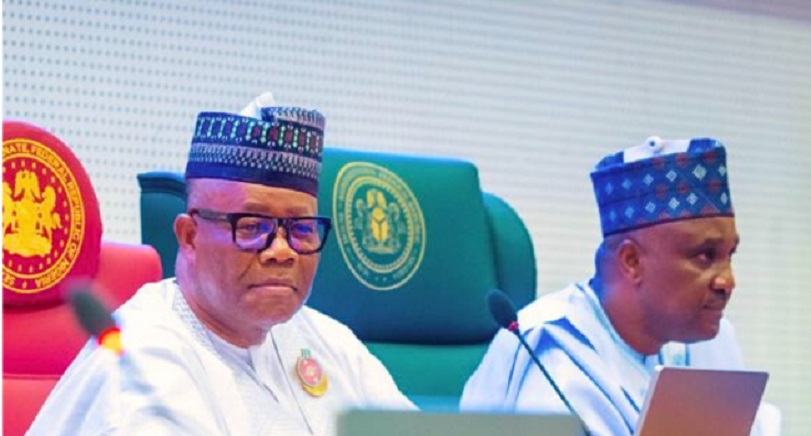
The Socio-Economic Rights and Accountability Project (SERAP) has threatened legal action against the National Assembly if lawmakers proceed with the Nigeria Data Protection (Amendment) Bill, 2026, urging Senate President Godswill Akpabio and Speaker of the House of Representatives Tajudeen Abbas to withdraw what it described as a “backdoor” attempt to regulate social media, Prime Business Africa reports.
SERAP argued that the proposed legislation, sponsored by Senator Ned Nwoko (APC, Delta North), would give the Nigeria Data Protection Commission (NDPC) sweeping powers to effectively force social media platforms out of the Nigerian market, undermining constitutionally guaranteed rights to freedom of expression and access to information.
Join our WhatsApp ChannelREAD ALSO :
SERAP Sues NNPCL Over Alleged Failure to Account for ₦5.9bn Rebranding Expenditure
The Bill seeks to require social media platforms, data controllers and data processors operating in Nigeria to establish physical offices in the country. It also empowers the NDPC to prohibit the operations of entities that fail to comply within 30 days.
In a letter dated July 18, 2026, signed by its Deputy Director, Kolawole Oluwadare, SERAP maintained that the proposed amendment is inconsistent with the Nigerian Constitution and Nigeria’s obligations under regional and international human rights instruments.
According to the organisation, mandatory localisation requirements would significantly increase government leverage over technology companies, making it easier to exert political pressure, demand censorship and expose local employees of digital platforms to retaliation.
SERAP said the amendment would create a statutory mechanism capable of excluding digital platforms from Nigeria, with far-reaching implications for millions of citizens who rely on online platforms to exercise their rights to freedom of expression, access information, conduct business, pursue education and participate in civic and political activities.
The rights group noted that the proposal revives earlier attempts to regulate social media, which generated widespread public opposition and raised serious concerns over digital rights and freedom of expression.
While acknowledging that governments have a legitimate interest in ensuring digital platforms comply with domestic laws, SERAP argued that any regulatory measures must remain firmly anchored in constitutional guarantees and international human rights standards. It stressed that restrictions on digital services must satisfy the tests of legality, necessity and proportionality.
The organisation also faulted provisions empowering the NDPC to prohibit the operations of non-compliant platforms, arguing that the Bill contains no requirement for prior judicial authorisation, no meaningful opportunity to remedy alleged non-compliance beyond the 30-day deadline and no safeguards to protect the rights of millions of Nigerians who depend on digital platforms.
It further argued that there is no evidence the existing Nigeria Data Protection Act lacks adequate enforcement mechanisms or that less restrictive measures would be insufficient to achieve the government’s regulatory objectives.
SERAP warned that the amendment could also undermine Nigeria’s digital economy by increasing compliance costs for startups, artificial intelligence developers, research institutions, educational organisations and smaller technology companies, thereby discouraging innovation and investment.
The organisation cited the judgment of the ECOWAS Court of Justice in SERAP and Others v. Federal Republic of Nigeria, which held that the Federal Government’s suspension of Twitter violated the rights to freedom of expression, access to information and media freedom. Although the proposed legislation differs from the Twitter ban in form, SERAP argued that it could produce a similar outcome by empowering regulators to prohibit digital platforms from operating in Nigeria.
It also referenced Article 19 of the International Covenant on Civil and Political Rights, Article 9 of the African Charter on Human and Peoples’ Rights and the African Commission’s Declaration of Principles on Freedom of Expression and Access to Information in Africa.
The organisation noted that former United Nations Special Rapporteur on freedom of expression, David Kaye, had repeatedly cautioned governments against requiring technology companies to establish local offices as a means of facilitating censorship or exerting undue influence over online platforms.
READ MORE :
SERAP Demands Explanation Over ₦1.3bn Allocation to ‘Fictitious’ Presidential Council
SERAP added that no major democratic jurisdiction requires every social media platform to establish a physical office as a blanket condition for operating within its territory.
The organisation warned that if the Bill is enacted in its current or substantially similar form, it will institute legal proceedings in the public interest to challenge its constitutionality and safeguard Nigerians’ fundamental rights.
It urged the National Assembly to withdraw the proposed legislation, arguing that its passage would be incompatible with constitutional democracy, the rule of law and Nigeria’s commitment to protecting digital rights and fostering a thriving digital economy.

Amanze Chinonye is a Staff Correspondent at Prime Business Africa, a rising star in the literary world, weaving captivating stories that transport readers to the vibrant landscapes of Nigeria and the rest of Africa. With a unique voice that blends with the newspaper's tradition and style, Chinonye's writing is a masterful exploration of the human condition, delving into themes of identity, culture, and social justice. Through her words, Chinonye paints vivid portraits of everyday African life, from the bustling markets of Nigeria's Lagos to the quiet villages of South Africa's countryside . With a keen eye for detail and a deep understanding of the complexities of Nigerian society, Chinonye's writing is both a testament to the country's rich cultural heritage and a powerful call to action for a brighter future. As a writer, Chinonye is a true storyteller, using her dexterity to educate, inspire, and uplift readers around the world.