 Amanze Chinonye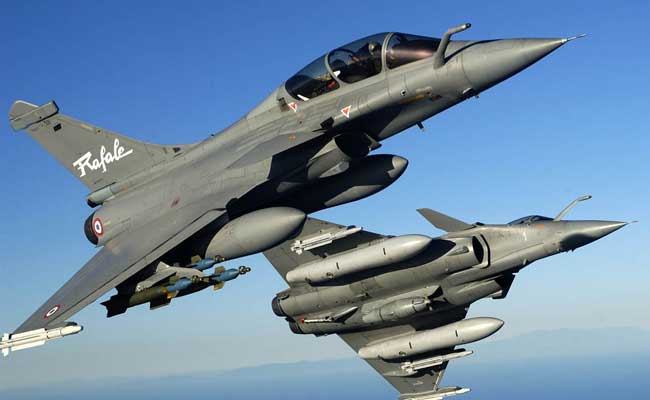
India is advancing plans for a potential $35 billion purchase of 114 Rafale fighter jets from France, with the proposed deal expected to give a significant boost to domestic aerospace manufacturing and reduce the country’s reliance on imported defence equipment.
Join our WhatsApp Channel
France has submitted its technical and commercial proposal to New Delhi for the aircraft, following India’s formal request for the acquisition. The programme is estimated at about ₹3.25 lakh crore.
READ ALSO :
Algeria Donates Four Military Helicopters to Niger as Defence Ties Deepen
Under the proposal, France would supply the first 20 aircraft, while the remaining 94 would be manufactured in India with local industrial partners. The contract has not yet been signed, and the production structure, pricing and technology-transfer arrangements remain under discussion.
The scale of domestic production could make the programme a significant industrial opportunity for India’s aerospace sector. Local manufacturing would potentially direct a large share of spending towards Indian companies involved in aircraft production, components, engineering, maintenance and other specialised services.
The plan aligns with Prime Minister Narendra Modi’s “Make in India” strategy, which seeks to strengthen domestic defence production, attract foreign investment and technology, and reduce the country’s dependence on imported military equipment.
Dassault Aviation, the French manufacturer of the Rafale, has already established a manufacturing foothold in India. In 2025, it partnered with Tata Advanced Systems to produce Rafale fuselages at a facility in Hyderabad, marking the first production of the fighter’s fuselage outside France.
The proposed expansion could deepen India’s aerospace supply chain by creating demand for precision engineering, electronics, software, specialised materials and maintenance services. It could also give Indian suppliers experience in meeting the technical and quality standards required for global aerospace production.
The economic gains, however, will depend on the final localisation terms. A higher share of domestically produced components would allow more of the programme’s expenditure to circulate within India’s economy, while continued reliance on imported systems and parts would reduce the wider industrial benefit.
The programme could also create economic activity beyond the initial purchase. A fleet of 114 additional aircraft would require long-term maintenance, spare parts, training and upgrades, potentially creating sustained demand for Indian engineering firms and skilled workers.
India already operates 36 Rafale fighters acquired for its air force and agreed in 2025 to purchase 26 Rafale Marine aircraft for the Indian Navy. The proposed acquisition would significantly expand the country’s Rafale fleet and the infrastructure required to support it.
For France, the prospective agreement would provide a major commercial opportunity for Dassault Aviation and its wider aerospace supply chain. Dassault reported first-half 2026 sales of €4.16 billion, up 46% from a year earlier, while adjusted operating income rose 83% to €330 million.
The potential Indian order would also strengthen the Rafale’s position in the international fighter market as countries modernise ageing combat-aircraft fleets.
Egypt has expanded its Rafale fleet to 54 aircraft, while Morocco is considering additional Western fighter options, including the Rafale. Algeria, meanwhile, has pursued Russia’s Su-57 as part of its military modernisation programme.
READ MORE :
Strategies For Businesses To Be More Sustainable For Tomorrow
For India, the central economic question is whether the proposed acquisition can translate defence spending into lasting industrial capacity.
If the planned localisation is implemented at scale, the programme could support skilled employment, strengthen Indian aerospace suppliers and expand the country’s participation in international defence supply chains.
The proposed $35 billion agreement remains subject to negotiations and government approval. Its eventual economic impact will depend largely on the final terms governing local production, technology transfer and domestic sourcing.

Amanze Chinonye is a Staff Correspondent at Prime Business Africa, a rising star in the literary world, weaving captivating stories that transport readers to the vibrant landscapes of Nigeria and the rest of Africa. With a unique voice that blends with the newspaper's tradition and style, Chinonye's writing is a masterful exploration of the human condition, delving into themes of identity, culture, and social justice. Through her words, Chinonye paints vivid portraits of everyday African life, from the bustling markets of Nigeria's Lagos to the quiet villages of South Africa's countryside . With a keen eye for detail and a deep understanding of the complexities of Nigerian society, Chinonye's writing is both a testament to the country's rich cultural heritage and a powerful call to action for a brighter future. As a writer, Chinonye is a true storyteller, using her dexterity to educate, inspire, and uplift readers around the world.