 Amanze Chinonye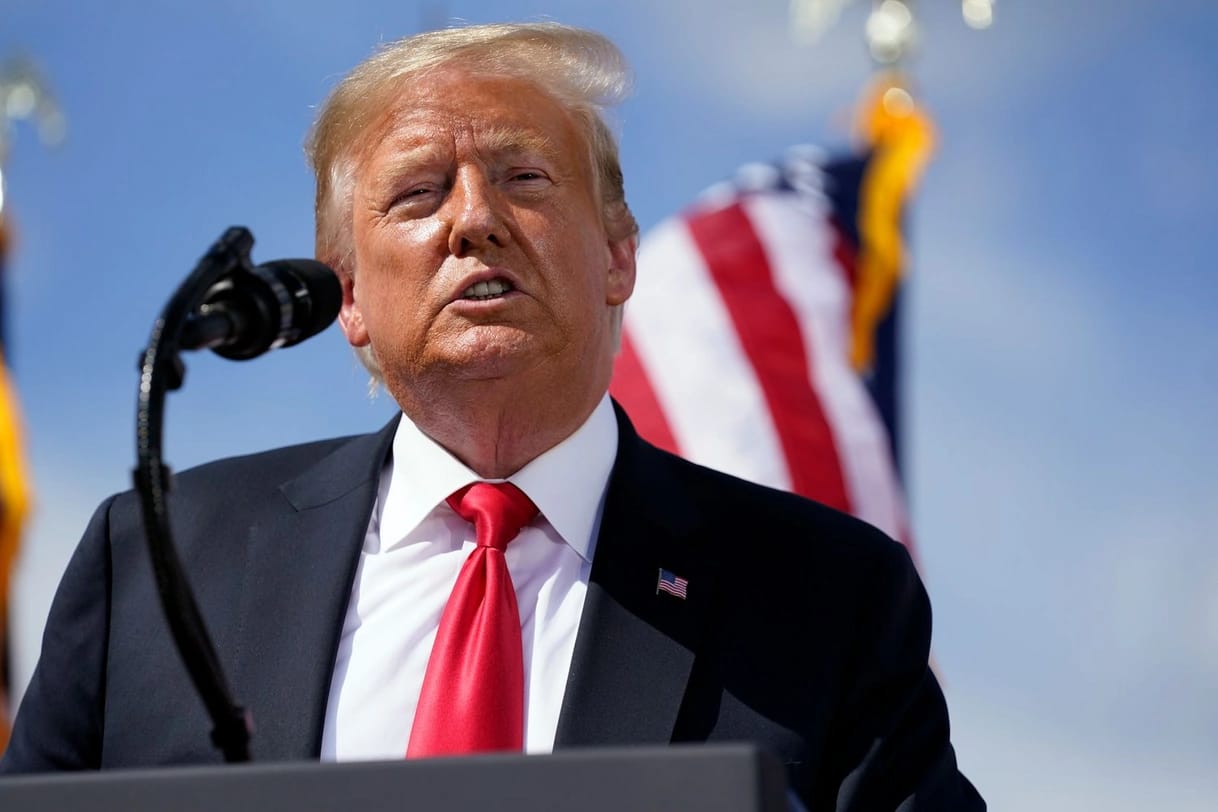
The United States has reaffirmed its commitment to a diplomatic framework with Iran despite renewed tensions in the Middle East, even as reports emerged that Israel recently shared intelligence with Washington alleging a fresh Iranian plot to assassinate President Donald Trump.
According to The Wall Street Journal, Israeli intelligence informed U.S. officials that Iranian authorities had discussed plans targeting the American president. While the report did not specify when the intelligence was obtained or transmitted, it said the information suggested what Israel viewed as a developing threat.
Join our WhatsApp ChannelREAD ALSO :
Iran Vows ‘Retaliation in Kind’ Against Israel, Denounces Trump After Khamenei Funeral
However, U.S. officials have offered a more cautious assessment. Two American officials told Israel’s Channel 12 that the intelligence reflected general discussions among Iranian officials about targeting Trump rather than evidence of a specific or operational assassination plot. They also suggested that Israel’s disclosure may have been intended to reinforce its security concerns, strengthen relations between President Trump and Israeli Prime Minister Benjamin Netanyahu, and influence Washington’s policy toward Tehran.
Iran has repeatedly threatened retaliation against Trump since the U.S. ordered the January 2020 drone strike that killed Gen. Qassem Soleimani, the former commander of the Islamic Revolutionary Guard Corps’ Quds Force. Since then, Iranian officials and state-backed groups have continued to invoke revenge for Soleimani’s death, with anti-Trump rhetoric remaining a recurring feature of official statements and public commemorations.
Speaking to reporters during the NATO summit in Ankara, held in July 7-8 2026, Trump acknowledged the longstanding threats against him, saying Iran had consistently regarded him as a primary target.
“They want to take out the U.S. leader – me,” the president said. “I’m on every single one of their lists. I’ve been fortunate so far, but maybe that doesn’t last forever.”
Security concerns intensified during the trip after Trump unexpectedly chose not to return to Washington aboard the newly refurbished Boeing 747 donated by Qatar. Instead, he boarded an older Air Force One aircraft for the flight from Turkey to the United Kingdom.
While The New York Times reported that the U.S. Secret Service recommended the aircraft change as a precautionary measure, Trump later dismissed suggestions that it was prompted by an imminent threat, insisting the decision was made “for old time’s sake.”
Defense Secretary Pete Hegseth also cancelled a planned visit to Israel shortly before Trump’s departure from Ankara, although U.S. officials have not publicly linked the decision to the reported intelligence.
The security developments coincided with renewed uncertainty over the U.S.-Iran memorandum of understanding (MOU) aimed at reducing tensions in the Gulf. Earlier this week, Trump declared the agreement effectively “over” after accusing Iran of attacking commercial vessels in the Strait of Hormuz and launching strikes against neighbouring countries.
Despite those remarks, the White House later clarified that Washington remains committed to diplomatic engagement.
“The United States is still committed to finding a resolution, and technical talks continue,” a senior U.S. official said in a statement released on Thursday.
The official condemned Iran’s attacks on civilian shipping, describing them as acts of terrorism, while stressing that the agreement is performance-based and depends on compliance by both parties.
“Iran’s actions constitute failed performance at an unacceptable level,” the statement added.
READ MORE :
US Lists 124 Nigerians for Deportation, Calls Them ‘Worst-of-the-Worst’ Criminals
The agreement, reached after months of indirect negotiations, provides for the temporary reopening of the Strait of Hormuz without transit charges while broader discussions continue. Tehran, however, maintains that it retains the right to regulate maritime traffic through the strategically important waterway.
Israel, which is not a party to the negotiations, has repeatedly criticised the arrangement, arguing that it fails to secure meaningful concessions from Iran over its nuclear programme.
Trump further escalated tensions on Friday, warning that any Iranian attempt on his life would trigger a decisive military response.
In a post on Truth Social, the president said he had directed the U.S. military to be prepared to launch overwhelming strikes against Iran if the Iranian government carried out or attempted an assassination.
He claimed military assets had already been positioned for such a contingency and warned that any attack would result in severe consequences for the Islamic Republic.
Although diplomatic engagement continues, persistent security threats and deepening mistrust continue to fuel concerns that the situation could deteriorate further, with significant implications for regional stability and global security.

Amanze Chinonye is a Staff Correspondent at Prime Business Africa, a rising star in the literary world, weaving captivating stories that transport readers to the vibrant landscapes of Nigeria and the rest of Africa. With a unique voice that blends with the newspaper's tradition and style, Chinonye's writing is a masterful exploration of the human condition, delving into themes of identity, culture, and social justice. Through her words, Chinonye paints vivid portraits of everyday African life, from the bustling markets of Nigeria's Lagos to the quiet villages of South Africa's countryside . With a keen eye for detail and a deep understanding of the complexities of Nigerian society, Chinonye's writing is both a testament to the country's rich cultural heritage and a powerful call to action for a brighter future. As a writer, Chinonye is a true storyteller, using her dexterity to educate, inspire, and uplift readers around the world.