 Amanze Chinonye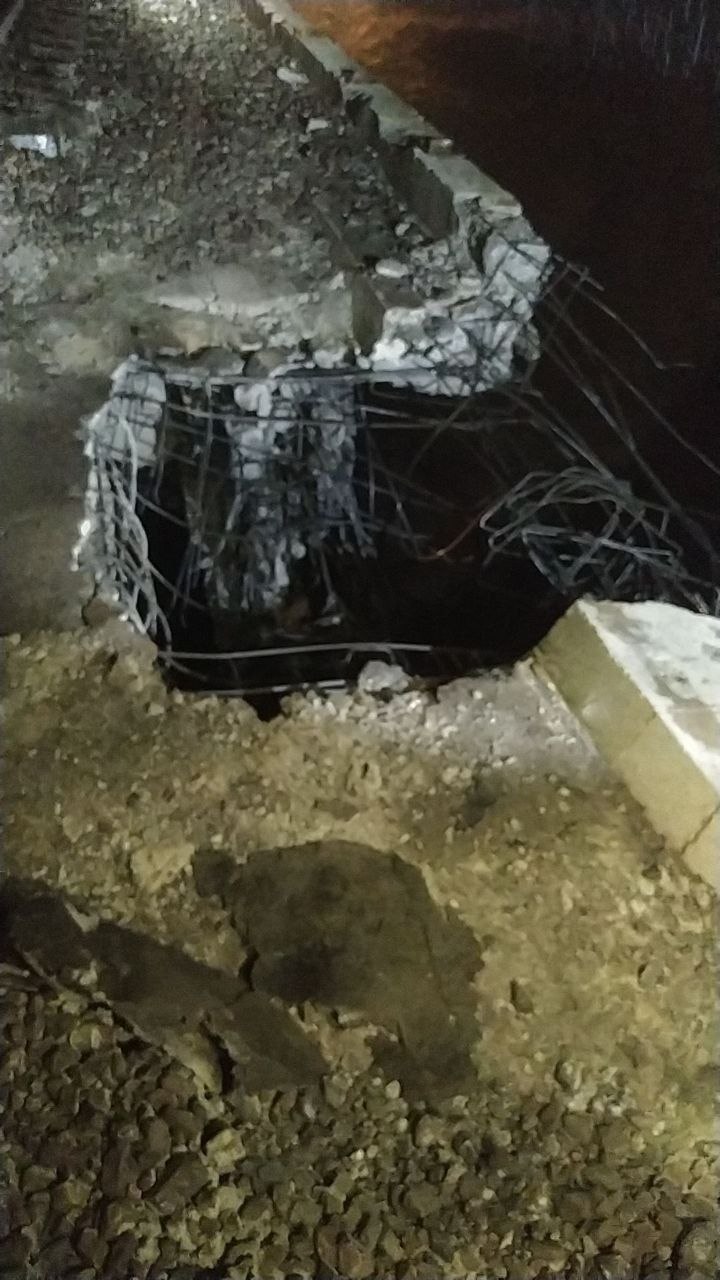
The United States and Iran continued exchanging strikes overnight Wednesday, with U.S. forces targeting military and logistics infrastructure across Iran in what marks one of the most extensive rounds of attacks since hostilities escalated following last month’s ceasefire agreement.
Join our WhatsApp Channel
According to the U.S. Central Command (CENTCOM), American forces struck 90 targets overnight after hitting another 80 the previous day. The latest operation targeted air defence systems, missile and drone storage facilities, naval assets and logistics infrastructure. For the first time in the current conflict, operational railway bridges were also included among the targets.
READ ALSO :
Diesel Price Rises to ₦1,450/Litre as Global Oil Rally Drives Up Depot Rates
One of the key sites affected was the Aq Tekeh Khan Bridge, located near Aq Qala in Iran’s northern Golestan Province. The bridge forms part of the Incheh Borun–Turkmenistan railway, a strategic cross-border corridor linking Iran with Turkmenistan and the wider Central Asian region.
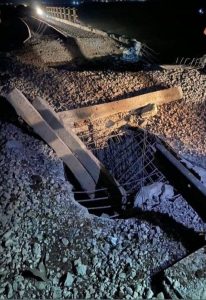
Iranian state media reported that the bridge was struck by seven projectiles, putting it out of service. Authorities have yet to provide an official assessment of the damage or announce when rail operations will resume.
Another strike reportedly hit a section of the Tehran-Mashhad railway just hours before the planned burial of former Supreme Leader Ali Khamenei in the northeastern city of Mashhad. Iranian state broadcaster IRIB condemned the attack as “criminal,” while officials said affected rail passengers would be transported by road around the damaged section.
The Incheh Borun railway is one of Iran’s principal rail gateways to Central Asia and forms part of the International North–South Transport Corridor (INSTC), a major trade network connecting Iran with Russia, Central Asia and other regional markets.
The route has become increasingly important amid disruptions to maritime shipping through the Strait of Hormuz, providing an alternative overland corridor for regional trade. Damage to the line could therefore disrupt freight movement and place additional pressure on regional supply chains if repairs are prolonged.
READ MORE :
Iran Begins Week-Long Funeral for Late Supreme Leader Ali Khamenei, Burial Set for July 9
intensify its retaliatory campaign by targeting U.S. military installations across the Gulf. Iranian forces reportedly launched attacks on sites in Bahrain and Kuwait, while the Iranian Army claimed responsibility for a drone strike on an early-warning radar facility in Qatar.
Despite the escalating conflict, Iran has so far avoided targeting major oil and gas infrastructure across the Gulf Cooperation Council (GCC), a move analysts say could trigger significant disruption to global energy markets. Instead, Tehran has continued to focus its operations on U.S. military facilities across the region.
Commenting on the latest developments, Iran’s lead negotiator, Mohammad Bagher Ghalibaf, accused Washington of violating its commitments and warned that the reopening of the Strait of Hormuz would occur only under what he described as “Iranian arrangements” rather than through American pressure.
The latest exchange of strikes underscores a widening conflict that is increasingly extending beyond military installations to strategic transport infrastructure, raising concerns over regional trade, logistics and the security of critical supply routes linking the Middle East with Central Asia.

Amanze Chinonye is a Staff Correspondent at Prime Business Africa, a rising star in the literary world, weaving captivating stories that transport readers to the vibrant landscapes of Nigeria and the rest of Africa. With a unique voice that blends with the newspaper's tradition and style, Chinonye's writing is a masterful exploration of the human condition, delving into themes of identity, culture, and social justice. Through her words, Chinonye paints vivid portraits of everyday African life, from the bustling markets of Nigeria's Lagos to the quiet villages of South Africa's countryside . With a keen eye for detail and a deep understanding of the complexities of Nigerian society, Chinonye's writing is both a testament to the country's rich cultural heritage and a powerful call to action for a brighter future. As a writer, Chinonye is a true storyteller, using her dexterity to educate, inspire, and uplift readers around the world.