 Pat Utomi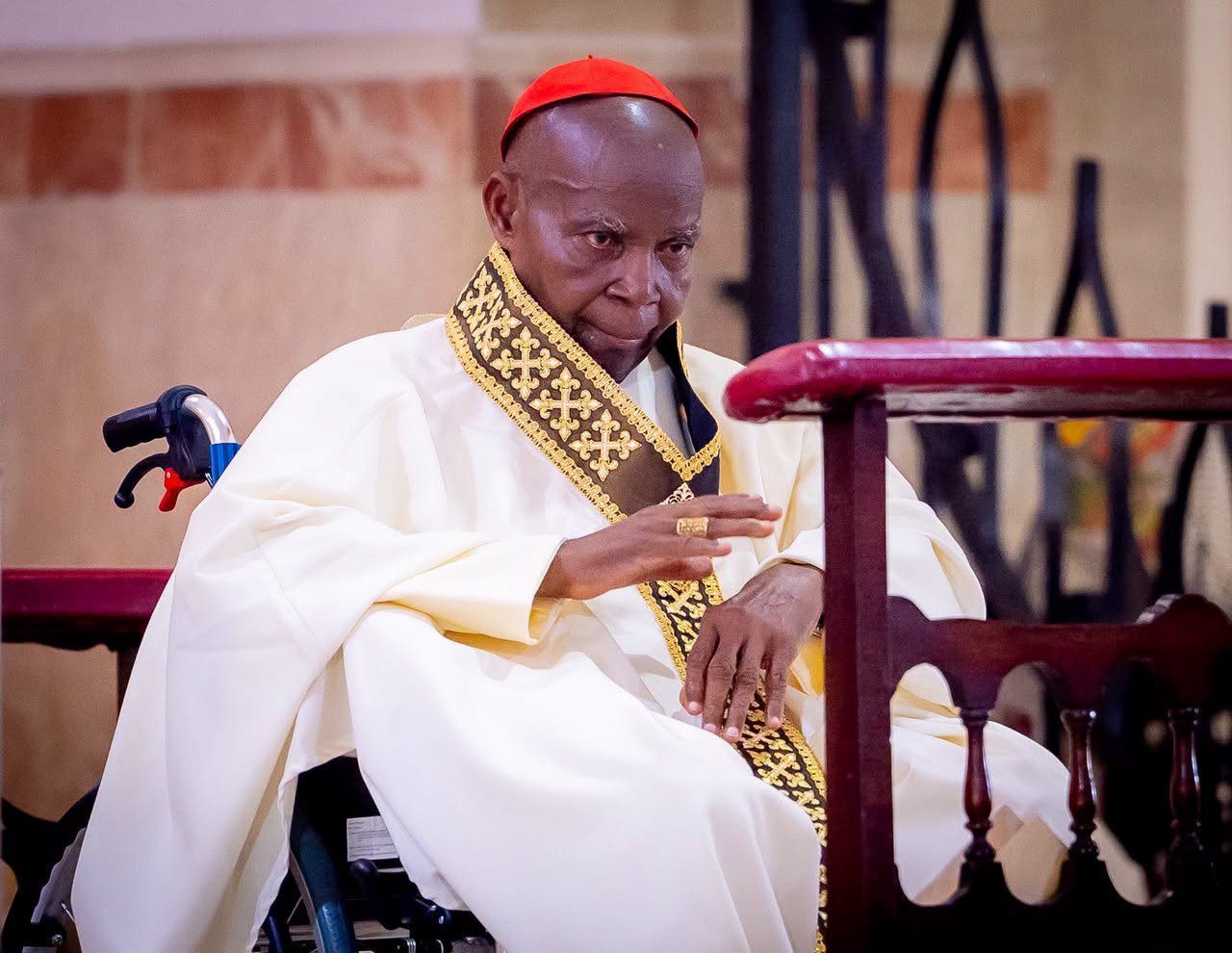
The ubiquity of his presence was the hallmark of a generation’s struggle for emancipation and charting a common cause. But the simplicity of his nature confused some of those who approached the granite firmness of character into thinking there was a yet-to-be-revealed catch. Yet he paid no heed to quibblings, as he called for focus on the common good and lashed out at ills in direct frankness that confounded the schemers in a culture steeped in deceit and pretended subtlety.
He was thus an enigma that puzzled some of those who watched from afar. But to those close by, he was a living expression of the audacity of charity and a sturdy shepherd.
Anthony Cardinal Olubunmi Okogie was my bishop for most of my adult life as the Prelate and Metropolitan of the See of Lagos, from which he retired as cardinal archbishop. In that role, I met him many times, with each meeting leaving a different impression. A few of them have remained indelible in my memory, stoking a consciousness that affects some of the ways I think to this day.
Join our WhatsApp ChannelSome of the most interesting were actually quite embarrassing for me in ways he may never have realised. The first, back in the 1980s, was to push me to study.
A troublemaking friend of mine often jokes, saying that even though they say he is brilliant, surely he cannot know all things. That joke opened to me an approach that seeks to advertise my ignorance so barriers to learning do not appear in the pride of believing you know. That worldview was tested on several encounters with the man who just turned 90.
Visits to this bishop, often unplanned, usually proved my disposition; recognising there was much I should know that I did not know was probably not foolish.
I returned from graduate studies in the US in 1982 to a shocking discovery of the plight of poor widows in Nigeria. I wanted to do something quietly about it as a personal mission, so I began sponsoring research into widowhood rites and to find victims for whom we could provide support. I also began speaking to some parish priests about how these widows could be organised and assisted.
Two priests I was friendly with and discussed these ideas with were Gabriel Osu, then recently ordained from my parish of St Anthony’s Gbaja, and Matthew Hassan Kukah from Kaduna.
Fr Osu wanted me to mention the efforts to the Archbishop, and I resisted, wondering what this little personal initiative had to do with someone as highly placed as an archbishop.
Then I was invited to take the reading at a Mass for the media at Holy Cross. Cathedral. I obliged. As Mass ended, I found myself before His Grace.
Monsignor Osu was quick to get into the widow support initiative.
”It’s good to find your charism,” the Archbishop said.
Charism kee. What is charism? I had heard the word before. Was it not something associated with religious life or saints?
He discerned my not being familiar with the usage and explained it.
I was flushed with embarrassment at not knowing what it was presumed I should know.
Institutionalising the widow programme required setting up a centre for the widows. I mentioned it to the then parish priest in Gbaja, Fr Raphael Adebayo.
One Sunday, Cardinal Okogie showed up for Mass in Gbaja and a big crowd of four, the Cardinal, his driver, Fr Adebayo and I, went to dedicate the Widow Support Centre.
Many years later, I had become more familiar with the Cardinal when, again in the company of Monsignor Osu, the Archbishop called me Amos.
”Looks like he has forgotten my name,” I thought.
I am on TV all the time. He should have been getting a reminder of my face; I almost spoke out loud.
”You are the prophet of social justice.”
Hey. See this manooo! Now I am a prophet.
”Hia kwa?”
I had not moved to a new church and been appointed prophet!
Of course, I hear readings from Amos. Was he not one of the minor prophets?
As soon as I left his presence, I began to study Amos and was moved to tears as I learned more of the prophet Amos. In my contemplative moments, I began to appropriate the naming.
I am Amos. I have to let the spirit of Amos have its way in me.
When the French magazine Charlie Hebdo was attacked by terrorists and the world began, in solidarity, to tweet #JeSuisCharlie, I tweeted Je suis Amos.
I had in spirit appropriated the ‘anointing’ of the prelate.
But what a remarkable thing that he who constantly spoke truth to power, fought for the poor in the face of military regimes, challenged governments for taking over mission schools, and, as president of the Catholic Bishops’ Conference of Nigeria and president of the Christian Association of Nigeria, demanded good governance should call me Amos.
He was the Amos we knew.
Cardinal Okogie was the ultimate moral voice of our time, the voice for the voiceless. He lived the 8th Habit before Stephen R. Covey wrote about it.
Whenever things went wrong in the public sphere, you could literally hear the heavy pounding of bated breath, holding to hear the Archbishop of Lagos. The tone of his response to the issue set the agenda for the conversation.
Love him or hate him, you could not ignore him. In him, there was no place for neutrality. If in Dante’s Inferno the hottest part of hell was the domicile for those who in the face of a moral crisis took refuge in neutrality, Anthony Cardinal Okogie would have a heck of a long drive to visit that estate.
Like the blind man feeling out an elephant, pronouncing one limb a tree trunk, many see different things when they behold him. While some see a towering political figure, others see a diligent pastor.
When I moved to Falomo Parish, we came to value him as the cardinal who was our assistant parish priest. When the parish priest took his leave to rest, the Archbishop was there every morning at 6 am to lead us in morning Mass.
To administer a diocese as vast as Lagos during transitioning from missionaries and simultaneously build a significant pipeline of indigenous priests, given the long time and significant effort involved in the formation of a Catholic priest, that fruit of his watch was just short of a management miracle.
Yet he did it all with the simple grace of a servant just doing his master’s work.
I got to know the Cardinal better during the Kukah/Ehusani era at the Catholic Secretariat when I travelled quite a bit with the bishops.
At a conference in Ghana, when Archbishop Albert Obiefuna was president of the Bishops’ Conference, I was chatting with him in an open field when the clock struck noon. I said ”Angelus,” and then wondered if it was proper protocol for me to say it. Surely it should be his prerogative.
He quickly led the prayer and then said something so funny, I will forever keep to myself for whenever I need a hearty chuckle.
It is usually easy to forget that young Anthony Okogie was a brilliant student who received scholarship offers that could have taken down prestigious career path, but he heard the call and held firmly to a vocation to the priesthood in the order of Melchizedek.
We pray that his reward may be bountiful, as his service has been enriching.
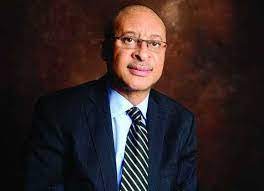
Patrick Okedinachi Utomi is a Professor at the Lagos Business School and Founder of the Centre for Values in Leadership