Amanze Chinonye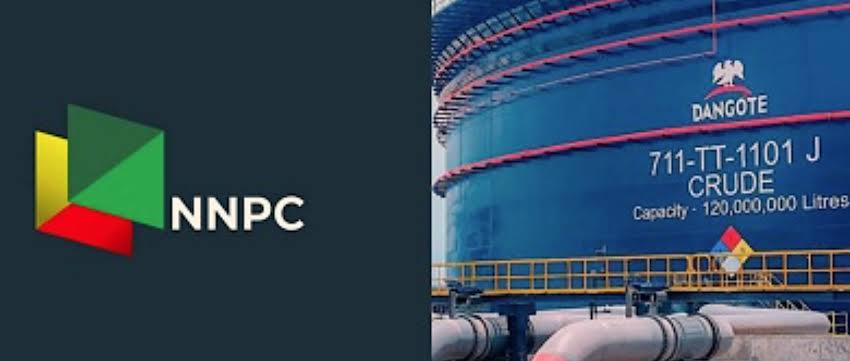
When former President of the Organised Private Sector of Nigeria (OPSN), Dele Oye, described the Nigerian National Petroleum Company Limited’s (NNPC Ltd.) claim that Dangote Petroleum Refinery is seeking a monopoly as “embarrassing,” he drew attention to a dispute that extends far beyond the petroleum industry.
At the centre of the controversy is a critical question: should Nigeria prioritise its largest refining investment or maintain an open market in which foreign and domestic suppliers compete on equal terms?
READ ALSO :
Join our WhatsApp ChannelDangote Fuel Distribution Strategy: Between Monopoly Concerns And Market Competition
The answer could shape the country’s energy security, investment climate and industrial ambitions for years to come.
Why Dangote’s Court Challenge Extends Beyond Import Licences
The dispute arose from a lawsuit filed by Dangote Refinery challenging fuel import licences issued to NNPC and other marketers. The refinery argues that continued reliance on imported petroleum products undermines domestic refining capacity and weakens the objectives of the Petroleum Industry Act (PIA), which seeks to encourage local processing of crude oil.
Supporters of the refinery contend that the issue is larger than market share. For decades, Nigeria exported crude oil while spending billions of dollars importing refined products. They argue that the country should create conditions that allow major domestic investments to thrive.
That argument has gained traction because the 650,000-barrel-per-day Dangote Refinery was widely expected to reduce Nigeria’s dependence on imported petroleum products, conserve foreign exchange and strengthen energy security. Proponents believe continued large-scale imports could diminish some of the economic benefits anticipated from the project.
The debate has intensified in recent months. Earlier this year, the Nigerian Midstream and Downstream Petroleum Regulatory Authority (NMDPRA) suspended the issuance of petrol import licences after determining that local production could sufficiently meet domestic demand, a move widely seen as a boost for domestic refining.
It is within this context that Oye rejected NNPC’s monopoly allegation. Supporters of the refinery, including Oye, argue that its emergence has reduced NNPC’s long-standing influence in the fuel supply chain rather than creating a new market monopoly.
Why NNPC Says Market Competition Must Be Preserved
NNPC has taken a different position. In its court filings, the company argues that import licences remain necessary to guarantee product availability, prevent supply disruptions and safeguard national energy security.
The state oil company maintains that depending heavily on a single refinery could expose the country to operational risks, including maintenance shutdowns or unexpected production constraints. From its perspective, maintaining multiple supply channels helps ensure market stability.
NNPC has also questioned whether Dangote Refinery can consistently satisfy Nigeria’s fuel demand under all circumstances, insisting that alternative sources remain essential to protecting consumers and the broader economy.
Fuel marketers have echoed similar concerns, warning that restrictions on imports could reduce market rivalry and concentrate significant influence in the hands of a single supplier.
For these stakeholders, the issue is not opposition to local refining but ensuring that no single operator becomes the dominant source of fuel supply in a market as critical as Nigeria’s.
READ MORE :
Why the Outcome Could Shape Nigeria’s Industrial Future
Beyond the legal arguments, the case has evolved into a wider debate about Nigeria’s economic direction.
For years, policymakers have sought to reduce dependence on imported goods and encourage domestic production. As one of the largest private-sector industrial investments in the country’s history, Dangote Refinery has become a symbol of those ambitions.
A ruling that favours unrestricted imports could reinforce market openness but may raise concerns among investors about the level of support available for large-scale domestic industries.
Conversely, supporters of domestic refining argue that a decision limiting imports could strengthen local refining capacity, while critics warn it could reduce competition and increase market concentration.
Ultimately, the dispute reflects a challenge faced by many developing economies: how to balance competition with industrial growth.
As the Federal High Court considers the case, the broader issue remains whether Nigeria’s energy future will be driven primarily by market liberalisation or by deliberate support for strategic domestic industries.
Whatever the outcome, the NNPC-Dangote confrontation has become more than a legal battle. It is increasingly being viewed as a test of how Nigeria intends to achieve energy security, attract investment and build a more self-reliant economy.

Amanze Chinonye is a Staff Correspondent at Prime Business Africa, a rising star in the literary world, weaving captivating stories that transport readers to the vibrant landscapes of Nigeria and the rest of Africa. With a unique voice that blends with the newspaper's tradition and style, Chinonye's writing is a masterful exploration of the human condition, delving into themes of identity, culture, and social justice. Through her words, Chinonye paints vivid portraits of everyday African life, from the bustling markets of Nigeria's Lagos to the quiet villages of South Africa's countryside . With a keen eye for detail and a deep understanding of the complexities of Nigerian society, Chinonye's writing is both a testament to the country's rich cultural heritage and a powerful call to action for a brighter future. As a writer, Chinonye is a true storyteller, using her dexterity to educate, inspire, and uplift readers around the world.