Amanze Chinonye
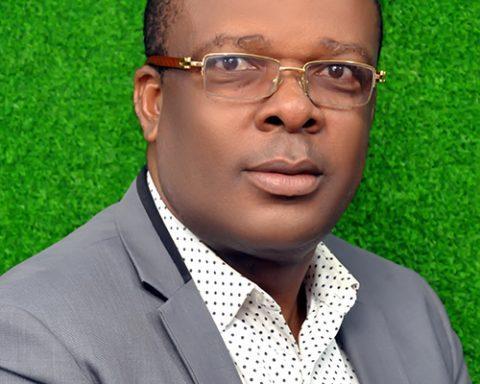
By Tony Onyima, PhD.
When the Catholic Bishops’ Conference of Nigeria concluded its first plenary meeting of 2026 in Abuja recently, it did not issue a routine ecclesiastical statement. Its communiqué read like a sober diagnosis of the Nigerian condition. It was pastoral in tone, but civic in urgency.
Join our WhatsApp ChannelBeneath its carefully chosen words lay an urgent question: What kind of leadership does Nigeria need if it is to survive and flourish as a commonwealth?
This question is not new. It haunted Plato as he watched Athenian democracy decay into demagoguery. It preoccupied Aristotle, who distinguished between good regimes that pursue the common interest and corrupt ones that serve private ends. It stirred Thomas Aquinas to argue that law must be ordered toward the common good, or it degenerates into tyranny. Nigeria’s crisis is, at its core, a leadership crisis. And unless leadership is redirected toward the common good, the nation’s immense promise will remain unrealised.
The common good is not a slogan. It is a philosophical and moral category with deep roots. In Christian thought, it reflects the relational nature of the human person, created for community. The bishops echo this tradition: the good of each is bound up with the good of all. A society cannot flourish if its structures benefit a few while abandoning the many.
In simpler terms, it means that leadership should work for all. That is precisely where Nigeria has struggled. No society can flourish where life is unsafe. The bishops’ communiqué speaks plainly about persistent insecurity: massacres in communities such as Woro and Nuku in Kwara State, attacks in the North and Middle Belt, kidnappings, displaced farmers, and brazen criminality. These are not isolated incidents; they are signs of a fragile security architecture.
To its credit, the federal government under President Bola Ahmed Tinubu has declared a national security emergency and increased recruitment into the armed forces. Yet the bishops note that recruitment alone is not enough. Modern threats require modern tools — advanced surveillance technology, improved intelligence gathering, and swift prosecution of those who finance or perpetrate violence.
Perhaps more damaging than the attacks themselves is the perception that justice is slow or selective. When suspected terrorists are not prosecuted promptly, or when repentant insurgents are reintegrated without clear accountability, public trust erodes. A government committed to the common good must not only fight crime but be seen to uphold justice transparently and consistently.
READ ALSO : Understanding Free, Fair Elections in Nigeria
Security is not a luxury; it is the foundation upon which all other goods — economic development, education, agriculture — depend. When farmers cannot safely cultivate their land, food prices rise. When traders fear travel, commerce suffers. Insecurity multiplies poverty.
Nigeria is abundantly blessed with mineral resources. Gold, lithium, oil, gas — these should be pillars of prosperity. Yet illegal mining and oil bunkering siphon trillions of naira from the national treasury. According to the bishops, criminal groups exploit these resources and channel the proceeds into further violence. Meanwhile, government borrowing continues, and citizens struggle under economic hardship. This is not merely an economic problem; it is a leadership problem.
Effective leadership would treat mineral wealth as a national trust. It would deploy technology— drones, artificial intelligence, satellite surveillance — to monitor remote mining sites. It would strengthen regulatory agencies and ensure that offenders are prosecuted decisively. It would ensure that taxes collected are visibly translated into roads, schools, hospitals, and power supply.
The communiqué also criticises heavy reliance on food importation as a short-term solution to rising prices. While imports may provide temporary relief, they risk undermining local farmers. Leadership for the common good requires long-term thinking: securing farming communities, providing subsidies and inputs, investing in irrigation, and creating stable markets for local produce. A country that cannot feed itself securely cannot claim economic sovereignty. Good leadership understands this connection.
Perhaps the most sobering section of the communiqué concerns Nigeria’s electoral process. Democracy depends on credible elections. Yet voter turnout has plummeted—23 per cent in the 2023 general elections and an alarming 7 per cent in recent FCT polls. Such figures suggest widespread disillusionment.
The bishops identify familiar malpractices: vote buying, intimidation, falsification of results, manipulation of voter registers, and interference by state institutions. When elections are perceived as compromised, citizens disengage. Apathy becomes a silent protest.
The call for mandatory real-time electronic transmission of results from the Bimodal Voter Accreditation System (BVAS) to the INEC Result Viewing Portal is not a technical footnote; it is a demand for transparency. Technology alone will not cure electoral malpractice, but it can reduce opportunities for manipulation.
More importantly, the communiqué urges governments in power to resist the temptation to misuse institutions such as INEC, the judiciary, and security agencies. Democracy cannot thrive where incumbents act as both referee and contestant.
Leadership for the common good requires humility—the willingness to lose an election fairly rather than win at all costs. Without that humility, democracy becomes hollow. One of the strengths of the bishops’ statement is its insistence that politics is not merely about power; it is about responsibility. Citizenship, they argue, is a virtue. Participation in political life is a moral obligation.
This is significant in a context where many citizens feel alienated from governance. The temptation is to withdraw, to say “nothing will change.” But leadership and citizenship are interconnected. When good people disengage, opportunists fill the vacuum.
The communiqué situates this responsibility within the spiritual seasons of Lent and Ramadan, which coincided this year. This convergence, the bishops suggest, is an invitation to reflection, repentance, and renewal – across religious lines. Nigeria’s diversity need not be a fault line; it can be a foundation for collaboration.
The proclamation of a Special Jubilee Year of St. Francis of Assisi by Pope Leo XIV further reinforces this moral dimension. St. Francis’s life of simplicity and humility contrasts sharply with the ostentation and excess that often accompany political office. Leadership anchored in humility is less likely to exploit public resources for private gain.
It is important to note that the bishops’ communiqué is not a partisan attack. It acknowledges positive steps, such as the declaration of a security emergency. But it also speaks truth to power, calling out systemic weaknesses.
This balanced approach strengthens its credibility. In polarised political climates, criticism is often dismissed as opposition propaganda. A moral voice that transcends party lines can remind leaders that their mandate is not to a faction but to the nation. Nigeria does not lack talented individuals. It lacks systems that consistently reward integrity over manipulation. Leadership for the common good means building institutions strong enough to outlast personalities.
At its heart, Nigeria’s challenge is a crisis of vision. Too often, politics is reduced to competition for access to state resources. When elections are seen primarily as gateways to wealth accumulation, public office becomes an investment to be recouped. The bishops describe this bluntly: when politics is understood as rigging and mandate theft, leadership becomes synonymous with illicit gain. The consequences are visible—worsening poverty, infrastructural decay, unemployment, and distrust.
A different vision is required. One in which leadership is service. One in which budgets are moral documents reflecting national priorities. One in which security agencies protect citizens impartially. One in which lawmakers strengthen, rather than weaken, electoral reforms.
This vision is not unrealistic. It is simply demanding.
The communiqué closes with a call to hope: “We must never give in to despair.” Hope here is not naïve optimism. It is a decision to work toward a better future despite present difficulties.
Nigeria has overcome daunting challenges before – civil war, military rule, and economic downturns. Its resilience lies in its people. But resilience must be matched with accountable leadership.
A better Nigeria is possible if leaders prioritise competence and integrity; if institutions are shielded from manipulation; if economic resources are managed transparently; if security is treated as a sacred duty; and if citizens remain engaged.
The search for leadership for the common good is ultimately a search for leaders who understand that power is stewardship. It is a search for public servants who recognise that authority exists to protect, not to exploit; to unite, not to divide. The Catholic Bishops’ Conference has offered a framework grounded in moral clarity and practical concerns. Whether Nigeria moves closer to that vision depends not only on those who occupy high office but also on the collective resolve of its citizens.
In the end, leadership for the common good is not an abstract ideal. It is measured in safer villages, fairer elections, affordable food, accountable institutions, and restored public trust – Nigeria’s future hinges on whether its leaders and its people choose that path.
Onyima teaches media and communication at Paul University, Awka.

Amanze Chinonye is a Staff Correspondent at Prime Business Africa, a rising star in the literary world, weaving captivating stories that transport readers to the vibrant landscapes of Nigeria and the rest of Africa. With a unique voice that blends with the newspaper's tradition and style, Chinonye's writing is a masterful exploration of the human condition, delving into themes of identity, culture, and social justice. Through her words, Chinonye paints vivid portraits of everyday African life, from the bustling markets of Nigeria's Lagos to the quiet villages of South Africa's countryside . With a keen eye for detail and a deep understanding of the complexities of Nigerian society, Chinonye's writing is both a testament to the country's rich cultural heritage and a powerful call to action for a brighter future. As a writer, Chinonye is a true storyteller, using her dexterity to educate, inspire, and uplift readers around the world.