 Emmanuel Ochayi
The World Bank forecasts subdued growth in Nigeria, dampening economic prospects for the broader Western and Central Africa region.
In its report, the World Bank noted that Nigeria’s lower-than-average growth would impede the subregion’s economic performance.
Join our WhatsApp Channel“In AFW, economic activity is set to increase from 3.2 percent in 2023 to 3.7 percent in 2024 and further accelerate to 4.2 percent in 2025–2026. The subregion’s performance will be held back by the lower-than-average growth in Nigeria,” the report highlighted.
According to the World Bank, excluding Nigeria, the AFW sub-region is projected to grow by 4.4 percent in 2024 and 5 percent in 2025–2026.
Explaining the factors behind Nigeria’s subdued growth, the report pointed towards gradual macroeconomic and fiscal reforms yielding results. It anticipates Nigeria’s growth at 3.3 percent in 2024 and 3.6 percent in 2025–2026, with a stabilizing oil sector and structural reforms driving slow but sustained growth in the non-oil economy.
READ ALSO: World Bank Urges Investors To Explore Developing Economies For Untapped Opportunities
“Structural reforms will be needed to foster higher growth,” emphasized the World Bank. It also highlighted the importance of averting high inflation, which is expected to ease gradually with monetary policy tightening and exchange rate stabilization.
In contrast, economic activities in the West African Economic and Monetary Union are forecasted to rise, propelled by solid performances in countries like Benin, Côte d’Ivoire, Niger, and Senegal. The report projected a growth of 5.9 percent in 2024 and 6.2 percent in 2025 for this sub-region.
The World Bank emphasized the need for accommodative monetary policies to support private consumption and highlighted the potential of investments in sectors like agriculture, manufacturing, and telecommunications to drive economic growth.
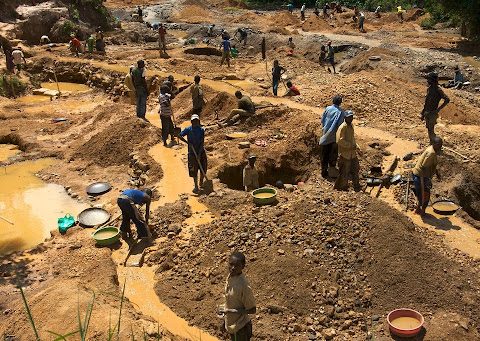
The report’s findings echo the grim reality of poverty in Nigeria and Sub-Saharan Africa. In 2022, the National Bureau of Statistics reported that 63 percent of Nigeria’s population, or 133 million people, were multi-dimensionally poor due to various socio-economic factors.
Sub-Saharan Africa faces significant challenges in deepening and lengthening economic growth, with high poverty rates, inequality, and weak transmission of growth to poverty reduction. The region’s growth remains below the levels observed in the previous decade, hindering substantial poverty reduction efforts.
The World Bank’s report underscores the urgency for Nigeria and Sub-Saharan Africa to implement robust reforms to stimulate economic growth and alleviate poverty.

Emmanuel Ochayi is a journalist. He is a graduate of the University of Lagos, School of first choice and the nations pride. Emmanuel is keen on exploring writing angles in different areas, including Business, climate change, politics, Education, and others.
- Emmanuel Ochayi
- Emmanuel Ochayi