 Victor Ezeja
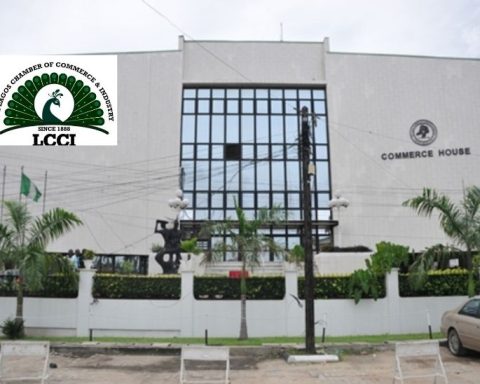
The Lagos Chamber of Commerce and Industry (LCCI) has warned that if the new Expatriate Employment Levy (EEL) policy launched by the federal government is not reviewed, it might affect foreign direct investment in Nigeria.
The chamber made its position on the matter known through a statement titled, “LCCI Perspective on Nigeria’s Expatriate Employment Levy (EEL),” signed by the Director General of LCCI, Dr. Chinyere Almona, released on Monday.
Join our WhatsApp ChannelDr Almona expressed concern that the policy might have unintended consequences on the economy.
The statement said enforcement of the policy could give the impression that the Nigerian government is not accomodative of foreign workers and that might affect foreign direct investment in the country.
READ ALSO:
- New Expatriate Levy Policy Will Discourage Investment In Nigeria – NECA
- Expatriate Employment Levy Policy May Have Devastating Effect On Diaspora Nigerians – CCPE Warns
- Nigeria’s Forex Crisis Rooted In Weak Industrial Capacity – LCCI
This, the chamber observed, would be counterproductive to the ongoing efforts to increase FDI inflow into the economy.
“The point must be made that maintaining expatriates in Nigeria is expensive and as such our members only bring in expatriates for very critical roles that require highly technical skills that are not readily available locally, the statement read in part.
“It is out of necessity that our members bring in expatriates and as such any imposition that makes this provision expensive will discourage them and jeopardise projects requiring such expatriates.”
While expressing its full support of government policies that enhance the profile of the business environment, generate more revenue for the government, and create more opportunities for local employment, the LCCI said: “We are concerned about likely perception by foreign investors that the Nigerian government is not accommodative to foreign workers. This perception is harmful to our drive for Foreign Direct Investments (FDIs) inflows.”
It stressed that there is need for a conducive business environment to “attract these kinds of investments into the country.”
It noted that only $184 million FDIs came to Nigeria in the fourth quarter of 2023 out of $1.088 billion capital importation that was recorded within the period.
The LCCI director-general observed that there are some critical sectors that require unique set of skills provided by foreigners and called on the government to consider exempting such sectors.
“In sectors where the country lacks capacity to boost supply of critical products, like food, cement, drugs, and other agricultural inputs, we urge the government to charge concessionary or totally exempt the manufacturers in these fields to encourage them to come in and boost supply of such scarce products,” Almona stated.
The federal government through the Ministry of Interior, launched the policy that imposed on companies employing foreign workers, levies of $10,000 (for workers on other categories) and $15,000 (for directors) annually.
The chamber contended that expatriates would have to go through two administrative processes in order to obtain the EEL and the Combined Expatriate Residence card and Alien Card (CERPAC) card, as a result of the most recent sets of taxes.
“From experience, having two procedures will mean more human interfaces, more bureaucracy, and more application costs,” LCCI stated.
“We recommend that the government continue to work with the already established and functional CERPAC with provision for yearly or regular reviews in rates according to internationally accepted rates. This way, we present our economy as open for business.
“The EEL may cause unintended consequences that may trigger the relocation of foreign companies to neighbouring countries that present a more conducive and less expensive environment for business.”
It also said that the imposition of the this levy May likely “spark retaliatory actions taken by other countries by imposing levies on foreigners and, particularly, targeting Nigerian workers,” adding “This will in turn affect diaspora remittances from Nigerian workers resident in other countries.”

Victor Ezeja is a passionate journalist with seven years of experience writing on economy, politics and energy. He holds a Master's degree in Mass Communication.