 Amanze Chinonye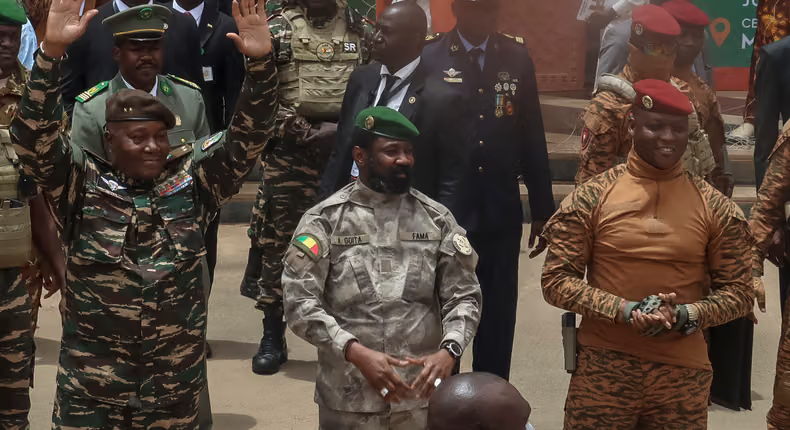
A diplomatic dispute between Nigeria and the Alliance of Sahel States (AES) over President Bola Tinubu’s remarks on regional insecurity has exposed a deeper divide in West Africa, where countries facing increasingly interconnected security threats are pursuing separate political and military paths.
Join our WhatsApp Channel
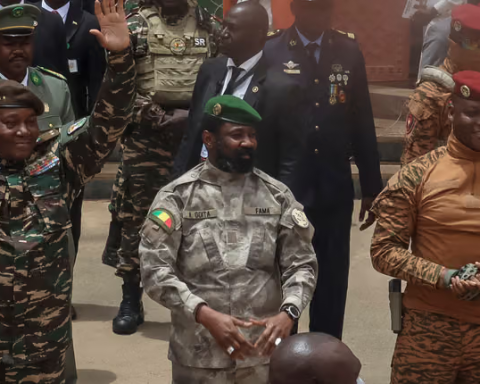
Burkina Faso, Mali and Niger summoned Nigeria’s chargé d’affaires in Ouagadougou on August 6 after Tinubu said insecurity in the three countries was exacerbating Nigeria’s security difficulties.
READ ALSO :
HURIWA To President Tinubu: Focus On Tackling Insecurity Not 2027 Politics
The AES rejected the assessment, arguing that it failed to recognise the sacrifices the three countries were making in their fight against armed groups and objecting to any suggestion that instability in the Sahel was responsible for Nigeria’s security problems.
Tinubu made the remarks on July 30 while discussing Nigeria’s security challenges. He said some terrorists operating in Nigeria were not Nigerians and added that insecurity in Mali, Burkina Faso and Niger was worsening the difficulties faced by his country.
The dispute has brought renewed attention to the widening political and security gap between Nigeria, which remains a leading member of the Economic Community of West African States (ECOWAS), and the three Sahelian states, which have built the AES into an alternative regional grouping.
The divide is becoming more significant as the security threats confronting the region increasingly cross national borders.
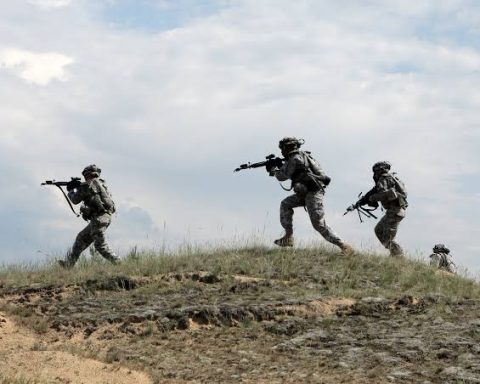
Armed groups operate across the Sahel, while weapons, fighters and illicit networks can move through porous frontiers into neighbouring countries. The expansion of militant activity has also raised concerns about possible spillover towards the coastal states of West Africa.
Yet the institutions through which governments respond to those threats are becoming increasingly fragmented.
The AES has accelerated efforts to build an independent security structure. In July, defence ministers from Burkina Faso, Mali and Niger approved a legal framework for a unified force designed to strengthen military coordination and facilitate cross-border operations.
The initiative is intended to deepen military integration among the three countries and provide the AES with greater capacity to conduct joint operations outside the framework of ECOWAS.
It marks another step in the transformation of the Sahelian alliance from a political partnership into a more integrated security bloc.
Burkina Faso, Mali and Niger formally withdrew from ECOWAS in January 2025 after announcing their decision a year earlier amid prolonged disputes with the regional organisation over military rule, sanctions and demands for a return to constitutional government.
Since then, the three countries have sought to consolidate the AES as an alternative political and security framework.
Their external security partnerships have shifted alongside that realignment.
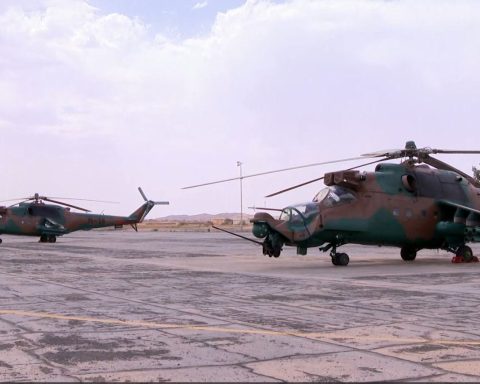
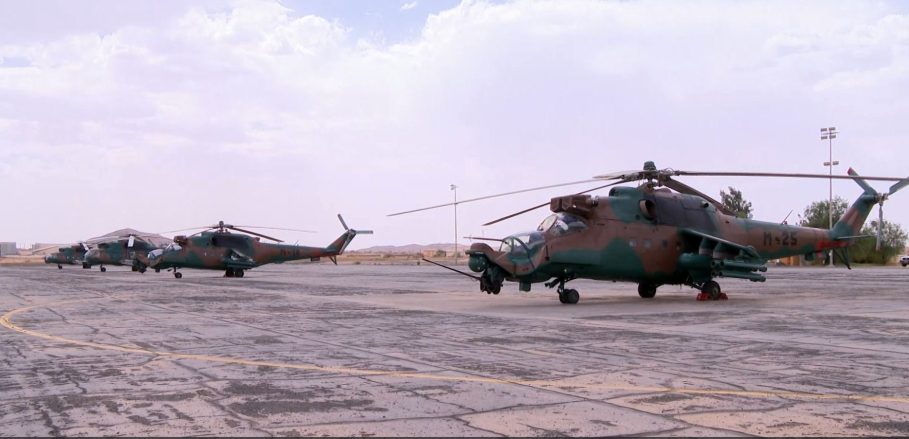
Russia has emerged as an important partner for the AES governments as relations with several Western countries have deteriorated. Moscow and the three Sahel states agreed in July to deepen military cooperation as militant attacks continued across the region.
READ MORE :
ECOWAS Strengthens Push for Regional Counterterrorism Force, Targets Full Deployment by 2027
Nigeria, meanwhile, remains committed to ECOWAS and maintains security partnerships with Western countries while seeking to preserve its role as a major regional security actor.
A June 2026 Nigeria-United Kingdom security and defence dialogue highlighted the importance of continued regional engagement and acknowledged the wider impact of instability in the Sahel on West Africa.
For Nigerian, the strategic dilemma is difficult to avoid.
Nigeria cannot easily insulate itself from developments in the Sahel. Niger shares a long border with Nigeria, while instability in Mali and Burkina Faso can influence the movement of fighters, weapons and illicit networks across the wider region.
Nigeria is also dealing with its own security challenges, including jihadist insurgency in the northeast and armed violence in other parts of the country.
For the Nigerian government, instability beyond its borders is therefore not simply a foreign-policy concern. It can have direct implications for domestic security.
The AES governments view the issue differently.
They increasingly present themselves as states on the frontline of the fight against terrorism and argue that their military campaigns have come at a heavy cost. Their decision to establish an independent security structure reflects, in part, their rejection of regional and international arrangements they consider ineffective or politically driven.
That divergence gives the Tinubu-AES dispute significance beyond the immediate diplomatic exchange.
The disagreement is not simply about whether instability in the Sahel contributes to insecurity in Nigeria. It reflects competing views about responsibility, sovereignty and how West Africa should organise its response to terrorism.
The United Nations has warned about the potential spread of militant activity from the Sahel towards coastal West Africa. At a July UN Security Council briefing, Russia’s representative also raised concerns about terrorist infiltration from the Sahel into Gulf of Guinea countries and cited continuing militant violence in Nigeria.
READ ALSO :
Obasanjo Faults Tinubu on Worsening Insecurity, Says Nigerians May Seek International Intervention
The warnings underscore a central contradiction in the region: the security threat is becoming more transnational even as the political mechanisms for confronting it become more divided.
For Nigeria, the emergence of an autonomous AES security structure could complicate intelligence sharing, border management and coordinated action against armed groups whose activities do not stop at national boundaries.
For the AES states, closer military integration offers greater control over their security policies and reduces their dependence on institutions and partners they increasingly view with suspicion.
The two approaches do not necessarily rule out practical cooperation. Cross-border threats could still create incentives for Nigeria and the AES capitals to maintain security contacts despite their political differences. But the mechanisms for such cooperation are less clear than they were when ECOWAS provided the region’s dominant framework for political and security coordination.
That is the challenge facing West Africa.
The region needs stronger cooperation against armed groups, trafficking and other cross-border threats at the same time that its governments are dividing into separate political and security camps.
The Tinubu-AES dispute has brought that contradiction into sharper focus.
What began as a disagreement over the interpretation of a presidential statement now points to a broader transformation in the region: Nigeria and the AES states are developing different security partnerships while confronting threats that remain shared.
The question for West Africa is whether those competing structures can find enough common ground to cooperate on security before political divisions further weaken the collective response to a crisis that recognises neither borders nor alliances.

Amanze Chinonye is a Staff Correspondent at Prime Business Africa, a rising star in the literary world, weaving captivating stories that transport readers to the vibrant landscapes of Nigeria and the rest of Africa. With a unique voice that blends with the newspaper's tradition and style, Chinonye's writing is a masterful exploration of the human condition, delving into themes of identity, culture, and social justice. Through her words, Chinonye paints vivid portraits of everyday African life, from the bustling markets of Nigeria's Lagos to the quiet villages of South Africa's countryside . With a keen eye for detail and a deep understanding of the complexities of Nigerian society, Chinonye's writing is both a testament to the country's rich cultural heritage and a powerful call to action for a brighter future. As a writer, Chinonye is a true storyteller, using her dexterity to educate, inspire, and uplift readers around the world.